These are questions all of us have asked, or perhaps should have asked more often.
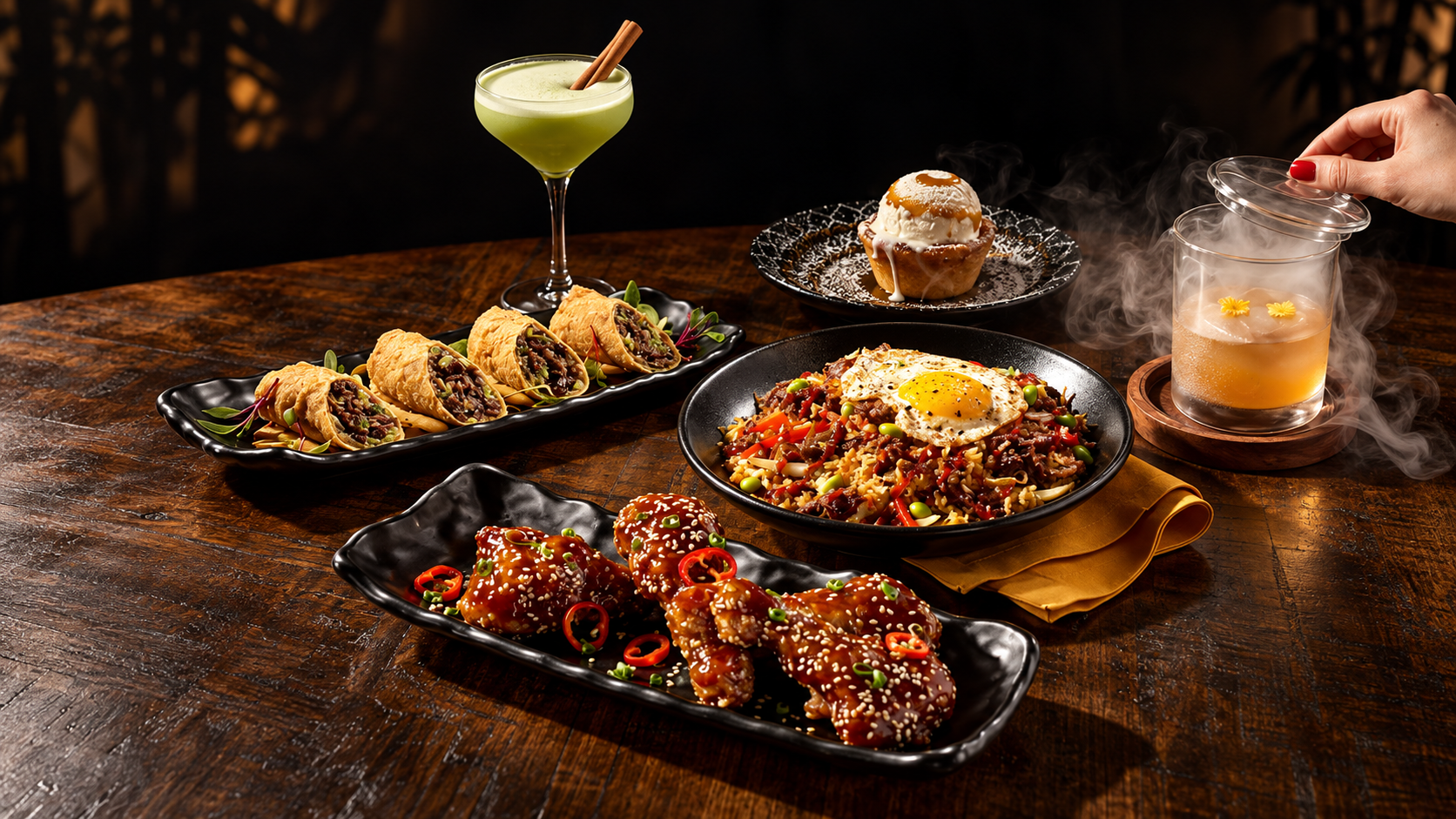
What goes with wagyu egg rolls? What should one drink with duck wings? And what, exactly, is best served alongside sushi boats and bitter chocolate cake?
The answer, apparently, is good luck.
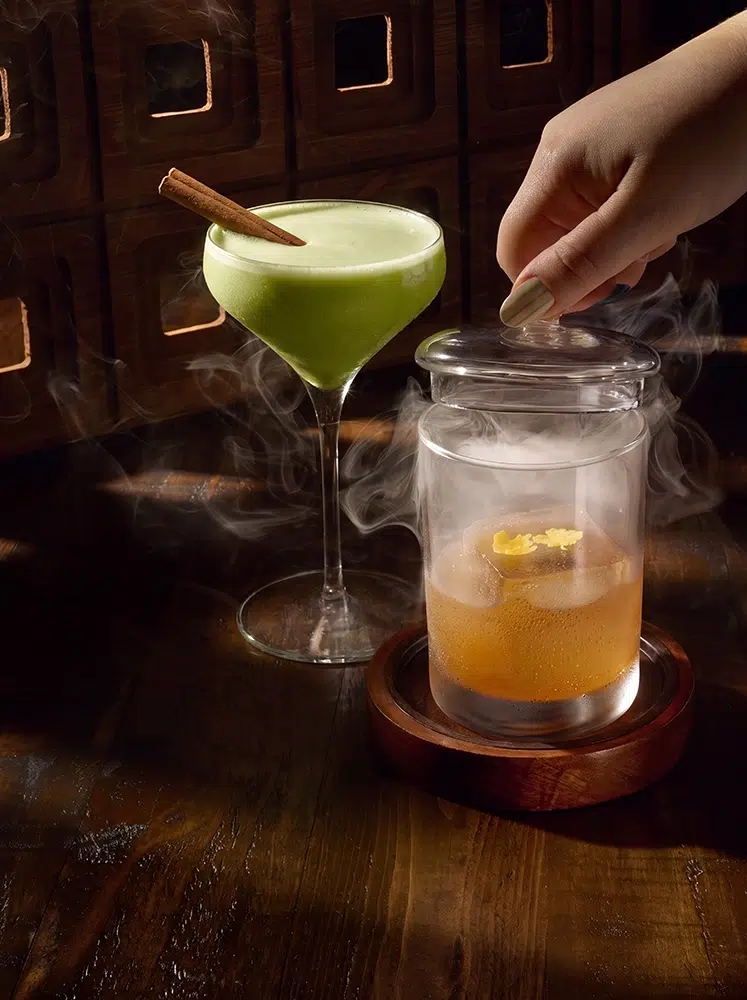
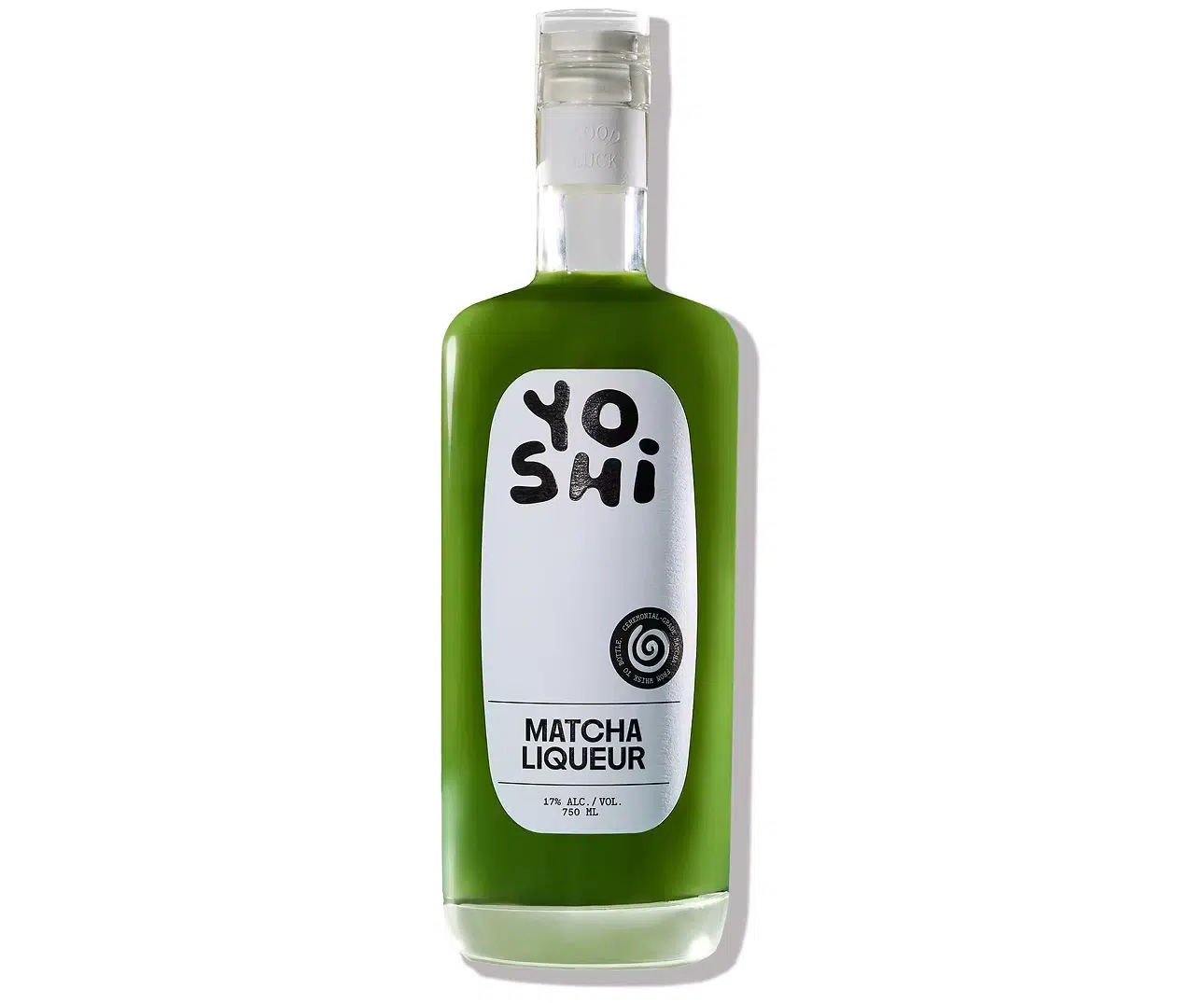
Or more precisely, YOSHI Matcha Liqueur, whose name translates from Japanese as “good luck” and which has found its way into P.F. Chang’s autumn cocktail menu in the form of a Matcha Martini. It sounds, at first, like one of those drinks invented because no one had yet thought to stop it. Then you taste the logic.
Matcha has already conquered cafés, bakeries, wellness counters and increasingly ambitious dessert menus. Cocktails were only a matter of time. The more interesting question is whether it can move beyond novelty and become a serious bar ingredient.
P.F. Chang’s is betting that it can.
Founded in 1993 by Philip Chiang and Paul Fleming, the brand built its identity around a contemporary interpretation of Asian dining and the theatre of wok cooking. More than three decades later, its seasonal menus are increasingly interested in what happens in the glass as much as on the plate.
The Matcha Martini is the clearest expression of that shift.
At its heart is YOSHI, a dairy-free liqueur made with ceremonial-grade Japanese matcha sourced from Uji, one of the most important matcha-growing regions in Japan. Oat milk softens the tea’s natural bitterness, while a neutral grain spirit gives it structure. At 17 percent ABV, the result sits comfortably between liqueur, digestif, and cocktail ingredient.
The drink itself is deliberately uncomplicated: two ounces of YOSHI Matcha Liqueur, one ounce of the spirit of choice, a touch of simple syrup if desired, then ice, a vigorous shake, and a finish of cold foam with matcha dusted over the top.
It looks theatrical. The flavor, fortunately, has more discipline than the color might suggest.
Matcha brings vegetal depth, tannin-like bitterness, and a faint savory edge that can do useful work in a cocktail. The oat milk adds body without muting the tea completely, while the base spirit determines the direction: vodka keeps it clean, rum brings warmth, tequila sharpens it, and whisky can push the drink into darker territory.
That structural versatility is what separates matcha from ingredients that are merely fashionable. It does not just make a drink green. It changes its balance.
This is where YOSHI becomes more interesting than a novelty liqueur.
The brand was developed over nearly two years by founder Brett Jacobs, whose background is less Kyoto teahouse than Wall Street conference room. Before moving into drinks, Jacobs worked in finance and consumer investing, including time at Three Oceans Partners and later as Managing Partner of Bowery Brands.
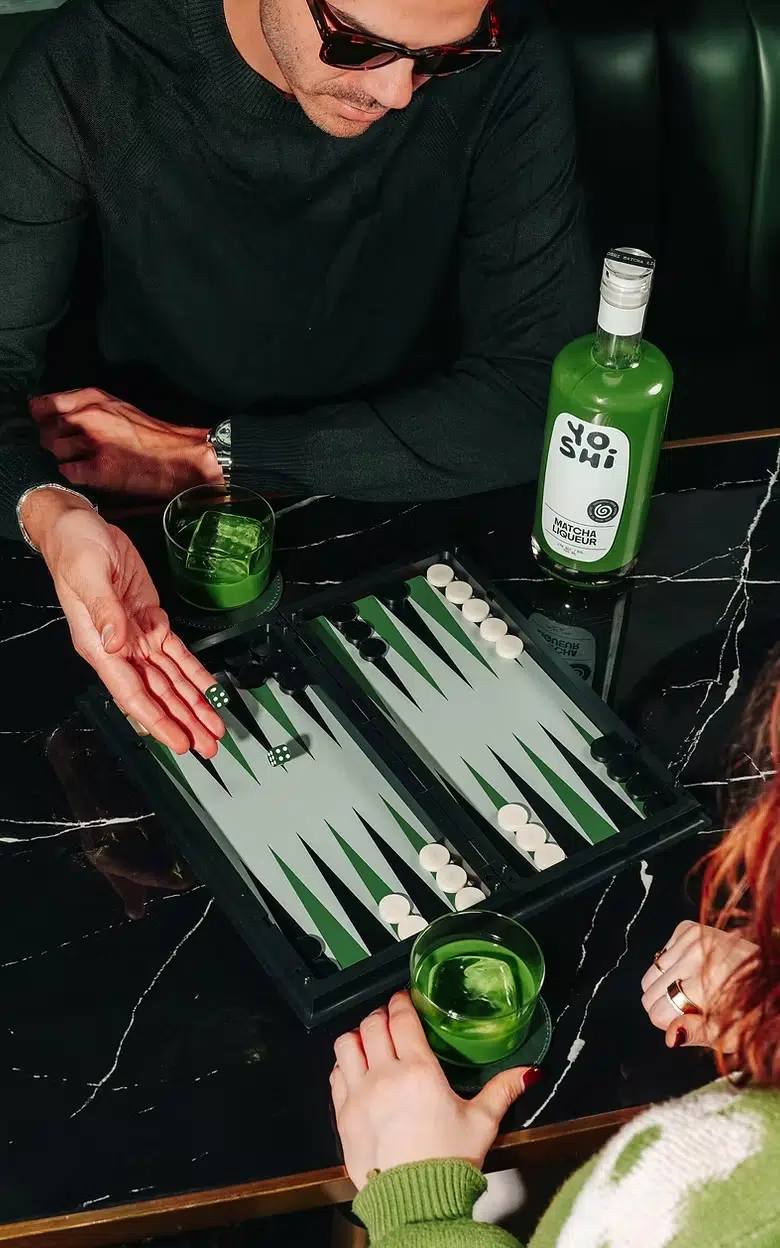
There is something particularly contemporary about the journey from investment banking to ceremonial tea by way of a cocktail shaker.
YOSHI’s appeal lies in translating a notoriously difficult ingredient into something bartenders can use consistently. Traditional matcha is sensitive to preparation, temperature, and texture. In cocktail form, those variables can become liabilities. By integrating the tea into a shelf-stable liqueur, YOSHI removes much of that friction while preserving enough of matcha’s bitterness and aromatics to remain distinctive.
That matters because a cocktail ingredient only becomes truly useful when it offers more than branding.
P.F. Chang’s is featuring YOSHI as part of its Autumn in Kyoto seasonal program, a menu built around richer, cooler-weather flavors and the idea of reworking familiar dishes and drinks through a more layered lens.
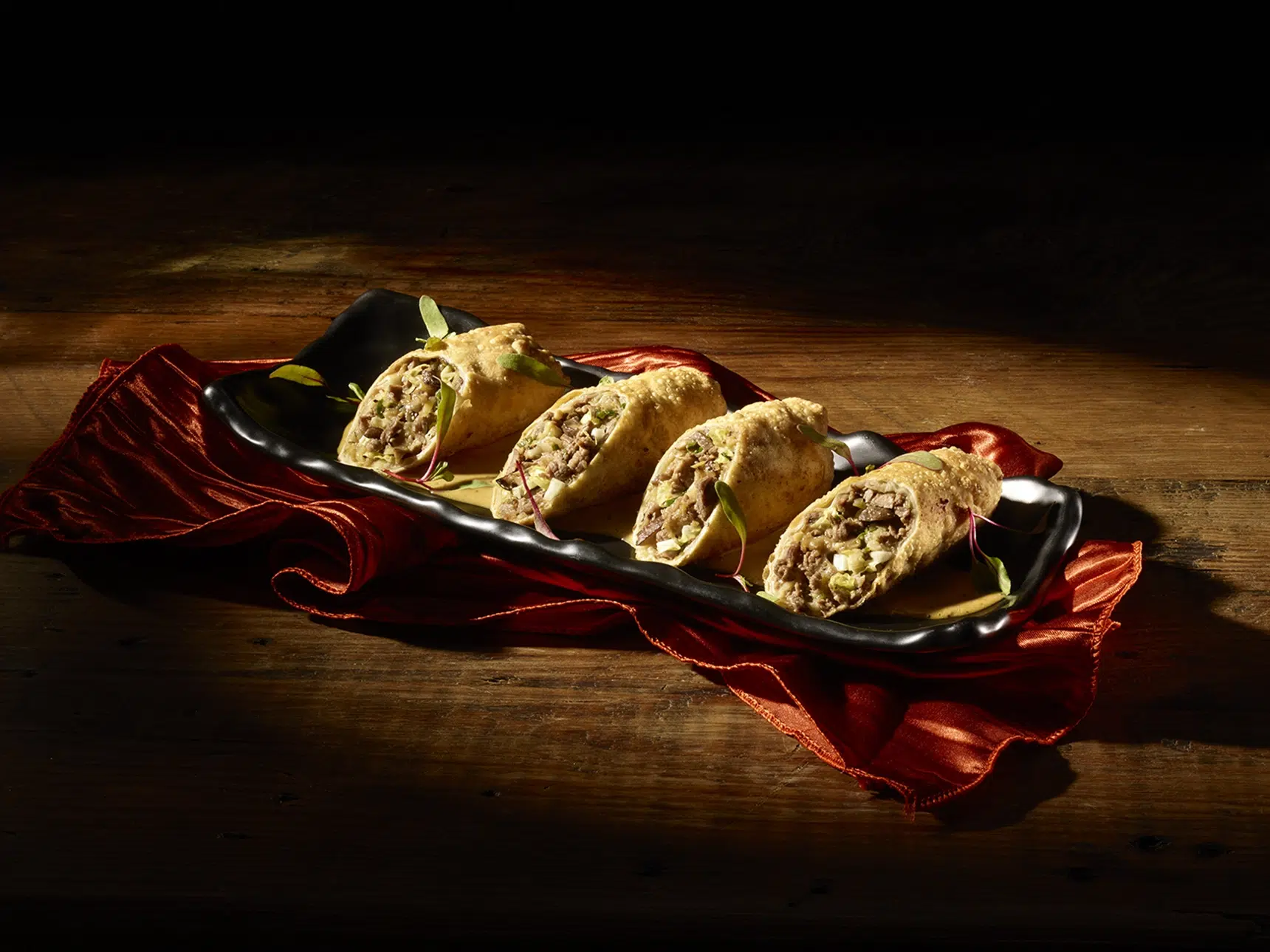
“Autumn gives us the opportunity to work with deeper, richer flavors and ingredients that feel especially craveable this time of year,” says Steve Solis, Vice President of Culinary at P.F. Chang’s. “We challenged ourselves to reimagine familiar P.F. Chang’s favorites through unexpected seasonal pairings.”
Unexpected is exactly right.
The seasonal cocktail list also includes the Kyoto Cabin, made with Woodford Reserve Bourbon, black tea, maple, and lemon, then finished with nutmeg. If the Matcha Martini is bright, vegetal and modern, the Kyoto Cabin is its darker autumnal counterpart: warmer, more familiar, and built around flavors that naturally belong together.
YOSHI, meanwhile, has ambitions beyond a single martini.
The Matcha Colada combines the liqueur with rum, coconut and pineapple juice, giving the tropical classic a greener and slightly more earthy personality. The Matcha Margarita pairs YOSHI with tequila, lime and agave, while the Matcha Mojito brings together rum, lime, mint and matcha in a combination that sounds more eccentric than it actually tastes.
That makes sense. Matcha has bitterness, freshness, and enough vegetal character to work against sweetness rather than simply add to it. It can sharpen pineapple, control coconut, and bring tension to agave. In other words, it behaves more like a serious cocktail component than a flavored syrup.
Its visual appeal is unavoidable, of course.
Few ingredients have been more photogenic over the past decade than matcha, whose green hue has made it a darling of social media and modern café culture. But color can be both an asset and a distraction. The better matcha drinks understand that the visual hook may bring a guest to the glass, but balance is what keeps the drink there.
That is particularly important because matcha has already endured the indignity of becoming shorthand for trendiness. It has appeared in croissants, cakes, doughnuts, lattes and almost anything else capable of being tinted green. Some of it has been excellent. Some of it has merely been green.
A serious matcha cocktail has to offer more than spectacle.
YOSHI’s advantage is that the tea is not an accessory. It is the foundation of the liquid, which gives bartenders a far more coherent starting point than simply adding matcha powder to a finished recipe and hoping enthusiasm will do the rest.
P.F. Chang’s seasonal program also includes its Spirit of the Zodiac: Spirit of Strength campaign, supporting Starlight Children’s Foundation through guest donations and the sale of a limited-edition horse plush. It is a worthwhile initiative, but fortunately not one that distracts from the broader point of the menu itself.
That point is evolution.
There is a pleasing cultural symmetry in a restaurant known for wok-fired classics serving a cocktail built around a Japanese tea tradition, reinterpreted through an American liqueur brand and folded into a modern Asian-American dining experience. Food and drink have always moved this way: ingredients travel, cultures adapt them, and eventually someone adds ice.
The question is whether the result respects the ingredient enough to make the journey worthwhile.
In this case, it does.
The Matcha Martini is not trying to replace the espresso martini, nor should it. It belongs to a different mood altogether: less roasted, less sweet, more vegetal, and just strange enough to feel new without becoming difficult.
That may be its greatest strength.
For wagyu egg rolls, duck wings, sushi boats, and perhaps dessert, the drink makes an unexpectedly persuasive case for matcha as more than a passing obsession. It works because the tea is allowed to remain what it is: bitter, aromatic, distinctive and slightly unruly.
Which, for a cocktail, is often exactly what you want.
And if all else fails, there is still the name.
Good luck.