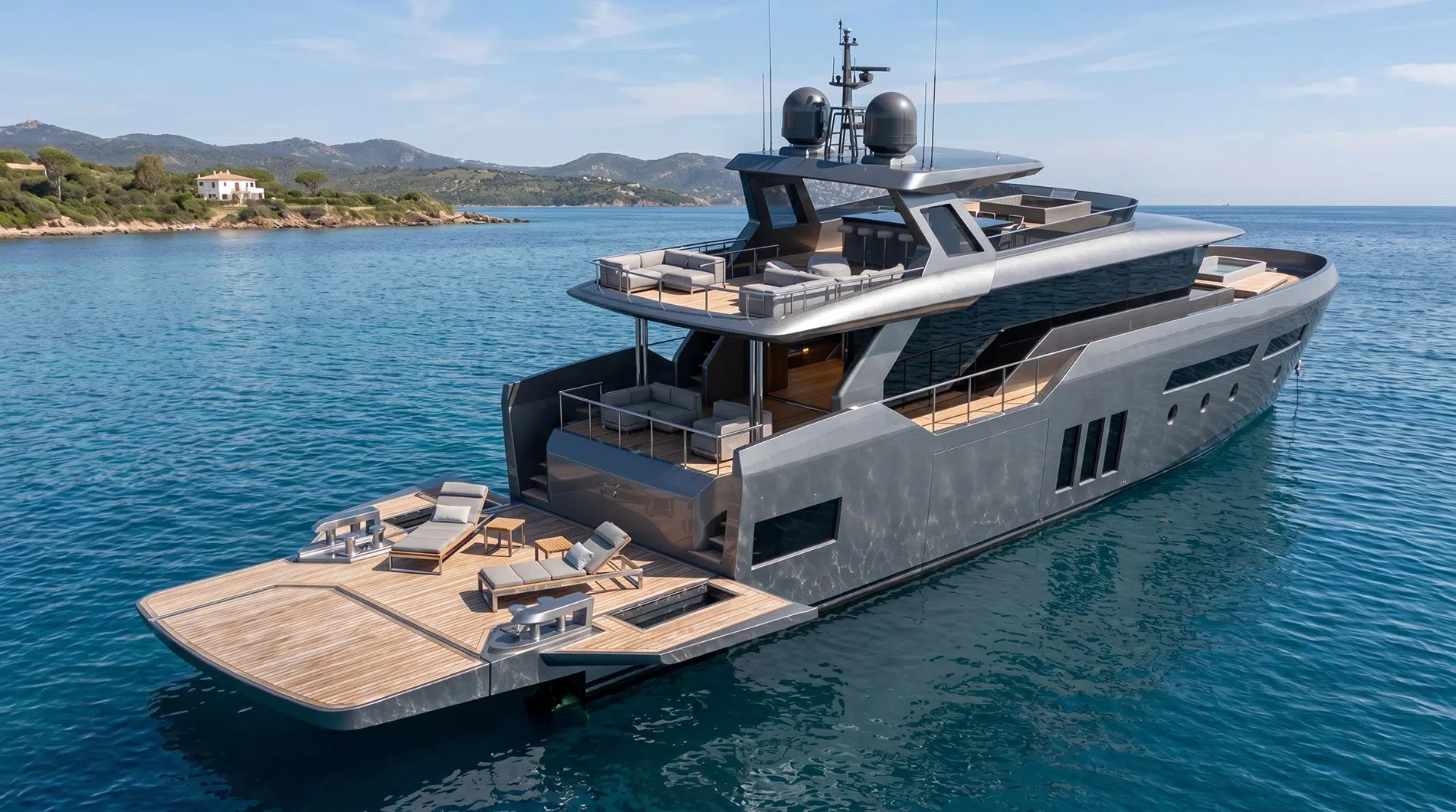
There is a particular kind of excess that has long defined the superyacht world: more length, more decks, more volume, more everything. Wanderlust95 proposes something rather different. At 32.49 metres, or roughly 106 feet, Franco Gnessi’s latest explorer concept suggests that the next frontier in luxury yachting may have less to do with scale than with how intelligently every metre is used.
Conceived by the Italian architect and principal of Dynaship Yacht Design, Wanderlust95 is envisioned as a compact explorer capable of venturing well beyond the familiar circuit of Mediterranean ports while retaining the comfort, visual drama and increasingly important environmental considerations expected of a contemporary yacht.
Its dimensions are deliberately restrained by modern superyacht standards. Yet that is precisely the point.
Rather than attempting to shrink the architecture of a much larger yacht, Gnessi has approached Wanderlust95 as an exercise in spatial efficiency, giving exterior areas multiple functions and designing interiors to maintain a sense of openness well beyond what the yacht’s length might suggest.
The result is a vessel conceived for owners who want to travel rather than simply arrive.
At the heart of that proposition is a diesel-electric hybrid propulsion system paired with substantial onboard battery capacity. According to the concept specifications, Wanderlust95 would be capable of operating under full electric power for periods of silent cruising, an increasingly attractive capability for owners navigating protected coastlines, marine reserves and destinations where noise and emissions can fundamentally alter the experience.
There is something especially appropriate about approaching an isolated anchorage without the persistent hum of diesel machinery. Silent operation changes the relationship between yacht and surroundings: conversations remain quiet, wildlife becomes easier to observe, and the sea itself becomes the soundtrack.
The hybrid architecture is intended to work alongside low-emission generators, while specialized glazing helps reduce ultraviolet exposure and solar heat entering the yacht. The latter may sound like a relatively small architectural detail, but reducing heat gain can lessen the burden placed on air-conditioning systems, one of the considerable energy demands aboard a yacht cruising in warm climates.
Wanderlust95 is therefore not conceived as sustainability theater. Its environmental thinking is embedded in the way the vessel would operate.
The exterior architecture follows a similarly pragmatic philosophy.
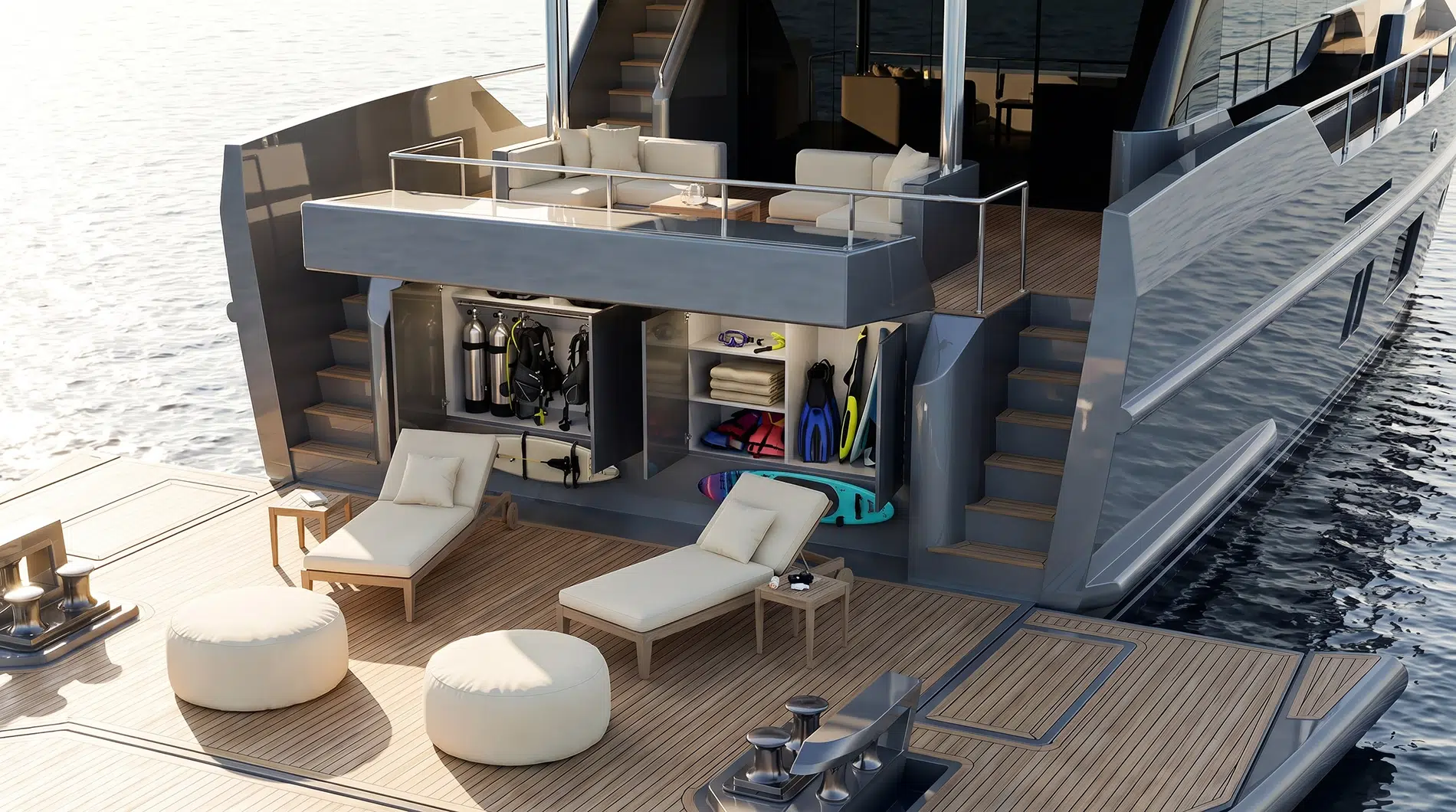
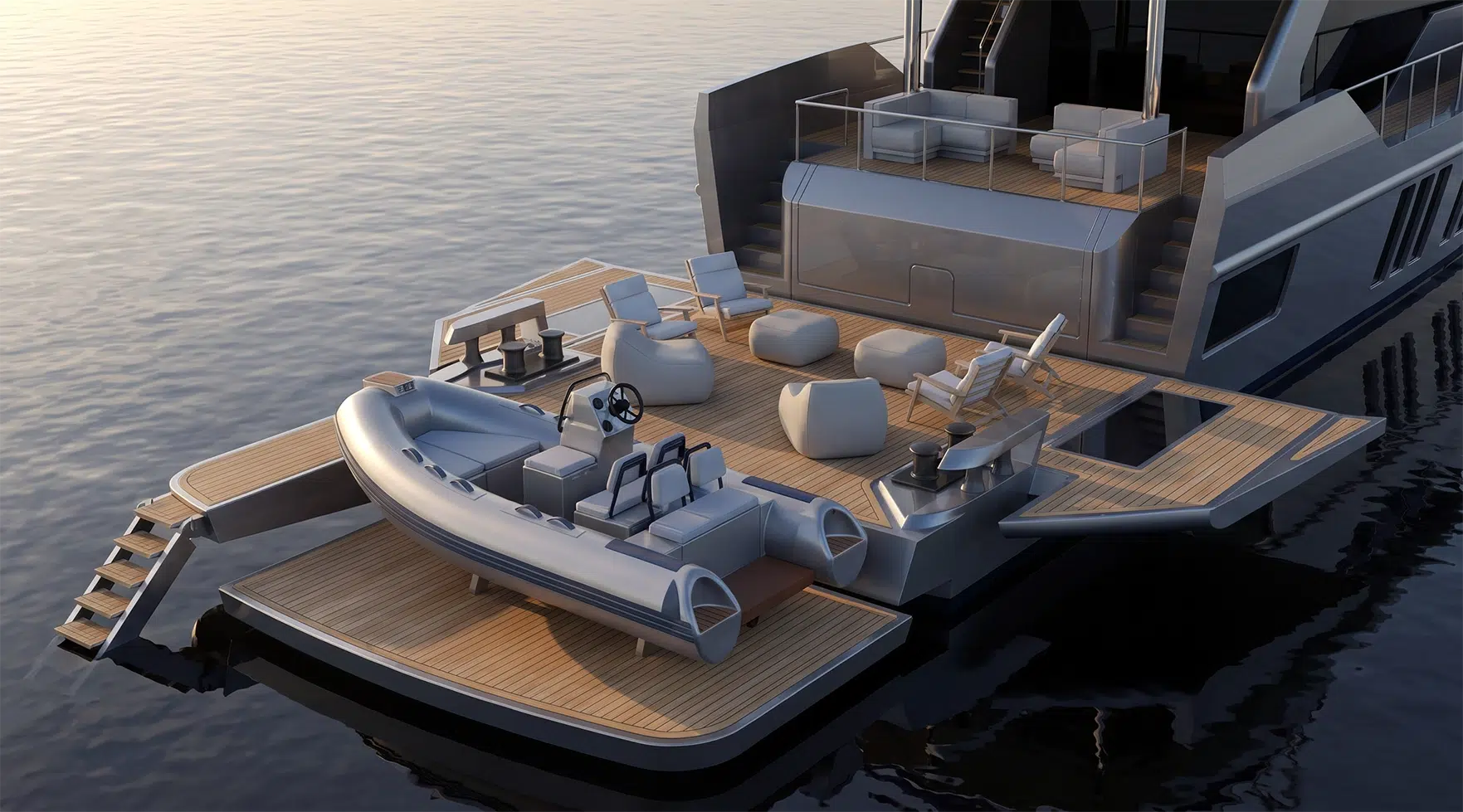
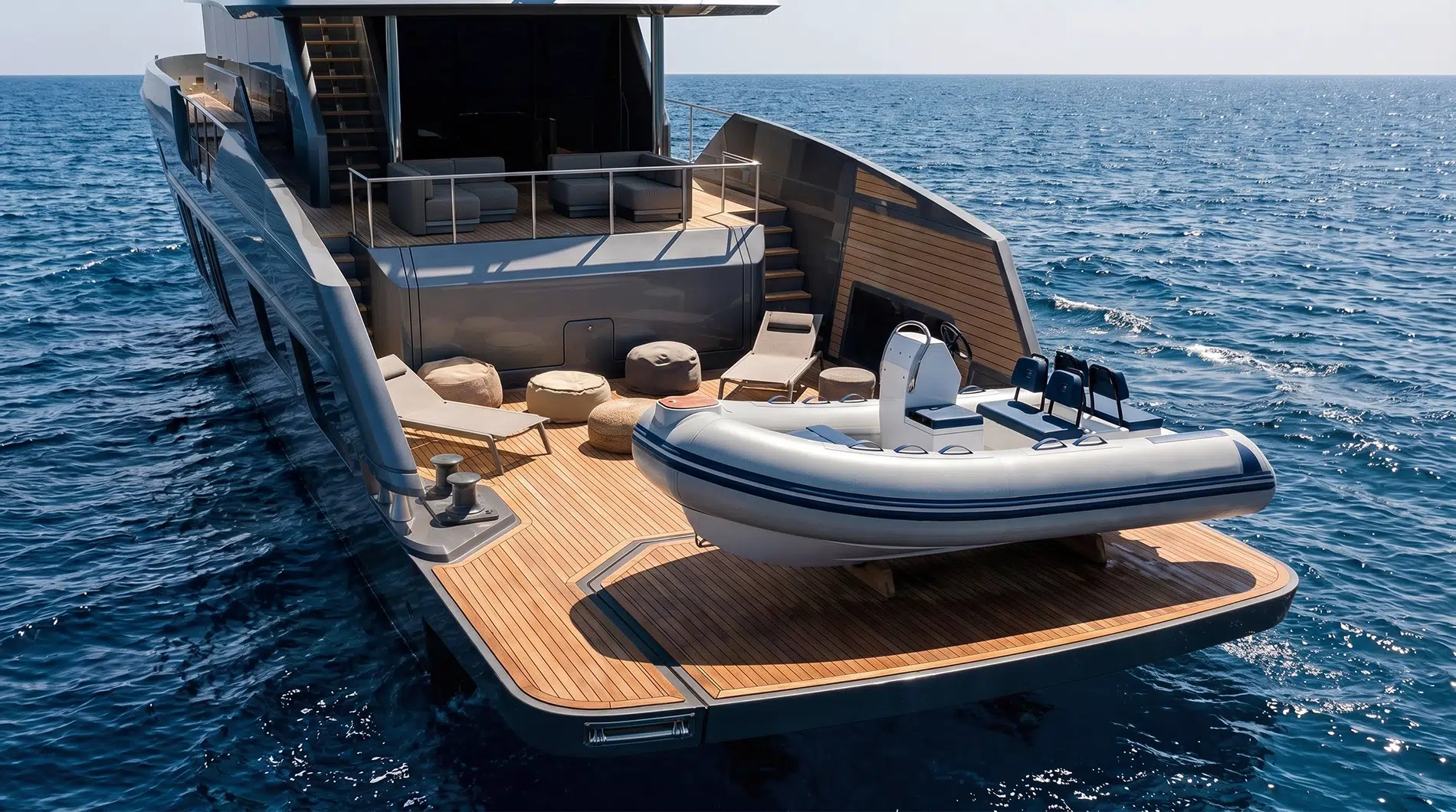
A large aft beach club serves as one of the yacht’s defining spaces. Opening bulwarks and lowering sections of the platform transform the stern into a broad terrace sitting almost directly on the water. At anchor, the traditionally defensive architecture of an explorer yacht effectively disappears, replaced by a waterside living room.
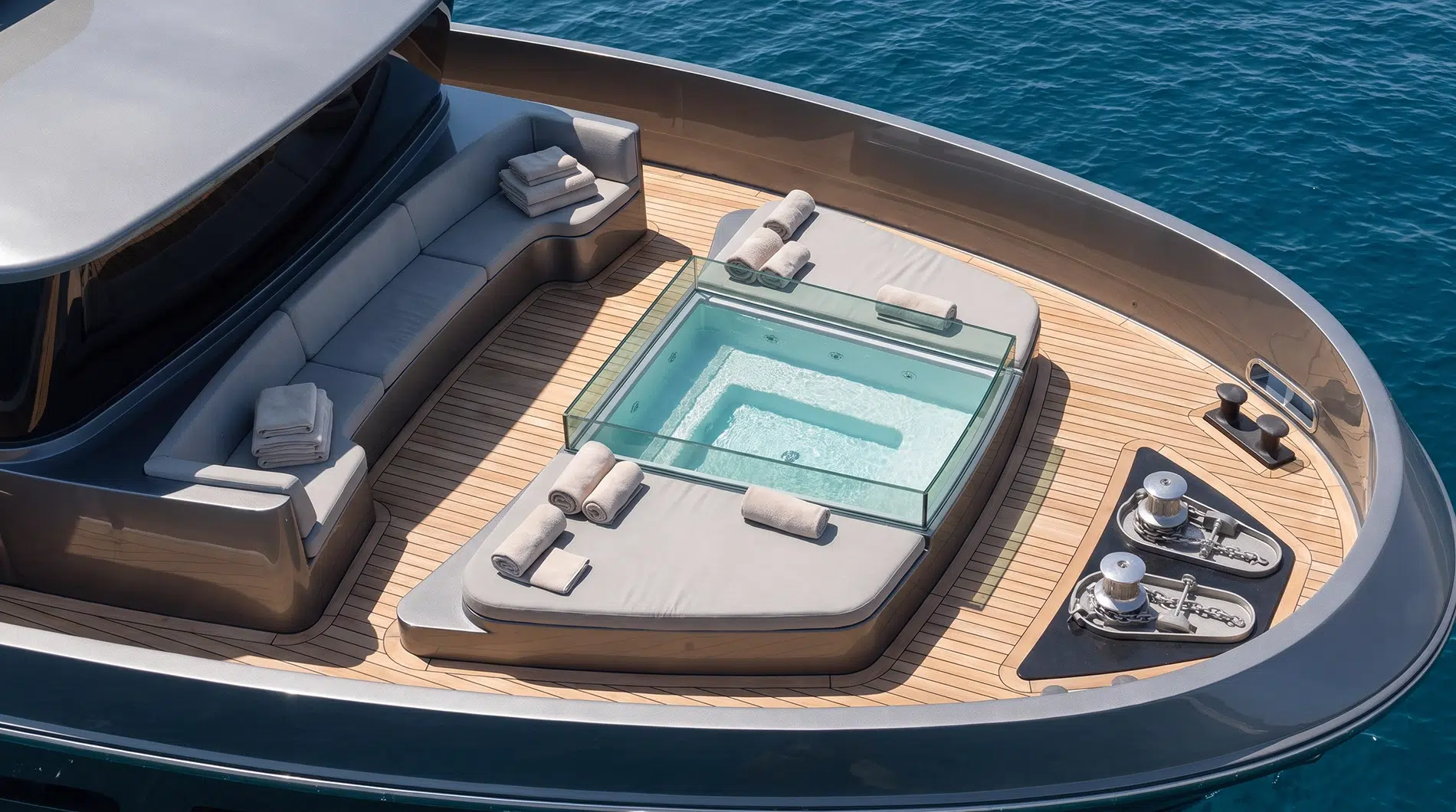
It is an increasingly important evolution in yacht design. Owners may still want the range, seaworthiness and independence associated with an explorer, but they are no longer willing to sacrifice the connection to the ocean that has become one of modern yachting’s greatest luxuries.
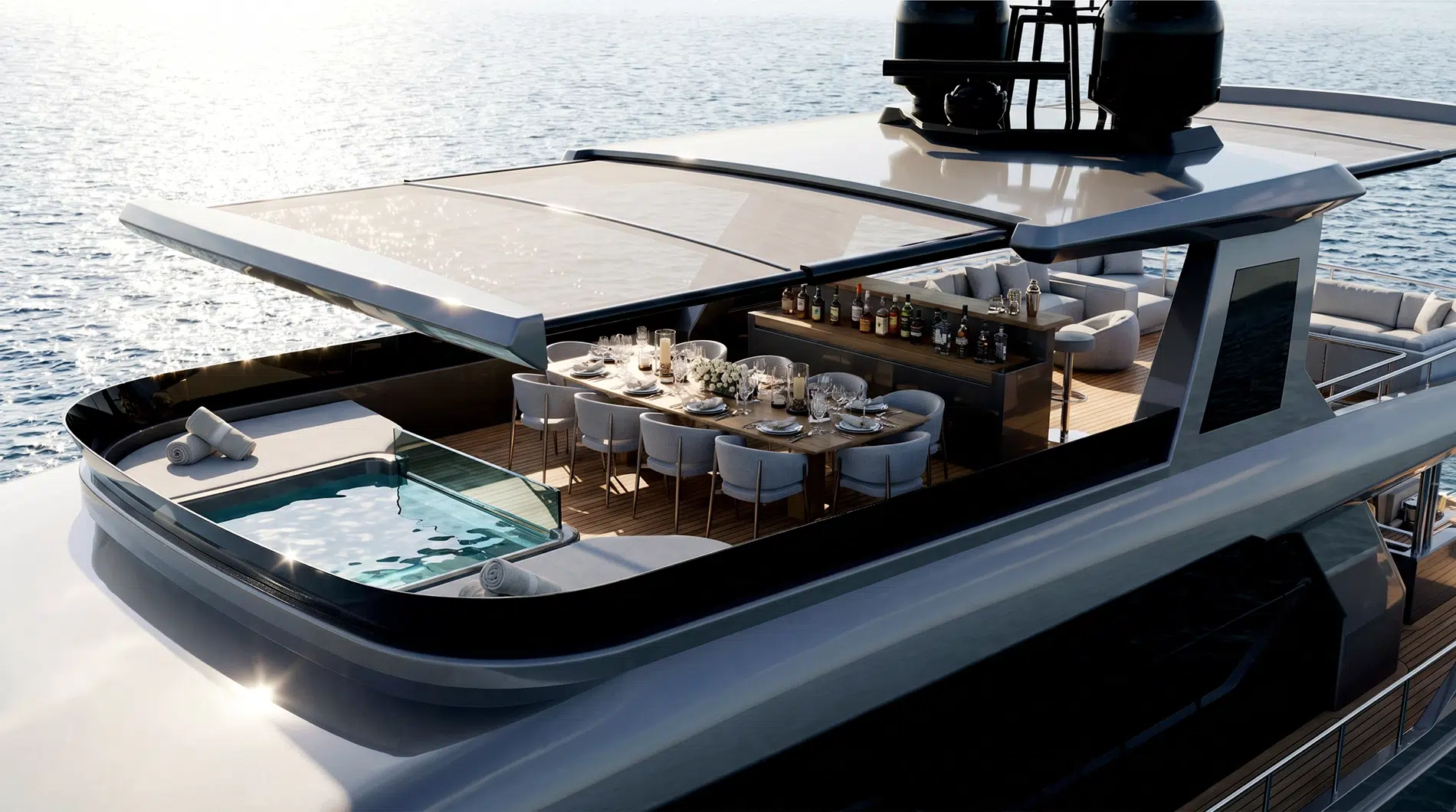
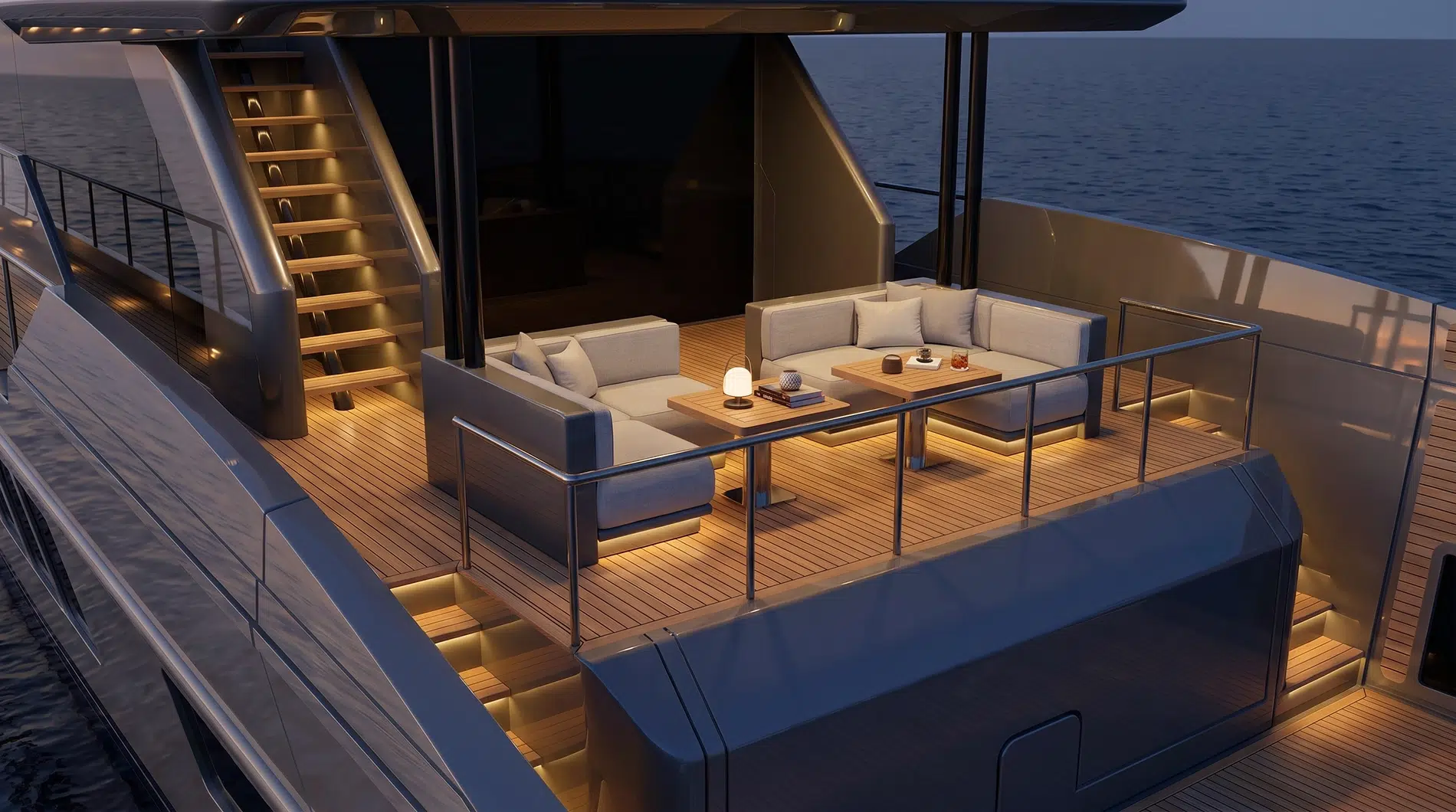
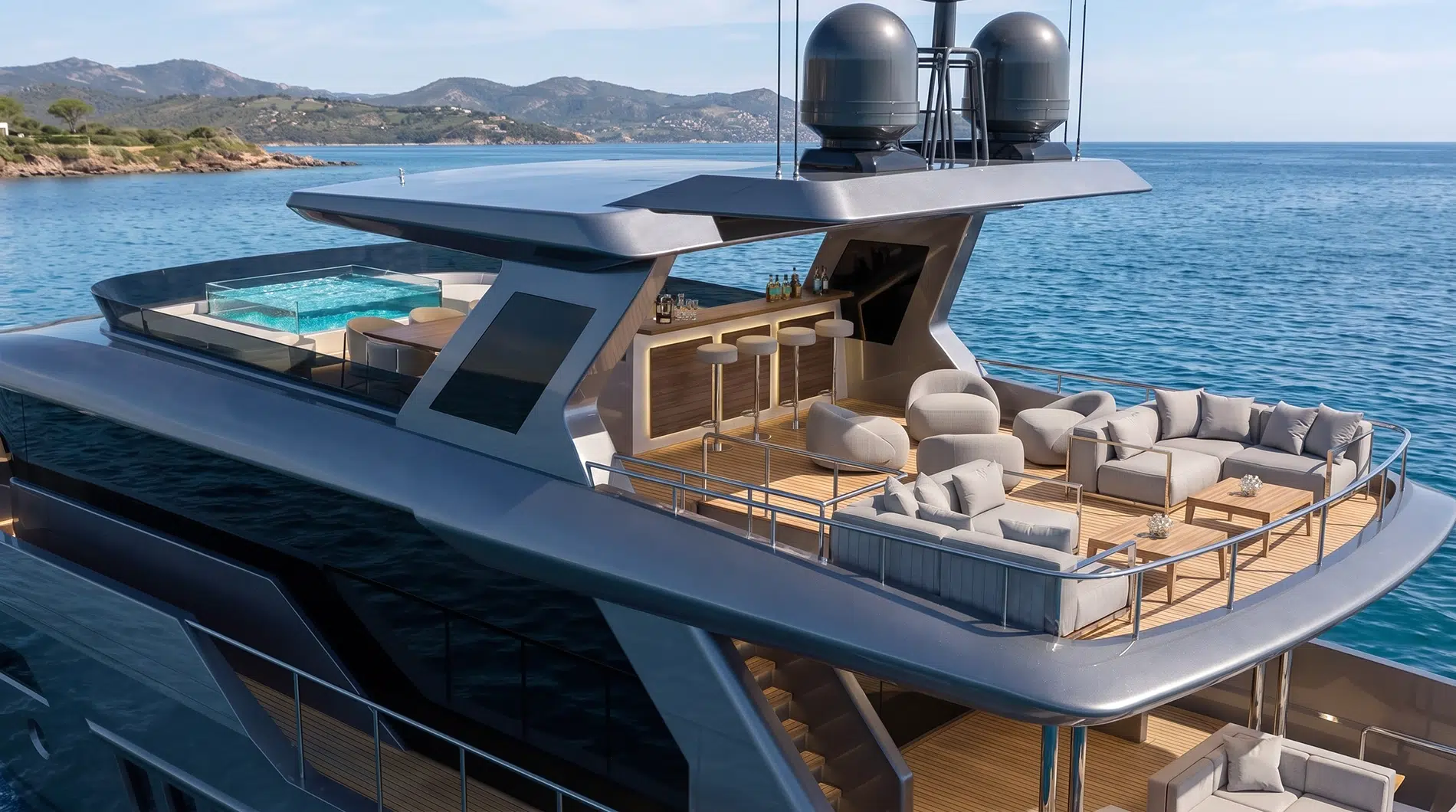
Elsewhere, social spaces are designed to change according to the rhythm of the day. A deck arranged for lunch can transition into a sun lounge in the afternoon or an open-air gathering place after sunset. The objective is not simply to create more spaces, but to allow the same space to perform several roles.
Tenders and water toys, meanwhile, are intended to disappear into dedicated storage areas toward the bow, preventing the equipment associated with exploration from consuming the yacht’s most valuable guest real estate.
Inside, glass becomes one of Wanderlust95’s most important materials.
The main saloon is conceived with expansive floor-to-ceiling glazing, visually dissolving the boundaries between interior and sea. Instead of creating the enclosed sensation sometimes associated with traditional expedition vessels, Gnessi has sought to make the surrounding landscape part of the interior architecture.
That approach could prove particularly compelling in the destinations for which yachts such as Wanderlust95 are designed. Imagine Norway’s fjords unfolding beyond the glass, a near-empty anchorage in the Cyclades, or the changing colors of an Adriatic sunset becoming the backdrop to dinner.
Accommodation is planned for approximately eight to 10 guests, depending on the final configuration, with separate crew circulation designed to preserve privacy and service efficiency. Customization would naturally play a significant role should the concept advance to construction, and the yacht has been envisioned for either fiberglass or marine-grade aluminum construction.
The latter would be particularly appropriate for owners with genuinely adventurous itineraries in mind.
Yet Wanderlust95 may ultimately be most interesting because of what it does not attempt to be.
This is not another 80-metre floating palace with a nightclub, cinema, helipad and several swimming pools competing for attention. Nor is it a rugged expedition vessel that asks owners to compromise on contemporary luxury in exchange for capability.
Instead, Gnessi has positioned the yacht in a compelling middle ground: substantial enough for serious cruising, compact enough to reach destinations that can prove less accessible to considerably larger vessels, and technologically sophisticated enough to reflect a changing attitude toward how luxury should interact with the environment.
That change is becoming increasingly visible throughout the yacht industry. The new measure of sophistication is no longer simply gross tonnage or the number of amenities a designer can squeeze onto a general arrangement. Efficiency, flexibility, range, silence and access are becoming luxuries in their own right.
For an owner whose idea of yachting involves waking to an empty horizon rather than a crowded marina, Wanderlust95 presents an intriguing proposition.
The name, in this instance, feels entirely appropriate.