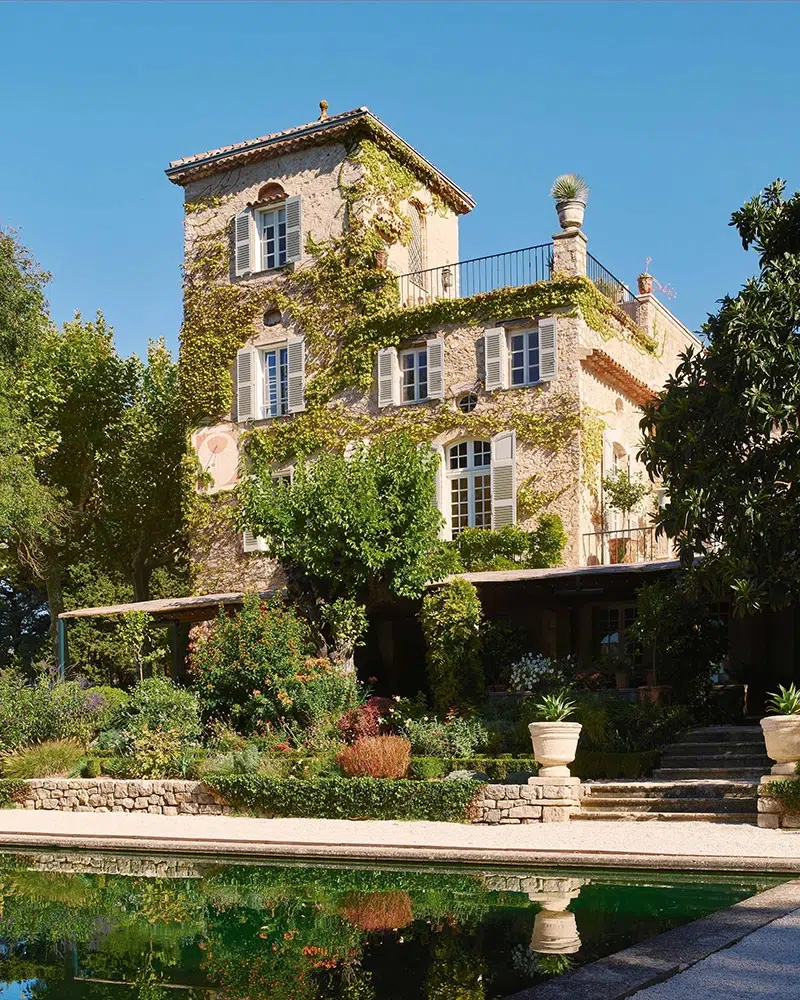
At Château de La Colle Noire, Christian Dior found the kind of luxury that could not be constructed in a Paris salon. It was quieter and more elemental: almond trees flowering at winter’s end, jasmine carrying through warm evenings, and the particular stillness of Provence after the heat of the day.
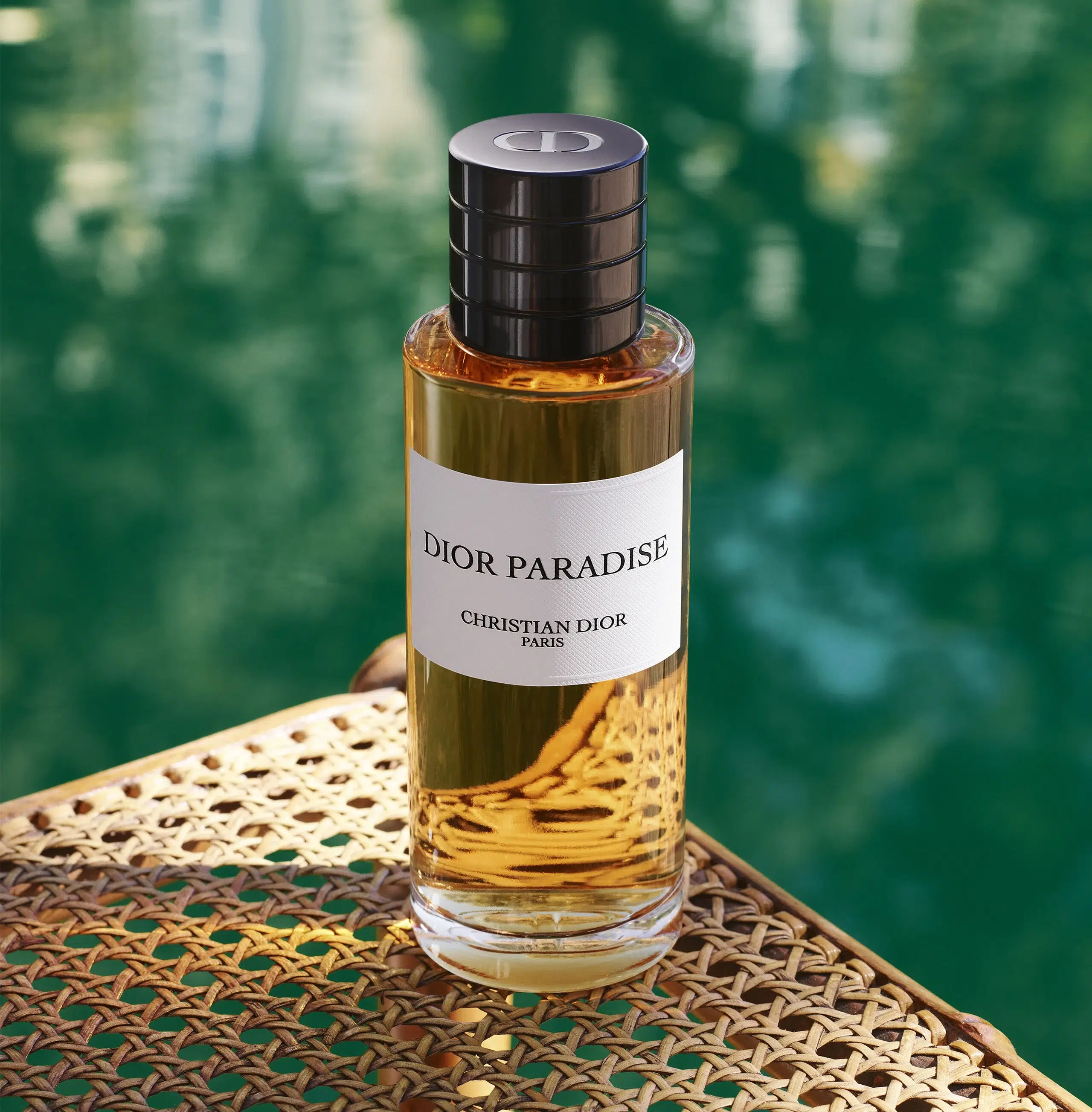
That private world now inspires Dior Paradise, the latest fragrance to join La Collection Privée Christian Dior. Created by Francis Kurkdjian, Dior’s Perfume Creative Director, the scent is built around a deceptively simple idea: happiness—not as spectacle, but as a state of comfort, memory, and return.
“The aim and the goal of everything is about happiness,” Kurkdjian has said. “Bringing happiness and building happiness.”
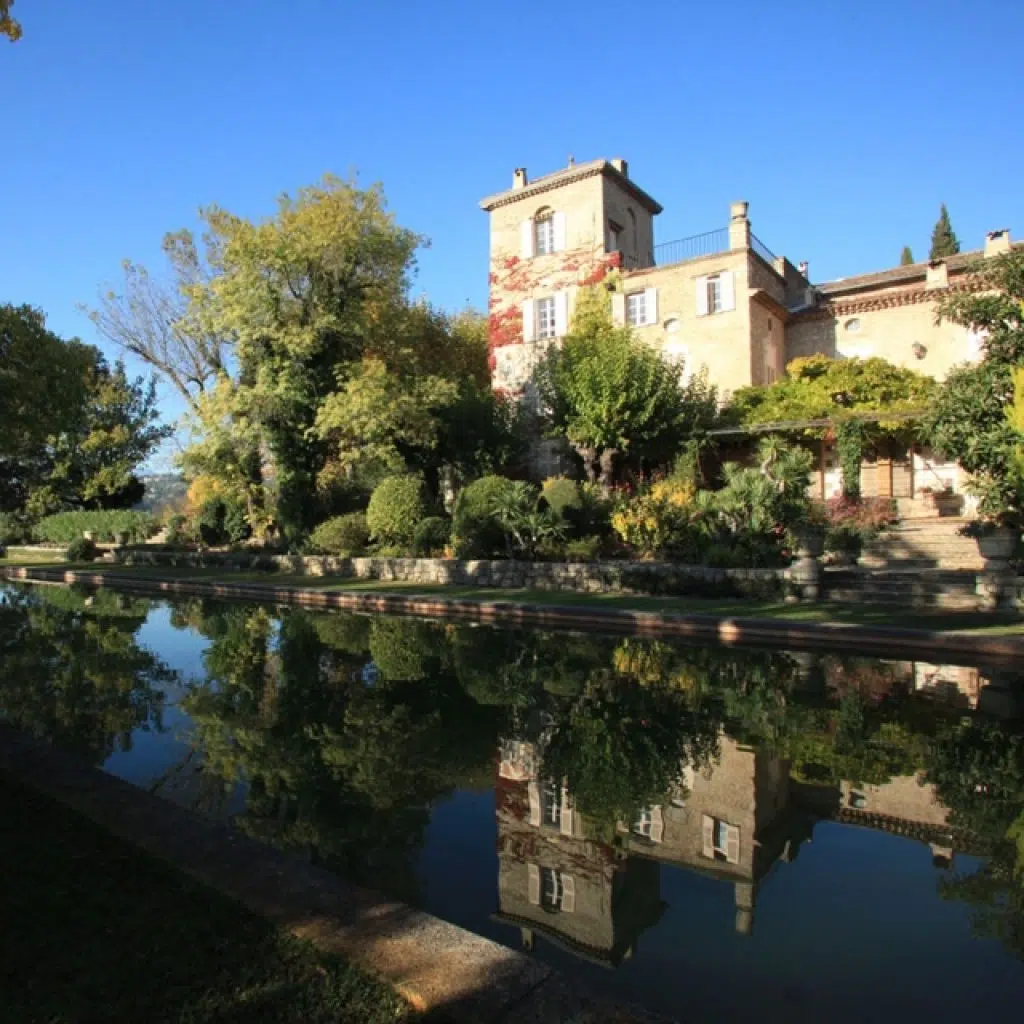
For Dior, that sentiment leads naturally to La Colle Noire.
Set near Montauroux, between the Var and Alpes-Maritimes and within reach of Grasse, the 19th-century château became Christian Dior’s Provençal refuge in 1950. He restored and reshaped the estate as a place apart from the pace of Paris, surrounding it with gardens, orchards, and hundreds of almond trees.
La Colle Noire was not simply a country house. It represented a return to something more personal: the enclosed gardens of Dior’s childhood, the scent of flowers after dark, and the possibility of living once again as “simple Christian” rather than as the public figure behind one of the world’s most influential couture houses.
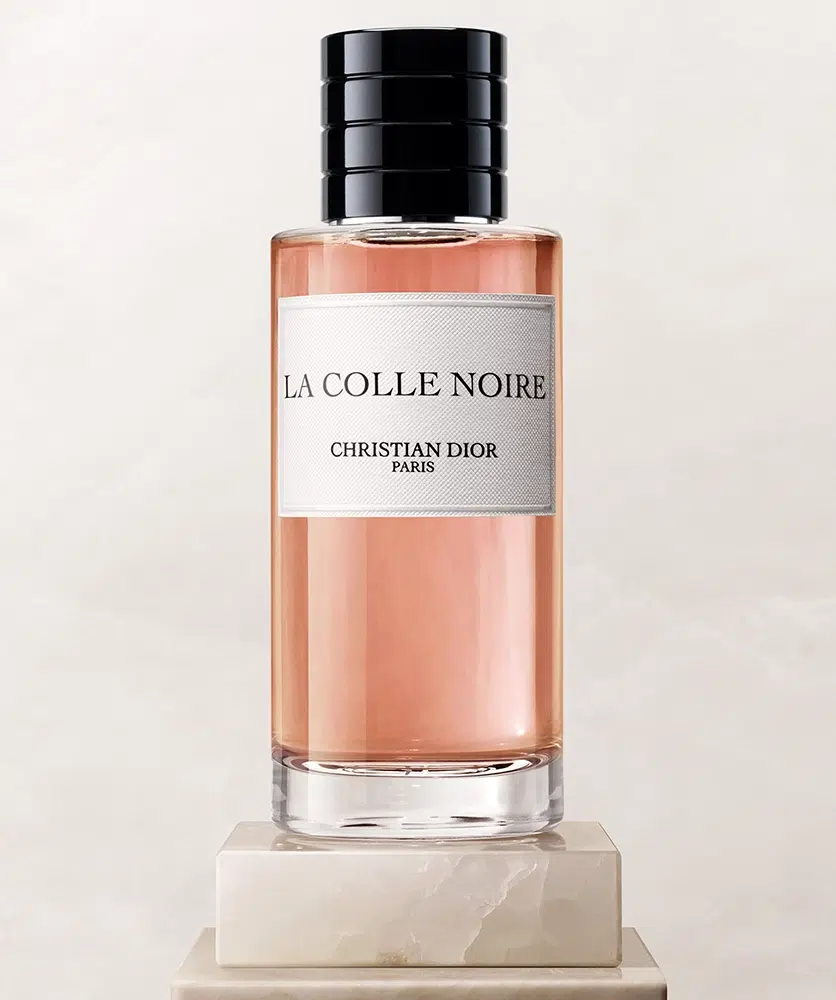
The estate remains central to Dior’s fragrance mythology. Its lily of the valley recalls Diorissimo, created in 1956, while the May roses grown across the property later inspired La Colle Noire, another fragrance within the house’s private collection. Dior Paradise continues that olfactory biography, but shifts its attention toward the orchard.
Kurkdjian chose almond as the fragrance’s emotional and sensory trigger. It is an inspired choice. The note is instantly familiar yet difficult to define, simultaneously creamy, bittersweet, powdery, and edible. Here, it evokes not only the trees Dior planted at La Colle Noire but also the comforting scent of warm pastry and sun-dried kernels.
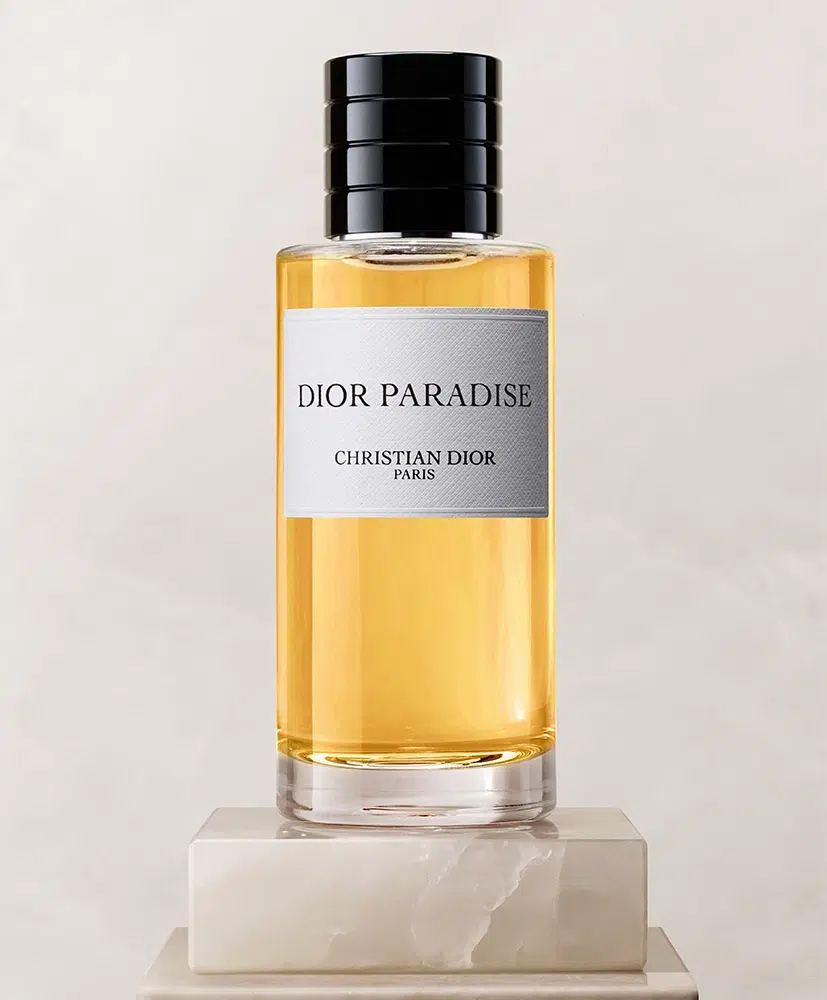
The fragrance opens brightly with mandarin and lime, introducing the crispness of citrus before the almond begins to emerge. Kurkdjian describes the effect as an “irresistible biscuit,” and the comparison captures the composition’s appealing duality: polished enough for La Collection Privée, yet grounded in something intimate and almost domestic.
The almond does not remain sugary or literal. A floral-woody accord gives the fragrance structure, while roasted tonka bean deepens the composition with warmth and a softly toasted sweetness. The result moves between brightness and comfort, with citrus light at the opening and a richer, enveloping character as it settles on the skin. Dior describes the scent as a celebration of Christian Dior’s beloved Provençal South of France, composed around mandarin, almond, woods, and tonka bean.
There is nostalgia here, but it is not sepia-toned. Dior Paradise does not attempt to reproduce the past exactly. Instead, it captures the way memory behaves: one detail becoming larger than the whole, a scent reopening a landscape, an orchard recalled through the bitterness of almond and the glow of citrus.
That is what makes the fragrance more compelling than a conventional summer launch. Its Provençal character is not expressed through predictable lavender fields or an overly literal bouquet. Instead, Kurkdjian looks toward the orchard and the kitchen, toward warmth, texture, and the kinds of smells that often carry the strongest emotional charge.
Christian Dior understood fragrance as an extension of couture from the beginning. In 1947, alongside his first fashion collection, he introduced Miss Dior and declared his ambition to be both couturier and perfumer. Dior Paradise belongs to that same tradition: a fragrance conceived not merely as an accessory, but as a complete silhouette in scent.
Its mood is summery without being fleeting, outdoorsy without becoming green, and comforting without surrendering refinement. Mandarin gives it radiance; almond lends softness and character; woods provide shape; tonka bean leaves a warm, lingering trace.
Most importantly, Dior Paradise feels transportive. It suggests the late-afternoon light of southern France, the faint sweetness of flowering trees, and the quiet pleasure of returning somewhere that feels deeply familiar.
The fragrance may have been created around happiness, but its true subject is perhaps more precise: the happiness of recognition.
At La Colle Noire, Christian Dior built a private paradise from gardens, memory, and stillness. Francis Kurkdjian has now translated that world into perfume—bright with citrus, warmed by almond, and unmistakably Dior.
La Collection Privée Christian Dior, Dior Paradise
From £255 for 100 ml.