This season, fine jewelry is no longer defined by a single tradition or technique. Instead, it unfolds as a layered dialogue, where heritage craftsmanship, global culture, and emerging technology converge to shape a new design language. Across continents and disciplines, designers are rethinking not only how jewelry is made, but what it represents: memory, identity, innovation, and, increasingly, purpose.
At the heart of this evolution is a renewed reverence for material, its history, its imperfections, and its ability to carry meaning.
Reframing Heritage in Polki Diamonds
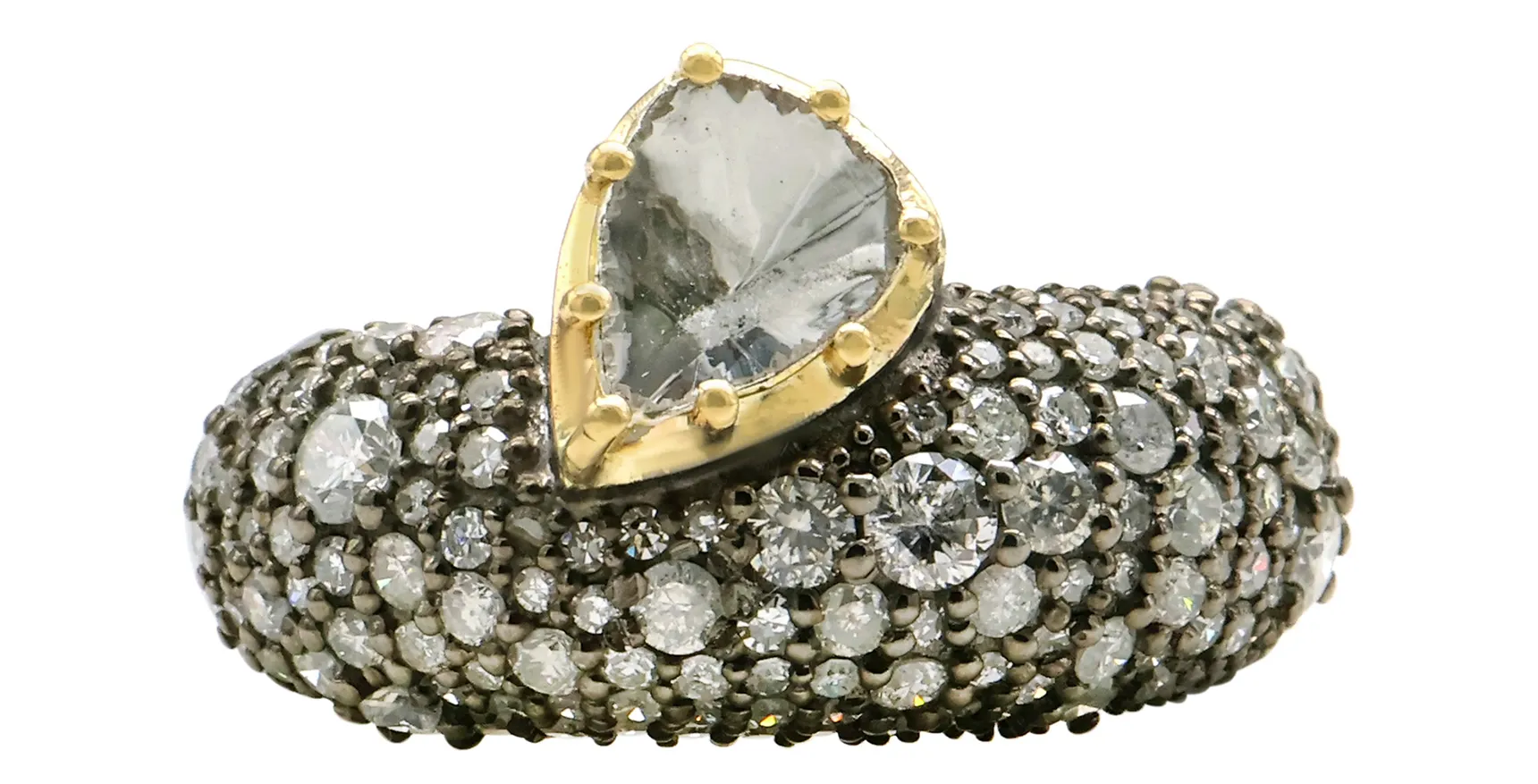
Polki diamonds, uncut, irregular, and rich with natural texture, form the foundation of the collection. Unlike faceted stones engineered for brilliance, these diamonds carry a quieter presence, their imperfections lending depth and individuality to each piece. Sourced and handcrafted in Jaipur, they reflect a lineage of craftsmanship rooted in centuries-old techniques.
Architectural influence, particularly from Mughal design, shapes the structure of the pieces. Stones are deliberately framed, soft curves counterbalanced by precise lines, creating compositions that feel both grounded and fluid. The result is jewelry that resists ornamentation for its own sake. Instead, it embraces a kind of restrained complexity, where every detail, from oxidized silver accents to halo-like settings, contributes to a sense of layered history.
The effect is not nostalgic, but deeply personal. Heritage, here, becomes an emotion rather than a reference, something felt rather than seen.
Craft as Cultural Dialogue
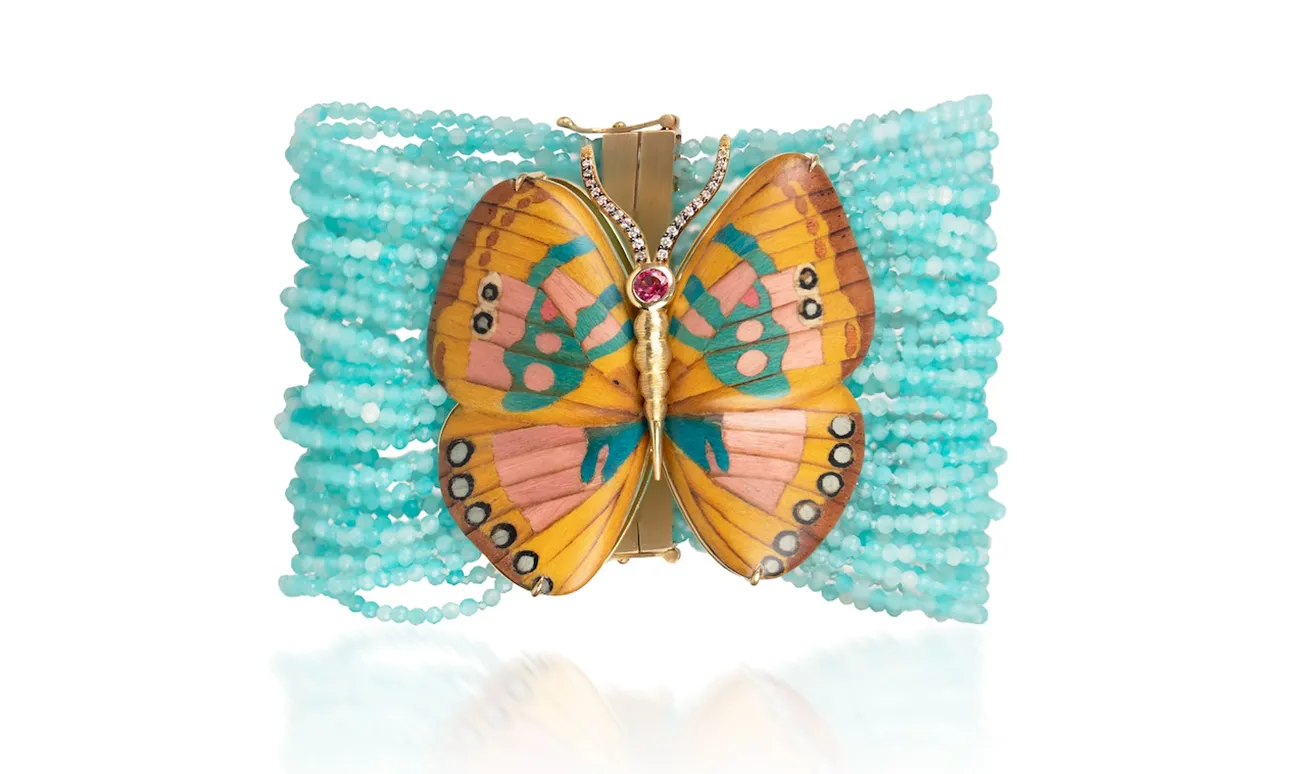
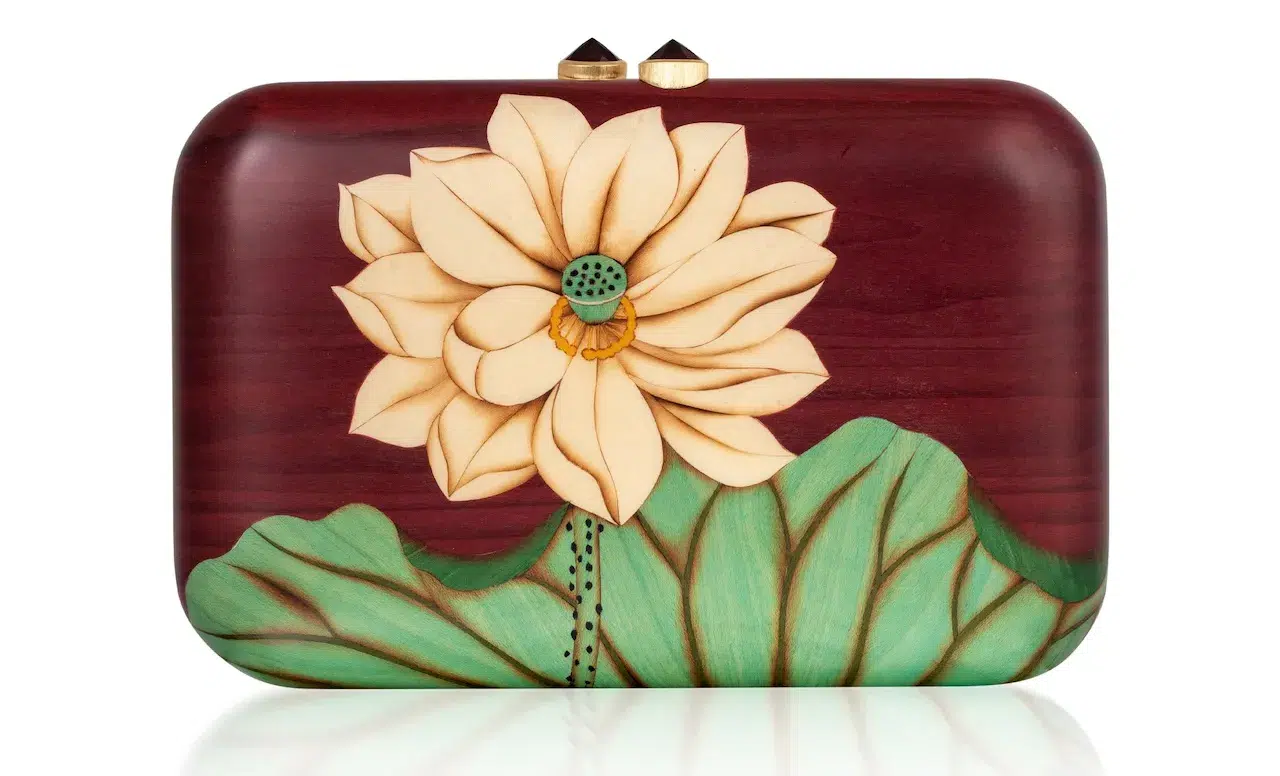
At the recent Doha Jewellery and Watches Exhibition, Furmanovich presented new additions to her Kashmir Collection, including pieces crafted from papier-mâché, a material more commonly associated with decorative objects than fine jewelry. Created in collaboration with multigenerational artisan families in Srinagar, the works bridge disciplines, elevating a regional craft into a global luxury context.
A pair of earrings and a sculptural marquetry cuff, inspired by the lotus gardens of Kashmir, exemplify this approach. The intricate surfaces, rich in pattern and narrative, are balanced by clean, modern silhouettes. Rather than preserving tradition in static form, Furmanovich allows it to evolve, retaining its essence while adapting it to a new audience.
The result is a dialogue between past and present, where craftsmanship is not only preserved but reimagined as a living, evolving language.
When Technology Becomes Ornament
Her latest creation is a decorative case designed for the Oura Ring, transforming a piece of wearable technology into an object of personal expression. The design is both considered and precise: it covers only the visible surface of the ring, leaving its sensors unobstructed while introducing elements of color, texture, and light.
Customization lies at the center of the concept. Clients can select enamel finishes or incorporate delicate diamond accents, allowing the piece to align seamlessly with their existing jewelry. The result is not an accessory layered onto technology, but a thoughtful integration in which functionality and aesthetics coexist without compromise.
In this context, innovation does not replace tradition; it extends it.

Objects of Knowledge and Legacy
The volume traces both heritage and evolution, capturing how a legacy brand maintains relevance through innovation while remaining anchored in its foundational codes. It serves as a reminder that luxury is not only created, but also studied, collected, and passed forward.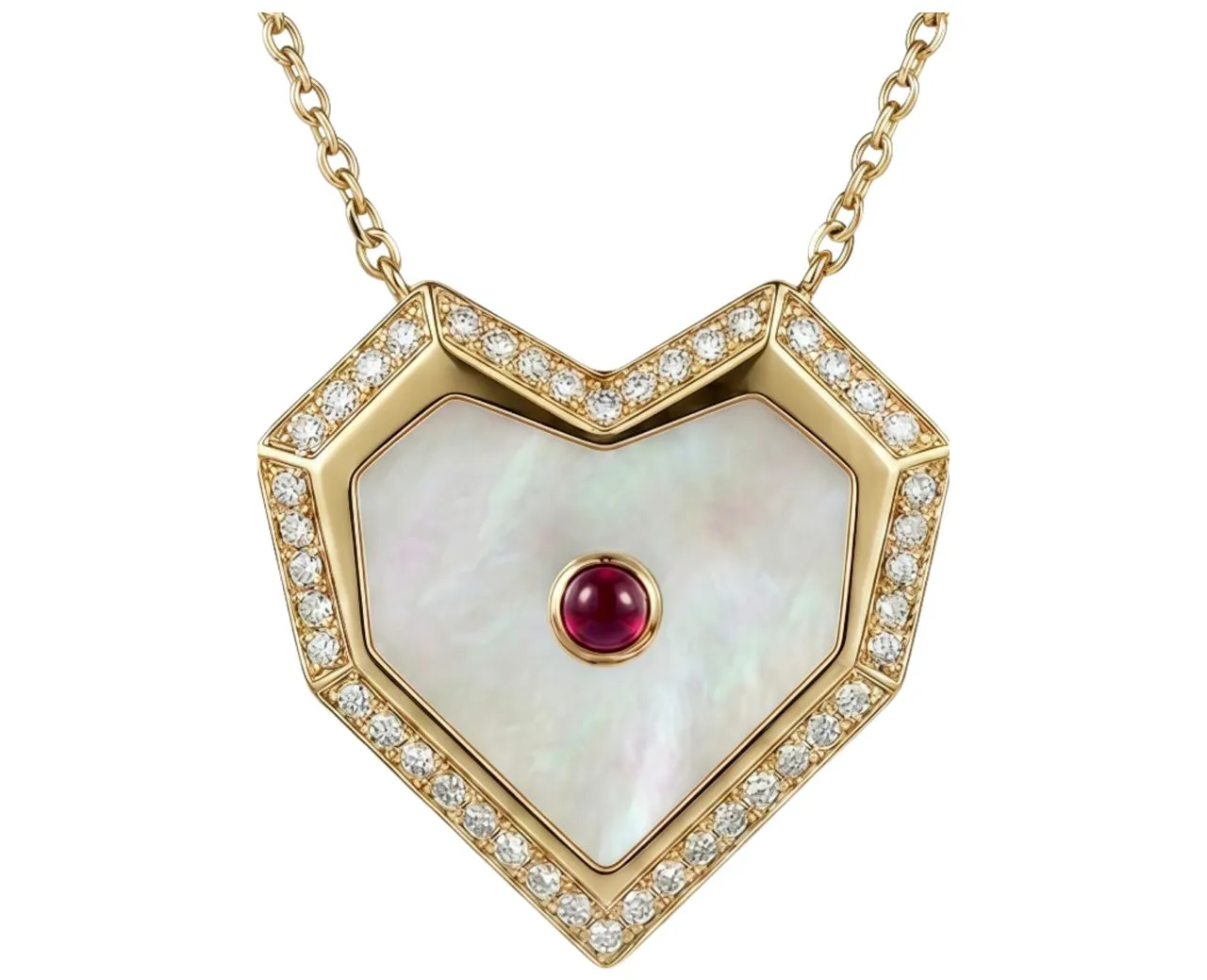
Amal Necklace, Lana Al Kamal Jewelry
Jewelry With Purpose
At the center of the project is a single, symbolic piece: a geometric heart-shaped pendant crafted in 18k gold. Mother-of-pearl, diamonds, and a cabochon ruby come together in a design that speaks to resilience and strength, while proceeds from the piece directly support programs for women facing cancer.
Here, jewelry transcends adornment. It becomes an instrument of connection, linking craftsmanship with compassion, and design with tangible impact.
A New Global Language
Taken together, these designers reveal a profound shift in contemporary jewelry. No longer confined to tradition or trend, the discipline now operates as a fluid exchange between cultures, materials, technologies, and ideas.
Whether expressed through the raw poetry of polki diamonds, the revival of Kashmiri craft, the refinement of wearable technology, or the integration of purpose-driven design, each piece reflects a broader evolution. Jewelry is no longer simply worn; it is experienced, interpreted, and, ultimately, lived with.
These are the new codes of craft and innovation, quietly redefining what fine jewelry can be, and what it can mean.