In an era where fragrance is increasingly driven by marketing cycles and mass appeal, Parfums de Nicolaï remains something rarer: a house defined by authorship.
Founded in 1989 by Patricia de Nicolaï, the great-granddaughter of Pierre Guerlain and niece of Jean-Paul Guerlain, the brand was born not from inheritance, but from independence. At a time when women were largely excluded from leading creative roles in legacy perfume dynasties, Nicolaï established her own atelier, shaping a distinctly personal vision of French haute parfumerie.
 |
 |
Today, that vision continues to evolve through a quiet but compelling dialogue between generations. Alongside her is her son, Axel de Nicolaï, who brings a contemporary sensibility to a house grounded in tradition. Having trained within the wider luxury industry before returning to the family business, Axel represents not a departure, but a continuation, one that reflects how perfume, like any art form, must move forward without losing its origin.
“Growing up with a perfumer unconsciously forms your nose,” he reflects. “It becomes part of how you experience the world.”
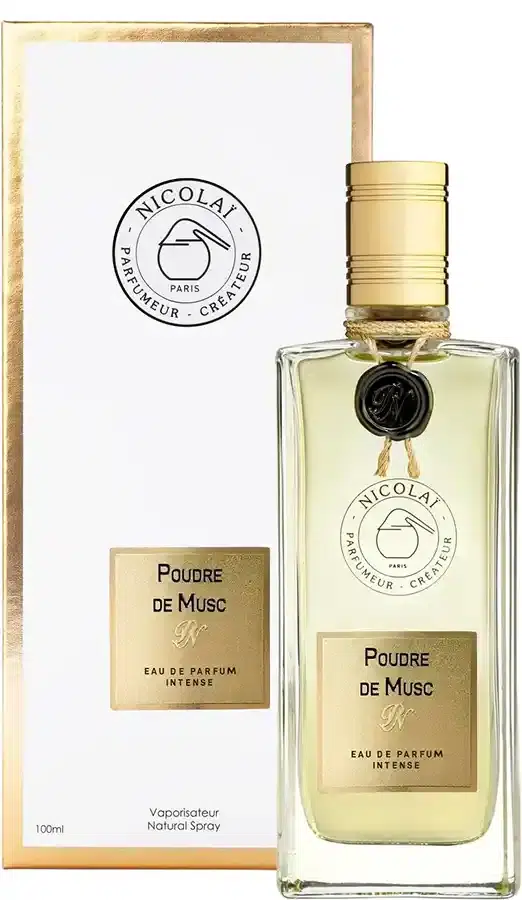
That sensibility is evident across the Nicolaï collection, where each fragrance carries a distinct identity rather than a trend-driven signature. The compositions are deliberate, often intricate, built from between 18 and 35 raw materials, each weighed, tested, and refined through a process that remains as empirical as it is intuitive.
There are no formulas for perfume creation here, only exploration.
In a category often driven by scale, Nicolaï remains resolutely personal, particularly within the world of niche perfume houses.
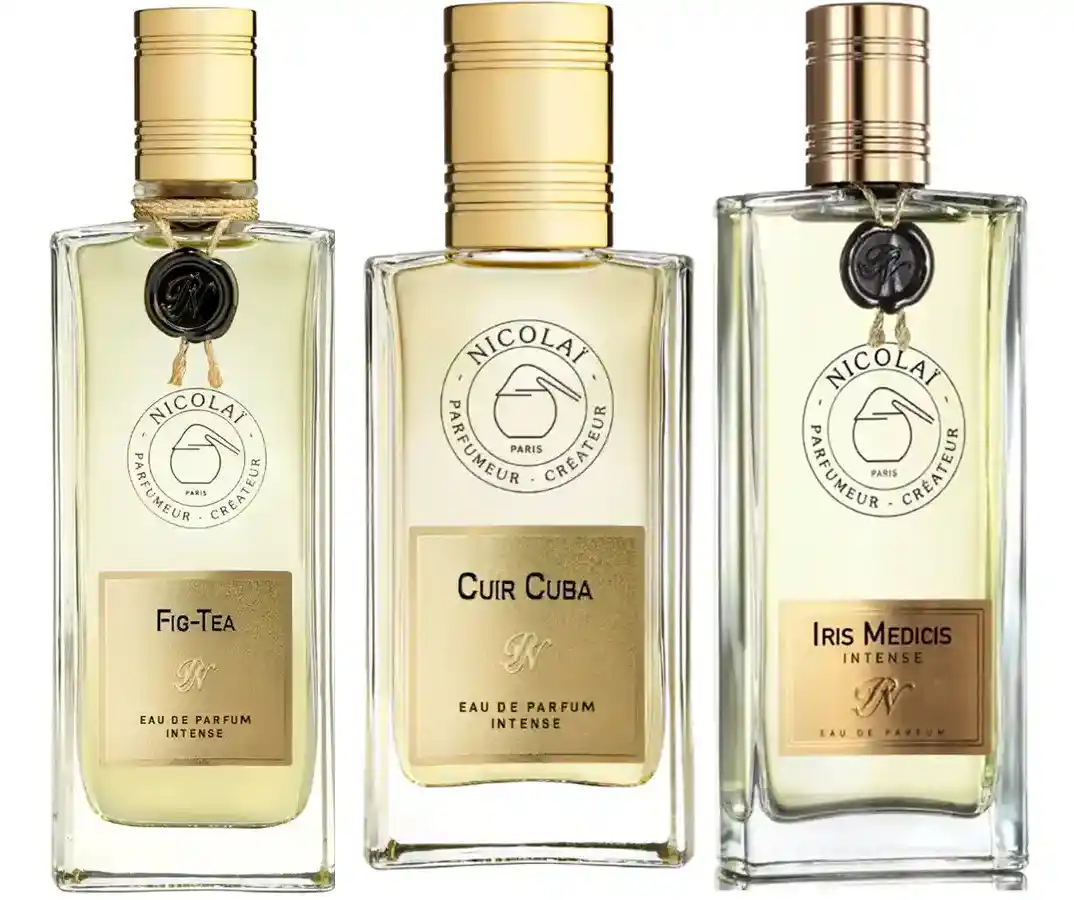
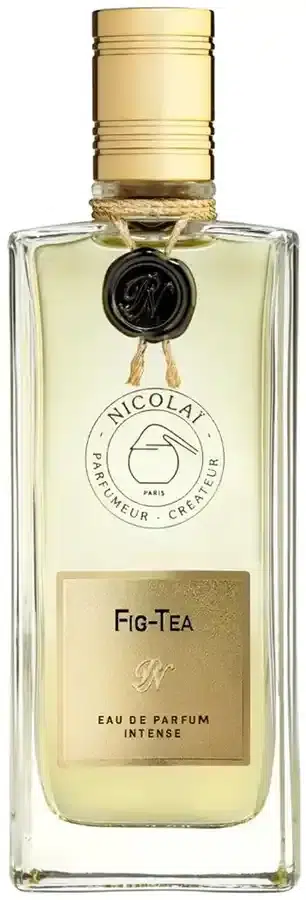 Fig-Tea Intense captures this philosophy with clarity. Conceived as an evocation of a Mediterranean summer, the fragrance balances the brightness of tea with the richness of sun-dried fig, unfolding with a warmth that feels both immediate and enduring. It is less a statement than an atmosphere, one that captures light, texture, and memory in equal measure.
Elsewhere, Iris Médicis offers a more contemplative expression. Inspired by Tuscany, the scent reflects the region’s layered beauty, cypress-lined paths, ochre villas, and the quiet elegance of its landscape. The iris, long associated with Florence, becomes both symbol and structure, anchoring a composition that feels restrained yet deeply expressive.
For Patricia de Nicolaï, fragrance has always been a matter of balance.
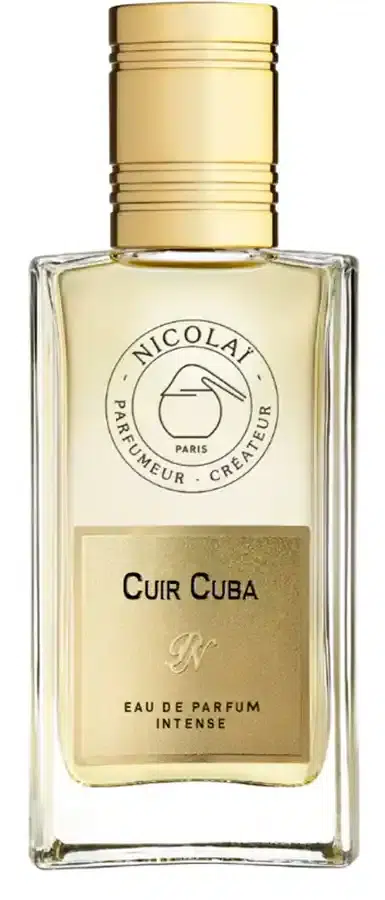
“With Cuir Cuba, I wanted to recreate the scent of my father’s cigar boxes,” she notes. “Something warm, mysterious, powerful, but never overwhelming.”
That tension between strength and restraint defines much of her work. In Ambre Cashmere, amber is softened by iris to create a texture that feels almost tactile, while Musc Intense transforms a traditionally supporting note into the center of the composition, paired with rose, carnation, and a subtle touch of pear to bring lightness to depth.
Even within these variations, a consistent philosophy emerges: perfume should not impose itself. It should reveal itself.
This approach extends beyond composition into the structure of the house itself. Unlike many heritage names now absorbed into global luxury groups, Nicolaï has remained independent, allowing creative decisions to be guided not by market demand, but by instinct and experience.
It is a position that feels increasingly rare.
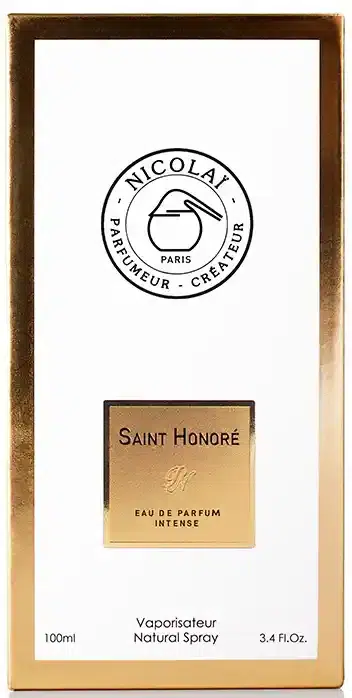
Yet it is precisely this independence that has allowed Parfums de Nicolaï to endure, building a catalogue that includes now-classic creations such as Patchouli Intense, Vanille Tonka, and Fig-Tea, each distinct, yet unmistakably part of the same lineage.
If anything, the presence of a second generation has only reinforced that identity.
“There is no taboo between us,” Axel says. “I can challenge her ideas, but in the end, she writes the formula.”
It is a simple statement, but one that captures the essence of the house: a balance between dialogue and authorship, evolution and control.
In a category often defined by excess, of launches, of messaging, of noise, Parfums de Nicolaï offers something quieter.
And in doing so, it reminds us that the most compelling fragrances are not created for the market, but for the wearer.