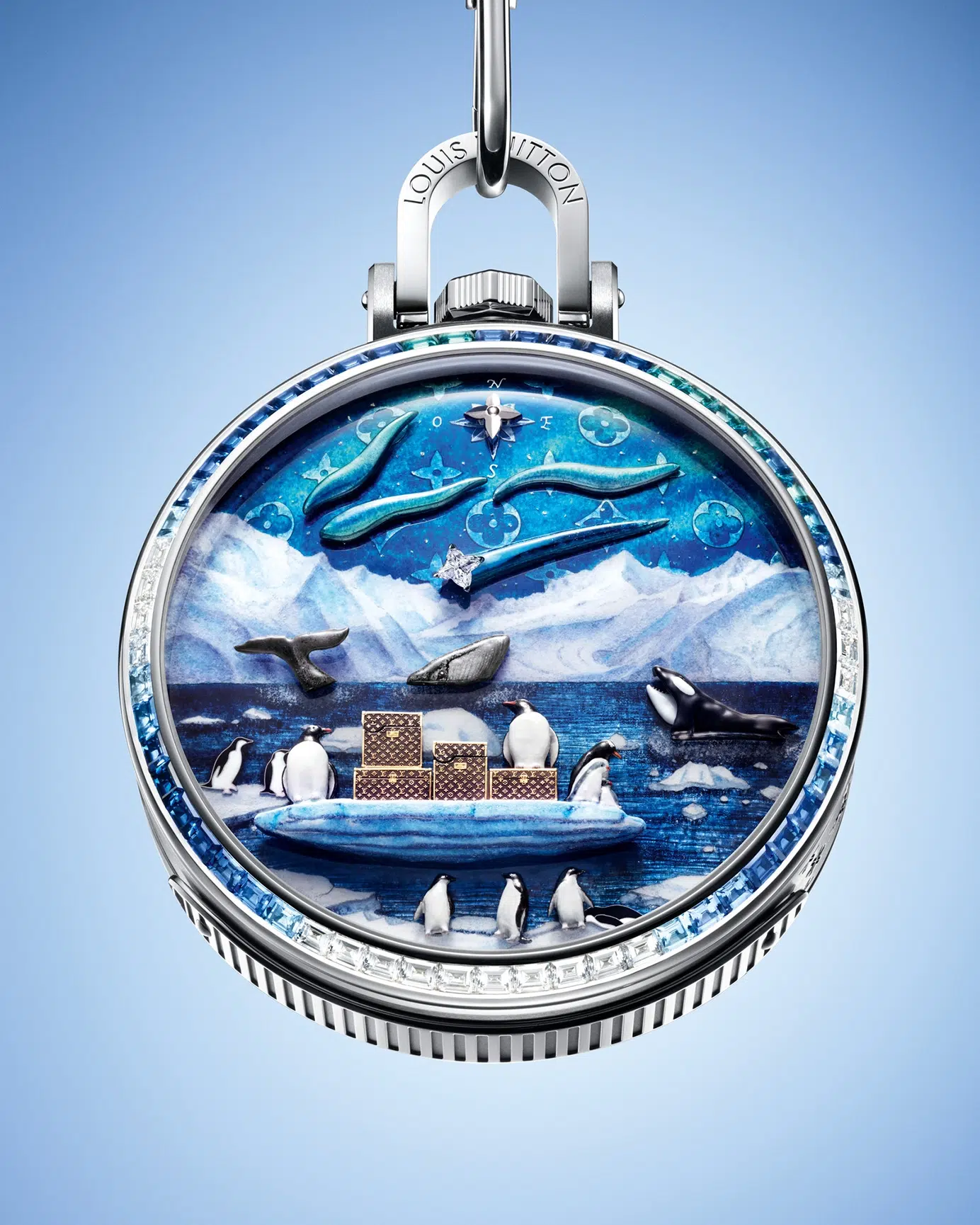
A whale rises from a dark enamel sea. An orca parts its jaws to reveal minuscule white-gold teeth. Penguins waddle and flap across drifting ice, Louis Vuitton trunks open and close, and a tiny diamond shooting star descends toward a glacier beneath the shimmer of the Northern Lights.
This is not simply a dial. It is a mechanical theater.
The Louis Vuitton Escale en Alaska, a one-of-a-kind pocket watch from the Maison’s Escales Autour du Monde collection, transforms Alaska’s Margerie Glacier into the setting for a fantastical polar tableau. Measuring 50 mm across and animated by 17 moving elements, it is the most complex pocket watch ever created by La Fabrique du Temps Louis Vuitton, the Geneva manufacture behind the Maison’s most ambitious watchmaking.
Its spectacle is immediate. Its significance runs deeper.
The Escale en Alaska brings nearly every discipline within Louis Vuitton’s watchmaking operation into a single object: automata, a minute repeater, a tourbillon, miniature enamel painting, hand engraving, gem-setting, case making, and leather craftsmanship. It is both a technical achievement and a declaration of intent—evidence that the Maison increasingly belongs in serious conversations about contemporary haute horlogerie.
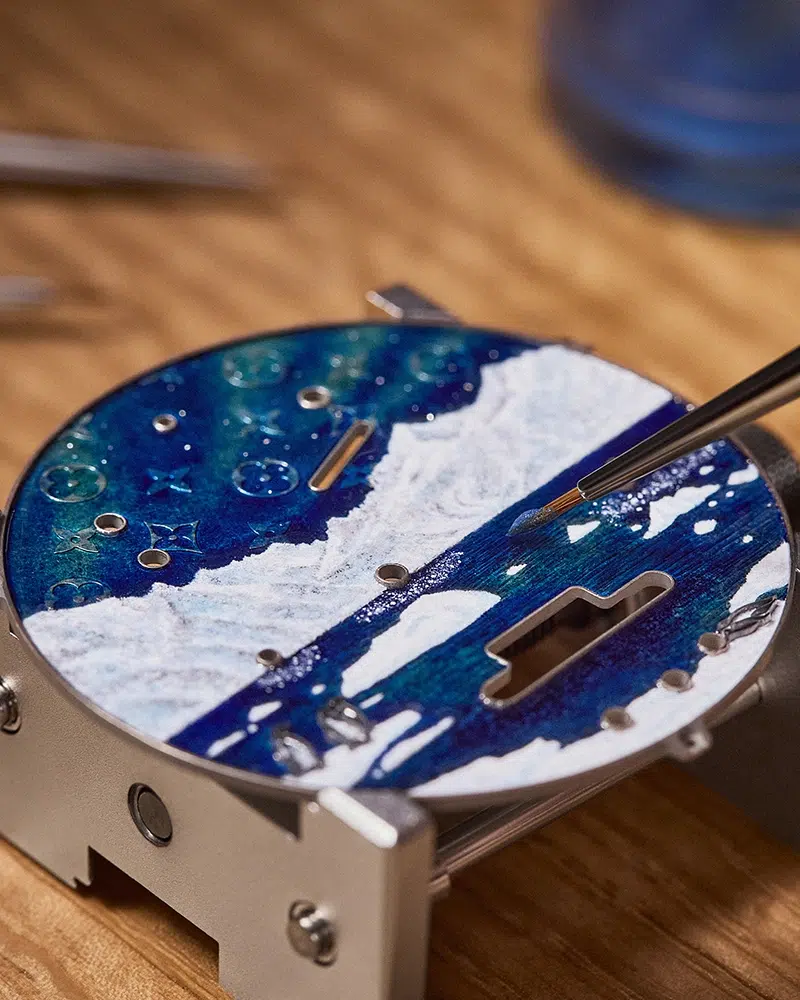
Beneath the domed sapphire crystal, Margerie Glacier stretches across the dial in layers of luminous white and glacial blue. The sea below is shaded with tones of indigo and green, while the sky carries softened Louis Vuitton Monogram flowers almost camouflaged within the enamel.
 |
 |
The landscape is intentionally imaginative rather than literal. Penguins do not inhabit Alaska, but here they belong to a mechanical fable of the frozen world, joining whales, an orca, drifting ice, and the aurora in a dreamlike celebration of travel. It is less natural history than artistic fantasy, rendered with the visual richness of a miniature painting.
At 12 o’clock, a gold compass rose turns against the blue sky. Below it, a shooting star traces its path toward the glacier, marked by the smallest LV Monogram Star-cut diamond Louis Vuitton has yet incorporated into a dial. Weighing 0.05 carat, it acts as both a precious detail and part of the narrative, turning the passage of time into movement across the heavens.
Activate the Jacquemart mechanism and the scene begins to perform.
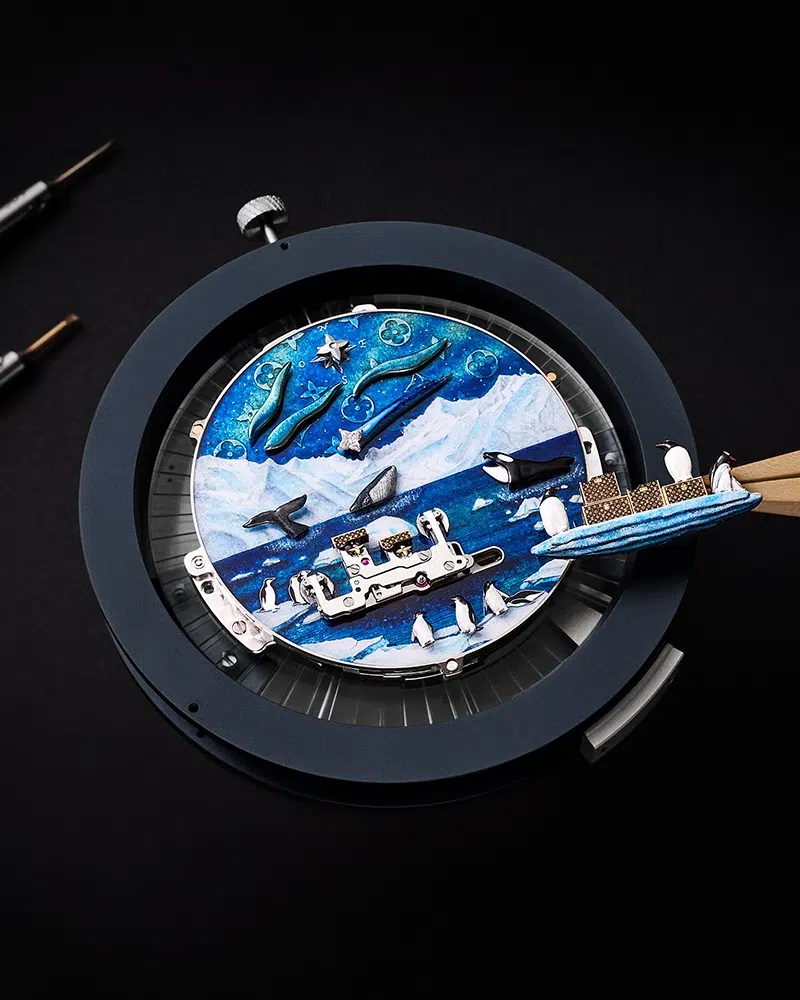
The blue whale raises its head and tail above the water. The orca opens its mouth. Three varieties of penguins move across the composition, while an iceberg travels gently from right to left. Louis Vuitton’s miniature trunks slowly open and close, revealing tiny Monogram flowers within. Altogether, the dial offers nine separate animations.
 |
 |
“This is the most complex pocket watch we’ve ever created,” says Matthieu Hegi, artistic director at La Fabrique du Temps Louis Vuitton, noting that the challenge was to accommodate the 17 moving parts without changing the established proportions of the mechanism and case. The result, he explains, is as much about emotional expression as technical expertise.
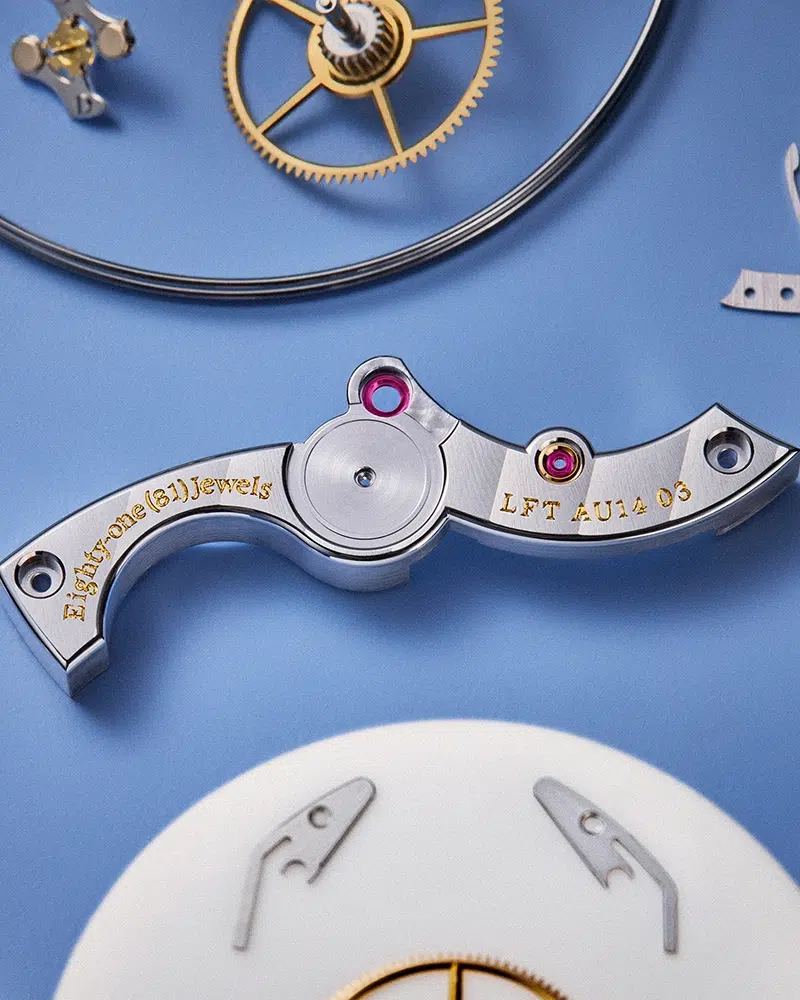
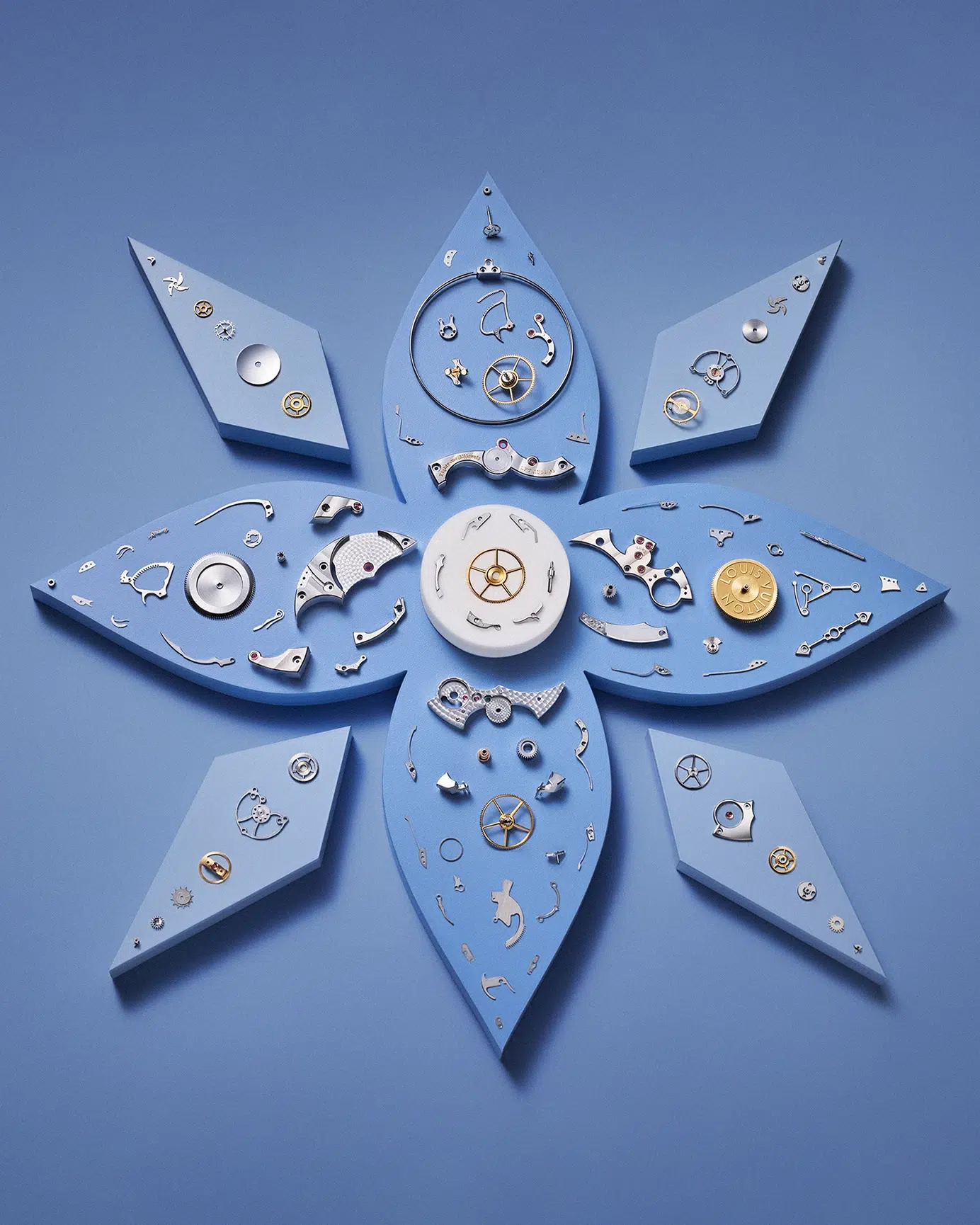
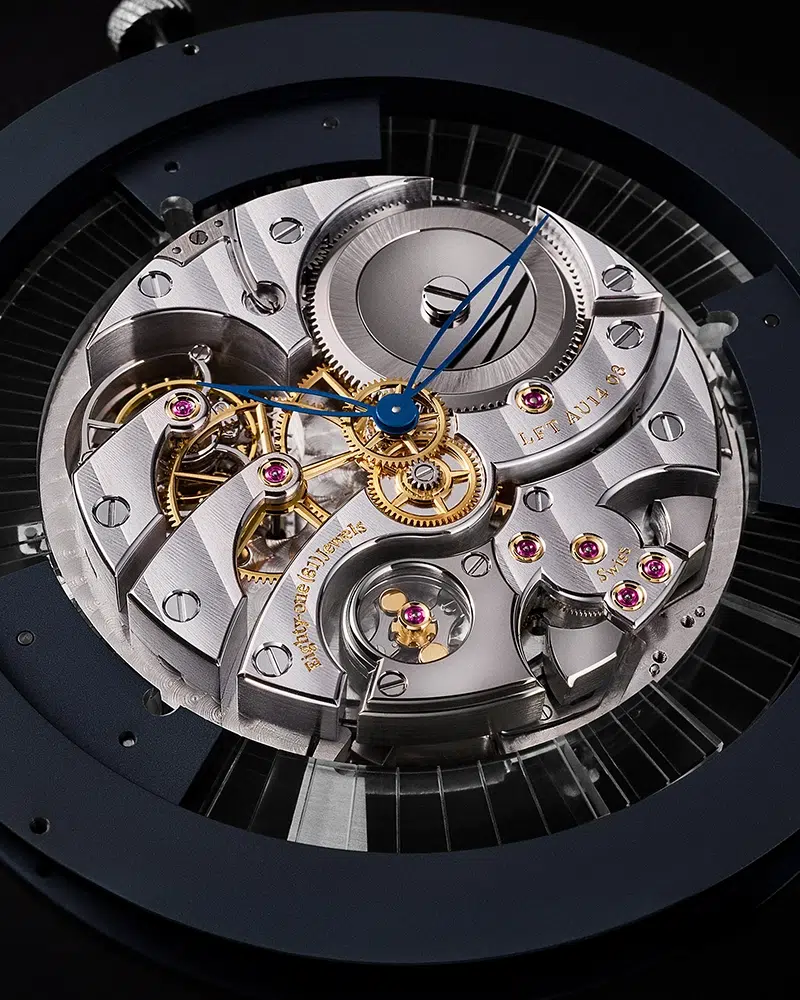
Behind the spectacle lies the manually wound LFT AU14.03 caliber, developed and assembled in-house. Its 751 components support the automata, a minute repeater that chimes the hours, quarter-hours, and minutes, and a tourbillon that connects the watch to the grand tradition of historic pocket watches.
The caliber offers an eight-day power reserve and operates at 21,600 vibrations per hour. Yet its architecture has been arranged so that conventional timekeeping never interferes with the animated dial. Rather than placing the hour and minute hands on the front, Louis Vuitton moved the blued hands to the caseback, preserving the scene as an uninterrupted work of art.
Turn the watch over and fantasy gives way to mechanics. Bridges, wheels, gongs, screws, and the tourbillon appear in an exacting composition of polished steel and gold. The contrast is deliberate: an expressive, jewel-like landscape on one side and a rigorous mechanical structure on the other.
 |
 |
Much of the movement remains hidden, but it was finished with the same care as its visible surfaces. Watchmakers created 735 hand-beveled inner angles, decorated the bridges with Côtes de Genève, and mirror-polished numerous components, including the screws, monobloc gongs, tourbillon cage, and ratchet.
That ratchet alone required three weeks of finishing. In total, approximately 500 hours were needed to assemble and hand-finish the movement.
The dial demanded an entirely different form of patience.
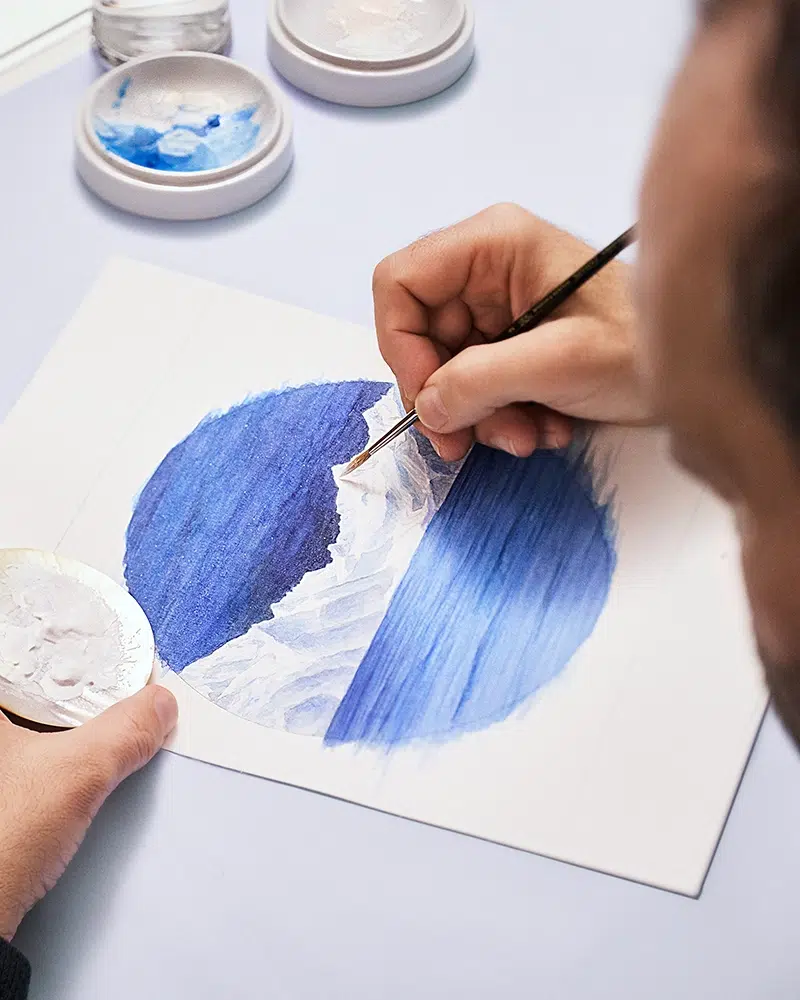
Artisans at La Fabrique des Arts employed Grand Feu, champlevé, cloisonné, and miniature enamel techniques to build its layered landscape. Thirty-two shades, primarily blues and whites, with touches of green, were selected over several weeks before painting could begin.
The completed dial underwent 35 individual firings, each one carrying the possibility of cracking, distortion, or an unexpected shift in color. Because enamel reacts differently at varying temperatures, the sequence of every shade had to be planned in advance. The enameling process alone required more than 300 hours.
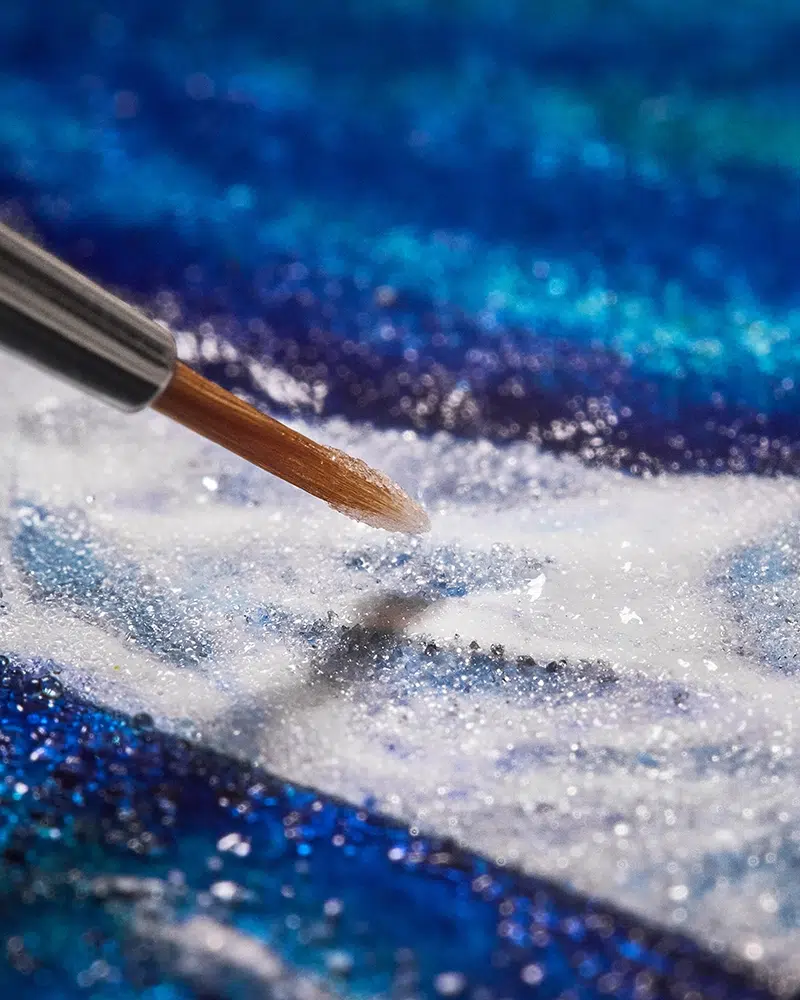
The glacier began with a foundation of white enamel, then received layers of pale blue, grey, and shadow to suggest depth. After firing, portions were engraved again to sharpen the impression of snow, ice, and frozen texture. Aventurine glass was incorporated into the path of the shooting star, giving it a subtle celestial shimmer.
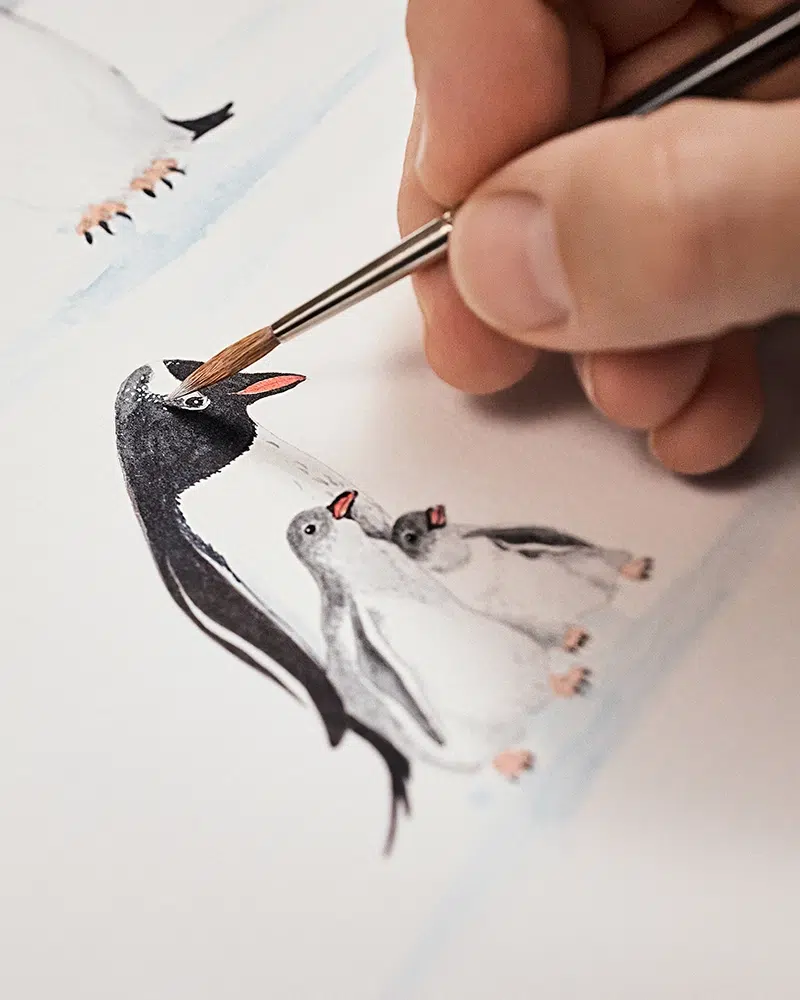
The penguins were engraved in gold before cloisonné enamel added shape and perspective. Elsewhere, the whale’s mottled blue-grey surface and tiny eye were painted in extraordinary detail, while the sea was built up through fine lines and gradations of color.
Every moving figure was also hand-sculpted by Louis Vuitton’s master engraver. The work extended even to the orca’s tiny teeth and the diminutive Monogram patterns covering the animated trunks. Engraving the dial components required approximately 160 hours.
The 18-karat white-gold case received another 40 hours of engraving. One side evokes the rain and mist associated with the glacier; the other features snowflakes woven among Louis Vuitton’s Monogram flowers.
Like the finest high-jewelry timepieces, the Escale en Alaska uses its baguette-cut sapphires, diamonds, and tourmalines as part of the composition rather than as decoration applied afterward.
The watch is accompanied by a white-gold chain and a bespoke blue leather bag inspired by a design from Louis Vuitton’s travel archives. It is a fitting conclusion for a piece rooted in the Maison’s enduring “Art of Travel,” even if this particular journey unfolds across only a few centimeters.
The Escale en Alaska does more than show what Louis Vuitton’s craftsmen can make. It shows what can happen when a luxury house refuses to separate mechanics from emotion, or watchmaking from storytelling.
This is not important merely because a glacier appears to move beneath sapphire. It matters because every animation, chime, engraved surface, painted shadow, and polished component contributes to a single idea.
Time, in the hands of Louis Vuitton, has become a landscape, and for a few extraordinary moments, that landscape comes alive.
Still-life photography: Ulysse Frechelin
Savoir-faire photography: Piotr Stoklosa