Boden has always understood the power of personality. Since Johnnie Boden founded the brand in 1991, its point of view has been unmistakable: optimistic color, confident print, and clothes designed with enough character to stand apart from the increasingly anonymous side of fashion. Now, after more than two decades of selling to American customers online, the British label is giving that audience something it has wanted for years—the chance to experience Boden in person.
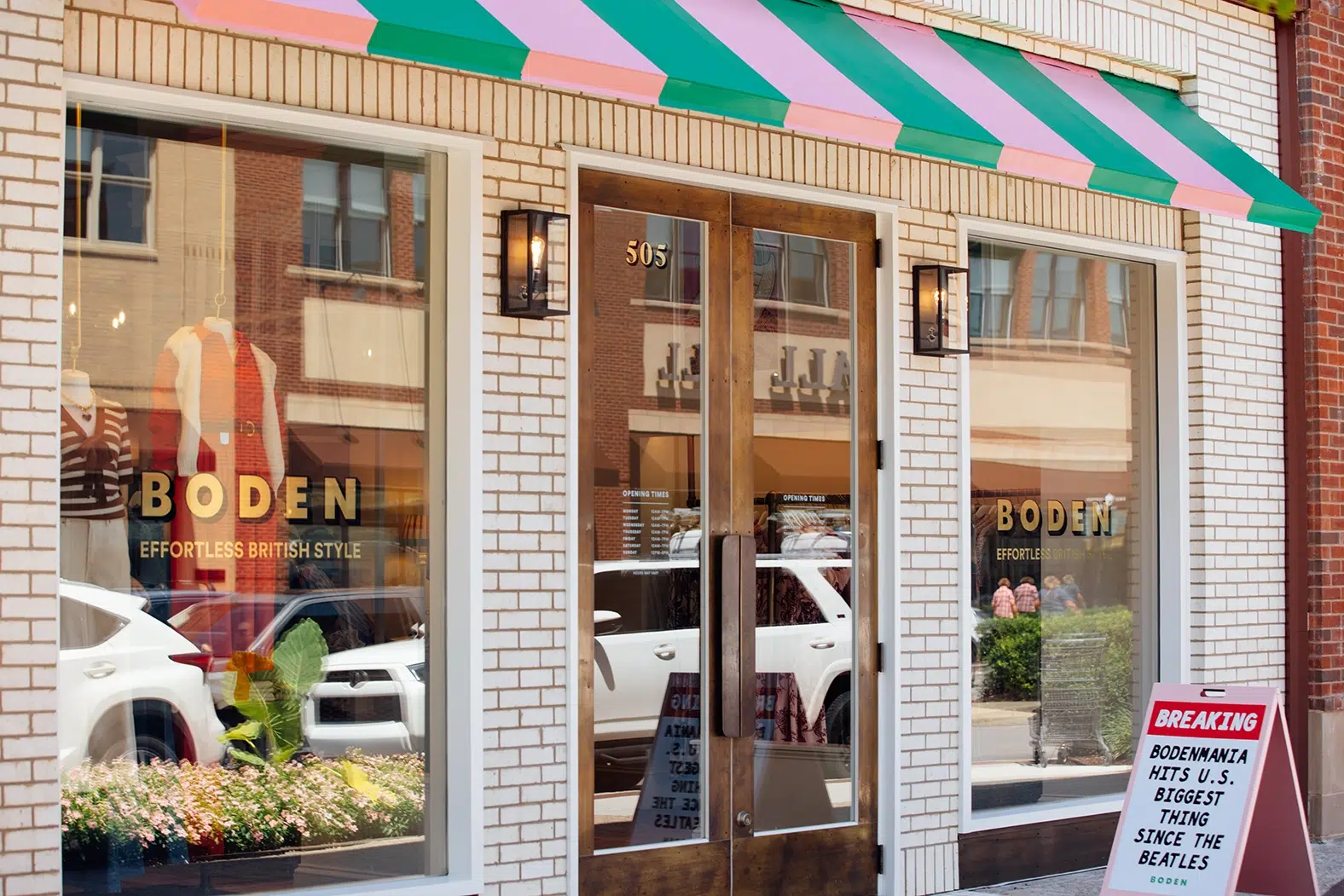
The brand has opened its second standalone U.S. store in Nashville, following the debut of its first American location in Atlanta last November, and a third store is already planned for Birmingham, Alabama, later this year. The expansion marks a significant new chapter for Boden, which has sold directly to U.S. customers since 2002 and is also available through Nordstrom.
For a company born as a mail-order catalogue, the move into physical retail feels particularly significant. Boden built much of its international following without relying on an extensive store network, developing instead a highly recognizable visual language through catalogues, e-commerce, and collections known for expressive dresses, colorful knitwear, polished separates, and childrenswear. Today, the brand counts more than 1.9 million active customers worldwide, with the United States among its largest markets.
Nashville is therefore more than another pin on the retail map. It is an opportunity to translate decades of British identity into a physical environment, and the new store at Hill Center Green Hills does exactly that.
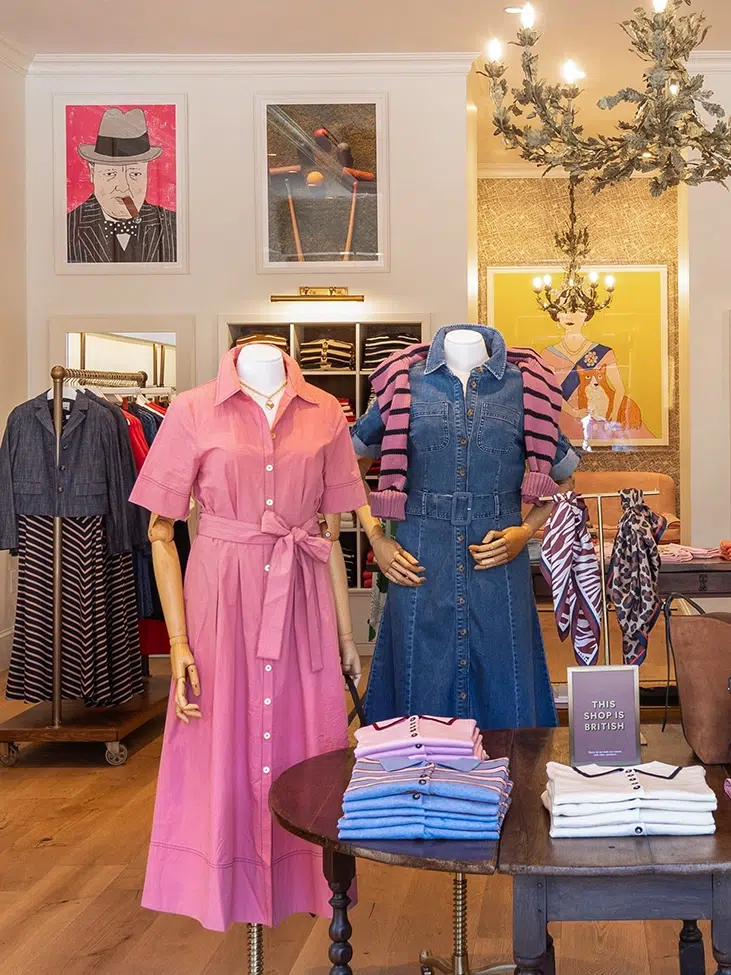
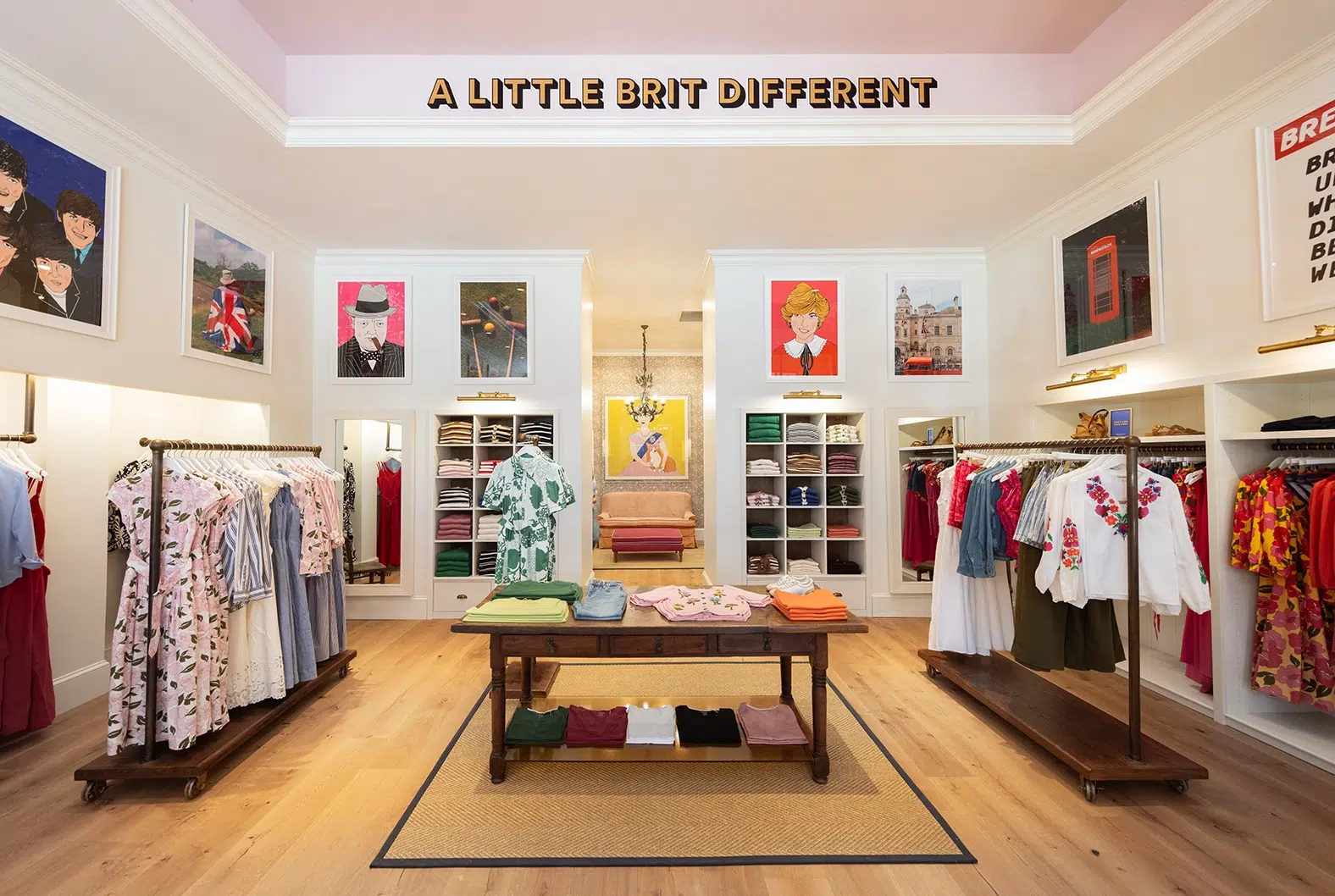
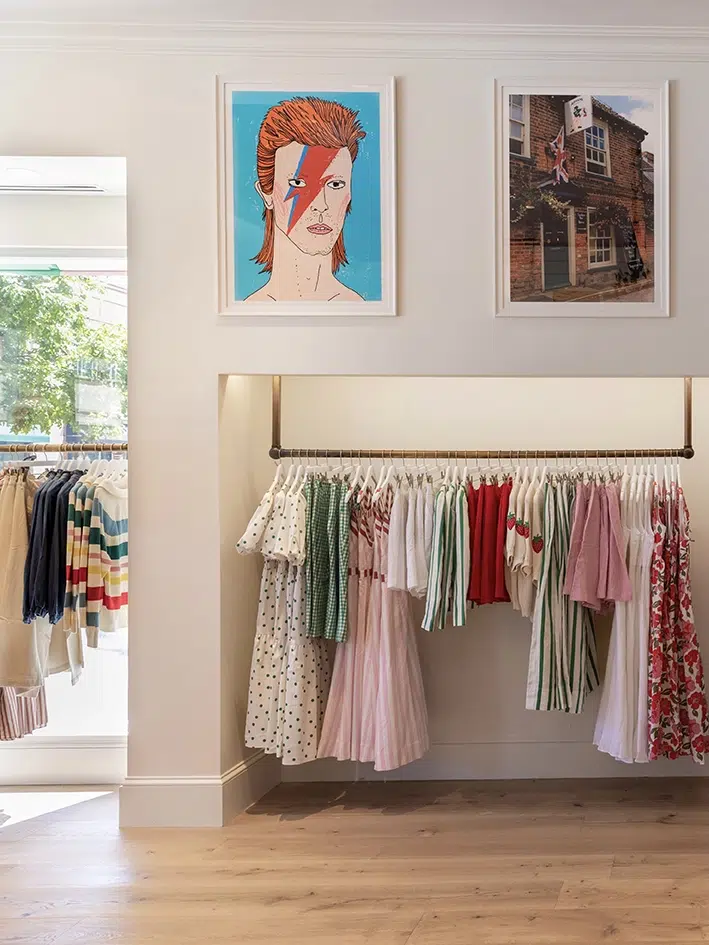
At 1,700 square feet, the space is intimate enough to feel curated rather than corporate. The interiors bring together bespoke chandeliers by London designer Richard Taylor, vintage furniture sourced in the UK, and artwork by British illustrator and longtime Boden collaborator Charlotte Farmer. A custom wallpaper produced by American printer Little Cocalico draws on imagery from old Boden catalogues, turning the brand’s own archive into part of the store’s decorative language.
There are more personal touches, too. A vintage London map print created by Boden’s in-house team appears throughout the accessories and dressing-room areas, while founder and Creative Director Johnnie Boden has curated a library of books spanning London, photography, art, and design. The result is less about recreating Britain literally than communicating the sensibility behind the clothes: colorful, cultured, slightly eccentric, and never overly serious.
That balance is central to Boden’s appeal. The brand has never positioned itself around minimalism or quiet understatement. Its strength lies in knowing exactly what it is: joyful, polished, and unmistakably visual, and the Nashville store gives that identity room to breathe beyond a screen.
The opening collection is appropriately seasonal, with a high-summer womenswear edit drawn from Boden’s July offering. Linen, printed dresses, swimwear, and other warm-weather pieces establish the store with the kind of optimistic color and pattern for which the label is known, while the setting allows customers to see the textures, proportions, and combinations in a way online shopping cannot always replicate.
That desire for physical interaction appears to be driving Boden’s next move as well. The company plans to open its third standalone U.S. store at The Summit in Birmingham, Alabama, this autumn. The approximately 2,000-square-foot location will join a retail mix that includes Tory Burch, BOSS, and Madewell, placing Boden within an established fashion destination while continuing the brand’s expansion across the American South.
According to the company, Birmingham was selected in response to existing customer demand and feedback from recent U.S. focus groups. Customers were particularly receptive to Boden’s colorful aesthetic and expressed a desire for more opportunities to shop the collections in person. It is a simple insight, but an important one: in an era dominated by e-commerce, some brands are discovering that physical retail can deepen a relationship that digital channels first created.
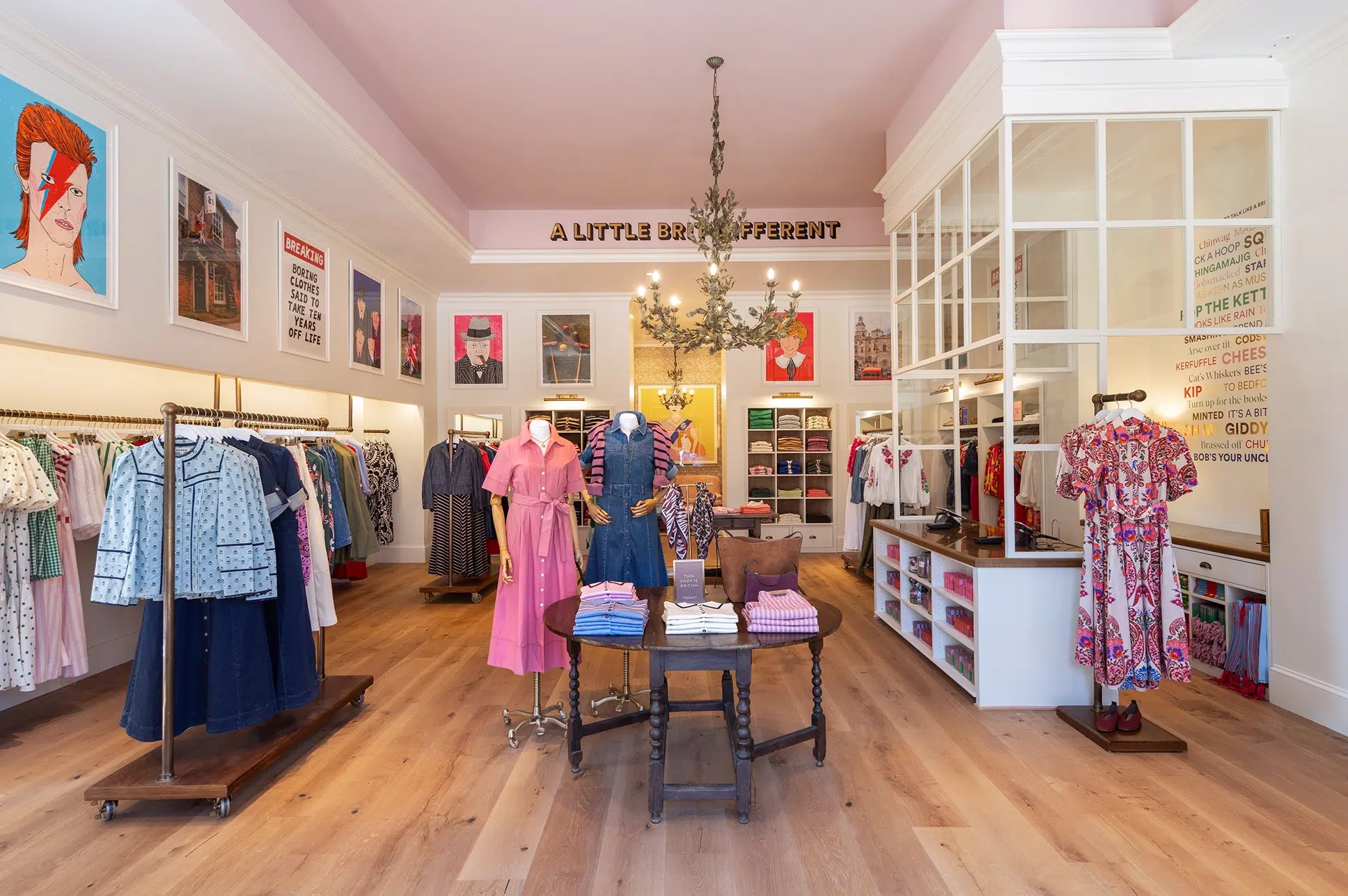
For Boden, that may be especially true. Much of the brand’s appeal lies in detail, the unexpected print, the saturated shade, the lining of a coat, the particular hand of a fabric, the way two colors play against each other. These are qualities that become more immediate when experienced in a room rather than through a product grid.
The choice of Atlanta, Nashville, and Birmingham also suggests a deliberate approach to growth. Rather than beginning with the obvious fashion capitals, Boden is building in markets where it already has engaged customers and where its confident, colorful identity may feel particularly distinctive. It is a strategy rooted less in spectacle than in relevance.
Three stores do not yet constitute a vast American retail network, nor do they need to. The more interesting story is that Boden, after years of successfully reaching U.S. shoppers from afar, is beginning to create places where the brand can be encountered on its own terms.
In Nashville, that means vintage British furniture, archival imagery, London references, and racks of color arriving in one of America’s fastest-evolving style cities. For Boden, the expansion may be geographical, but the identity remains firmly its own.