For a few extraordinary minutes off the coast of Spain, the Atlantic went dark.
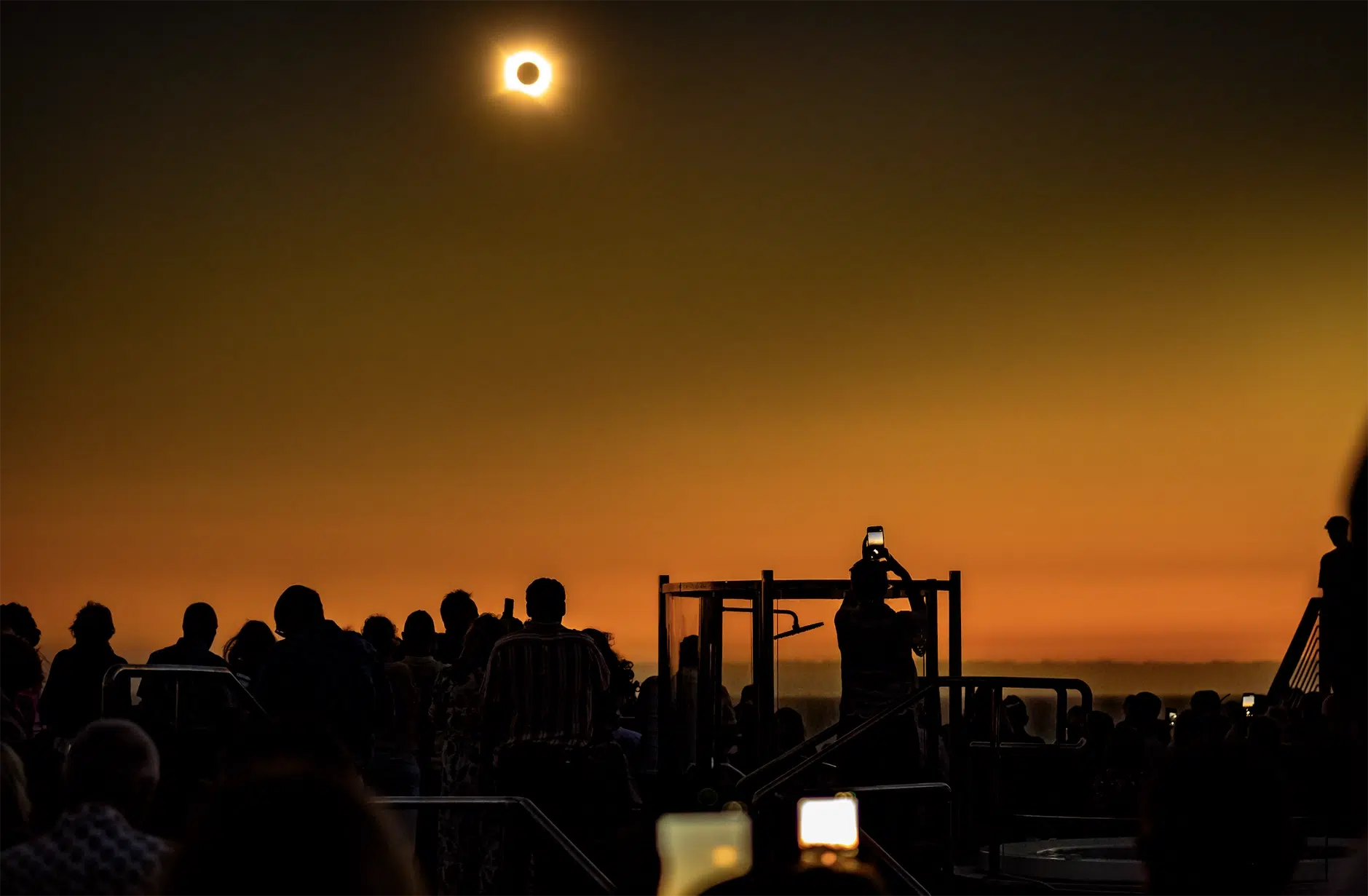
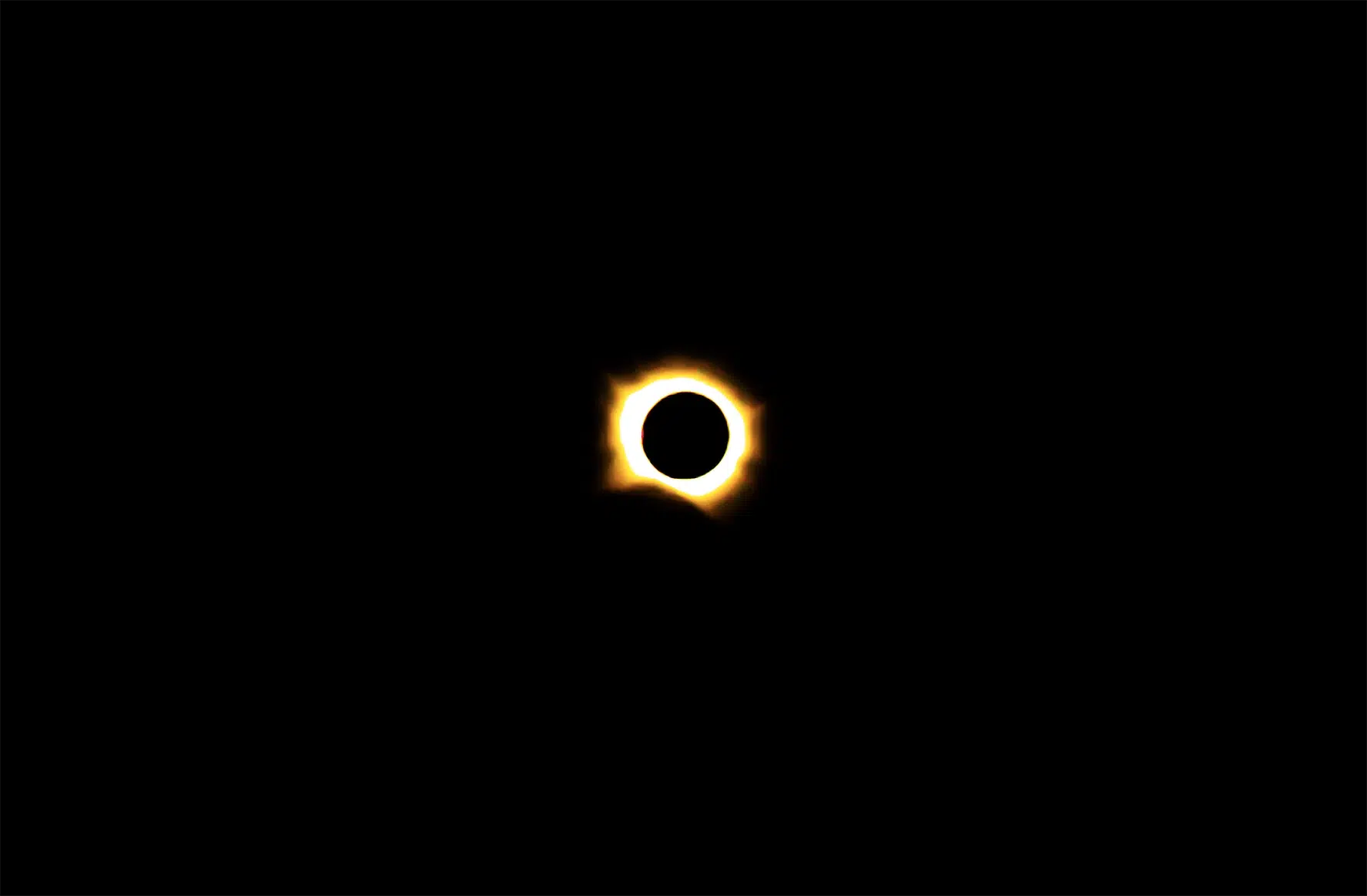
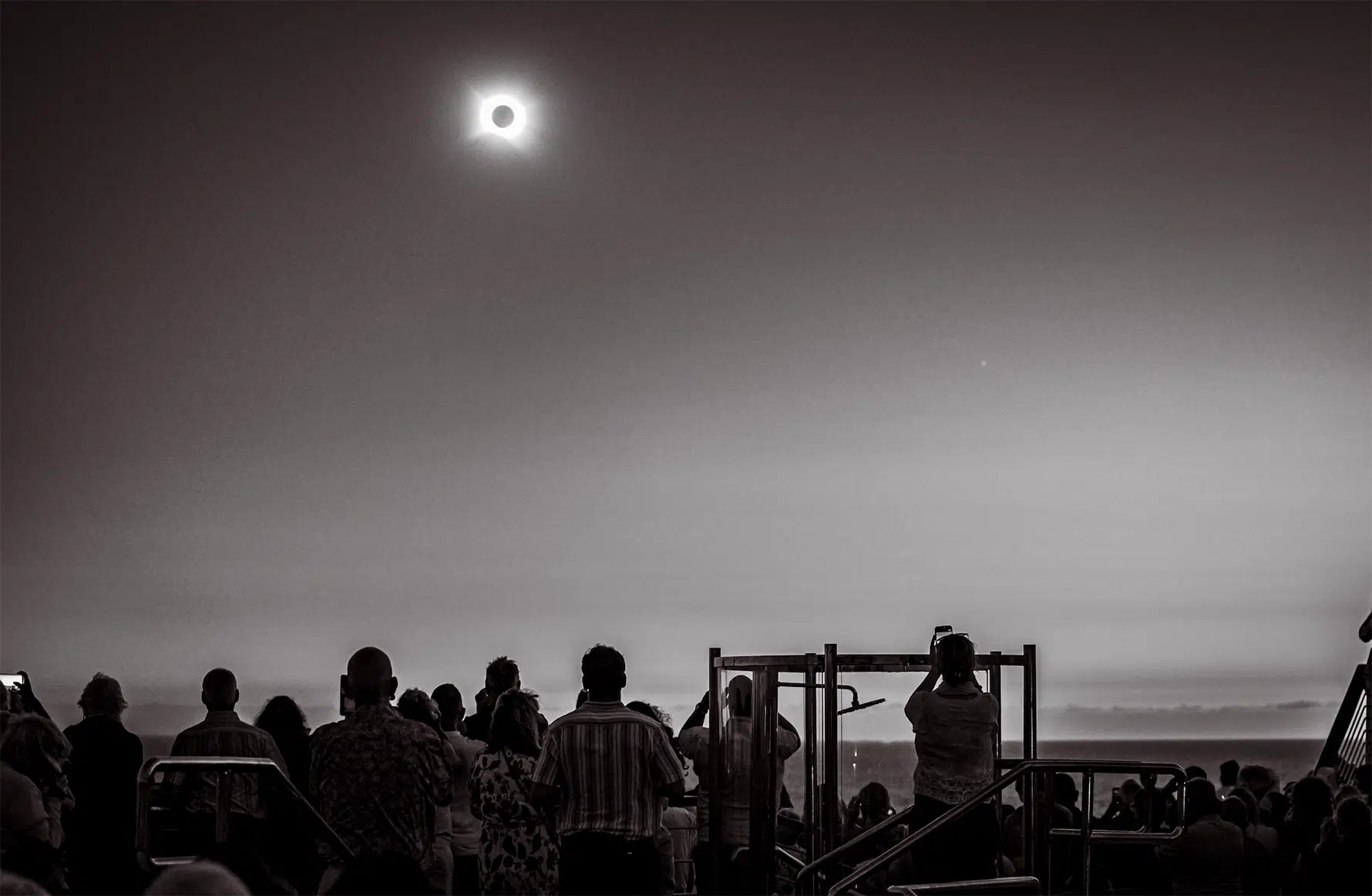
On August 12, guests aboard Cunard’s Queen Anne gathered on the ship’s upper decks as a total solar eclipse swept across the sky, temporarily transforming an otherwise elegant summer voyage into something far more elemental. With the sea stretching uninterrupted toward the horizon, the ship offered the kind of viewing platform few observatories could rival: open sky, expansive water, and the anticipation of watching daylight disappear in the middle of the afternoon.
The eclipse formed part of Queen Anne’s seven-night round-trip sailing from Southampton through Spain and France, an itinerary that Cunard had specifically highlighted for the celestial event. Positioned to give guests an unobstructed view from the ship’s upper decks, the voyage turned one of nature’s rarest spectacles into the centerpiece of an already distinctive journey.
There is something particularly compelling about witnessing an eclipse from the sea. On land, crowds gather in fields, observatories, city squares, and remote landscapes hoping for a clear patch of sky. At sea, the horizon feels larger, the surroundings quieter, and the sudden dimming of the light somehow more dramatic against the vastness of the water.
For Cunard, the moment also felt entirely in character.
The British cruise line has been crossing oceans since 1840, when its earliest ships began establishing regular transatlantic service. Today, its fleet comprises Queen Mary 2, Queen Victoria, Queen Elizabeth, and Queen Anne, the newest addition to the line. Queen Anne entered service in May 2024 as Cunard’s 249th ship and returned the company to a four-ship fleet for the first time since 1999. Built by Italian shipbuilder Fincantieri, the 113,000-gross-ton vessel accommodates approximately 3,000 guests.
Yet while Cunard’s identity is deeply rooted in maritime tradition, voyages like this reveal how easily that heritage can accommodate a more modern form of experiential travel. Today’s luxury traveler is increasingly interested not only in where a ship sails, but in what can be experienced along the way. A rare celestial event offers precisely that kind of unrepeatable moment.
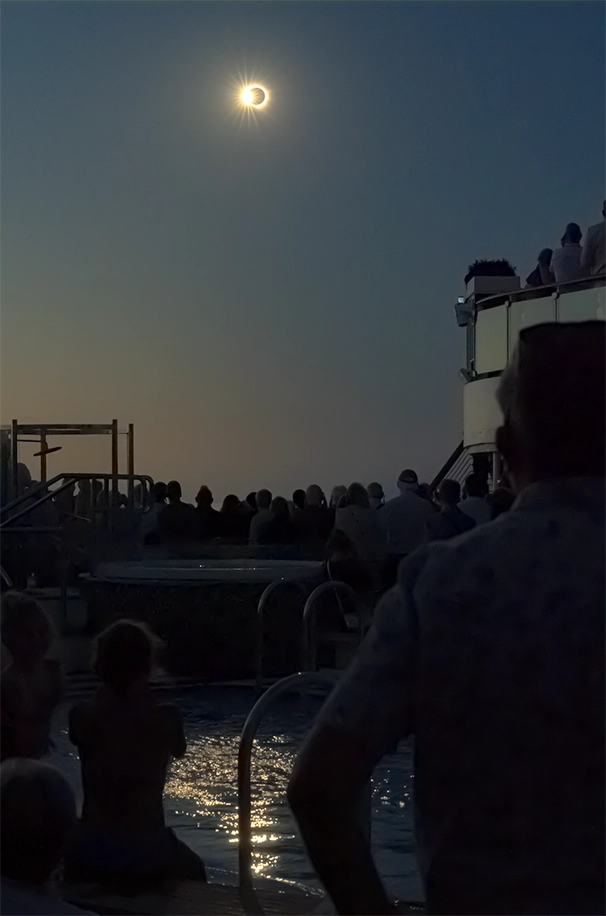
The August 12 eclipse was particularly significant because its path crossed portions of Europe, giving travelers in parts of Spain and surrounding regions the opportunity to witness totality. From Queen Anne, the spectacle became part of a larger rhythm of life at sea: breakfast, perhaps a leisurely morning on deck, and then the gradual realization that the light itself was beginning to change.
A solar eclipse does not arrive with theatrical noise. Shadows sharpen. Color drains subtly from the landscape. The temperature can fall, and the atmosphere takes on an uncanny stillness before the sun is briefly concealed.
For passengers watching from the deck of a Cunard Queen, the contrast must have been striking: polished teak, Champagne glasses, ocean air, and above it all, a phenomenon governed by celestial mechanics rather than any human schedule.
The experience also reflects Cunard’s growing interest in voyages built around the night sky and natural phenomena. Northern Norway itineraries regularly take guests into Arctic regions where the Northern Lights become part of the attraction, with ports including Tromsø, Narvik, and Honningsvåg bringing travelers closer to landscapes shaped by long winter nights and dramatic skies. Selected sailings also feature astronomy and exploration specialists who add context through onboard talks and presentations.
Cunard is already looking toward the next major solar event. On August 2, 2027, Queen Victoria is scheduled to position guests along the path of another total solar eclipse during a 14-night voyage through Portugal, Spain, and Morocco. The ship is expected to be in Tangier, Morocco, as the eclipse reaches its peak, making the North African port one of the focal points of Cunard’s next celestial sailing.
The opportunity to pair an eclipse with a Mediterranean or Atlantic itinerary is an appealing one. Travelers may spend one day exploring historic ports, another dining beneath chandeliers or relaxing on deck, and then suddenly find themselves looking upward as the sun vanishes behind the moon.
The skies have another performance scheduled even sooner. On August 28, 2026, a partial lunar eclipse will be visible during several Cunard voyages, with Queen Anne returning toward Southampton from Spain, Queen Mary 2 sailing toward the Norwegian fjords, and Queen Victoria visiting Kotor in Montenegro.
These experiences occupy an increasingly interesting corner of luxury travel. The most memorable journeys are no longer defined exclusively by suite size, fine dining, or impeccable service, important as those things remain. They are increasingly shaped by access: to remote landscapes, rare cultural events, wildlife migrations, and moments that cannot simply be recreated on demand.
A total solar eclipse belongs firmly in that category.
For Queen Anne’s guests, August 12 offered something no menu, spa treatment, or shore excursion could replicate. For a few minutes, the usual hierarchy of luxury disappeared altogether. Everyone on deck was simply looking upward, watching the sun vanish and waiting for the light to return.
And somewhere between Spain and Southampton, one of the world’s newest ocean liners found itself sailing through one of nature’s oldest spectacles.