Venice is most seductive before the city fully awakens. The lagoon is silver, St Mark’s Square belongs briefly to the pigeons and porters, and the façades of the palazzi appear suspended between water and sky. At the private landing of Baglioni Hotel Luna, a water taxi waits with its engine idling softly. Within moments, the city’s domes begin to recede, and the journey turns toward one of Venice’s most unexpected pleasures: its only golf course.
It is an improbable combination, which is precisely what makes it so compelling. Venice is a city associated with opera houses, masked balls, candlelit dining rooms and gondolas slipping through narrow canals. Golf rarely enters the conversation. Yet beyond the theatrical splendour of the historic centre, on the southern edge of the Lido, lies Circolo Golf Venezia, a secluded course shaped by maritime pines, sea air and the remains of old military fortifications.
Few hotels provide a more fitting point of departure than Baglioni Hotel Luna.
Set just steps from St Mark’s Square and the Doge’s Palace, the hotel occupies one of the most privileged positions in Venice. Its history is woven into that of the city itself, with roots extending back centuries to the Locanda della Luna, an inn that welcomed travellers arriving in the Venetian Republic. Today, after a multi-year transformation, the property is entering a new era, one that preserves the romance of its past while refining the experience for a contemporary luxury traveller.
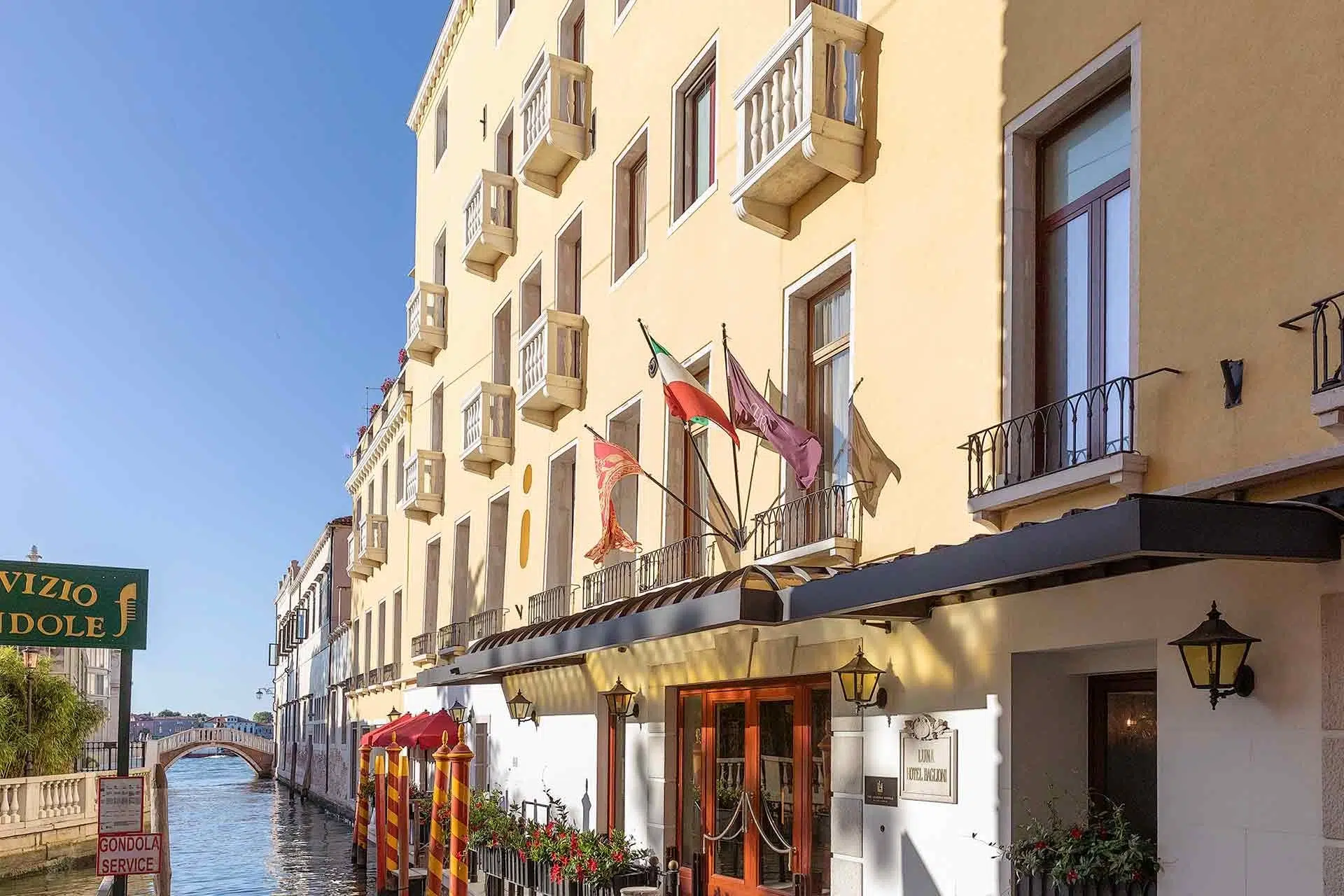
The sense of arrival is immediate. Guests step from the water directly into a world of marble, gilded mirrors, richly patterned fabrics and sweeping architectural gestures. The interiors possess the ceremonial beauty expected of a Venetian grand hotel, yet the atmosphere is more intimate than imposing. It feels less like entering a resort than being admitted into a private palazzo with a particularly illustrious guest book.
Baglioni Hotel Luna has long understood that luxury in Venice is inseparable from history. Here, the building is not simply a backdrop; it is part of the experience. The public spaces unfold with a sense of theatre, while the rooms and suites reveal a quieter interpretation of Venetian grandeur through handcrafted flooring, Rubelli textiles, Carrara marble and carefully layered decorative details.
The recent renovations have been undertaken with restraint. Rather than erase the patina of age, they allow the hotel’s historic identity to remain visible beneath the polish. The result is a property that feels refreshed rather than reinvented, preserving the emotional weight of its architecture while introducing greater comfort, clarity and ease.
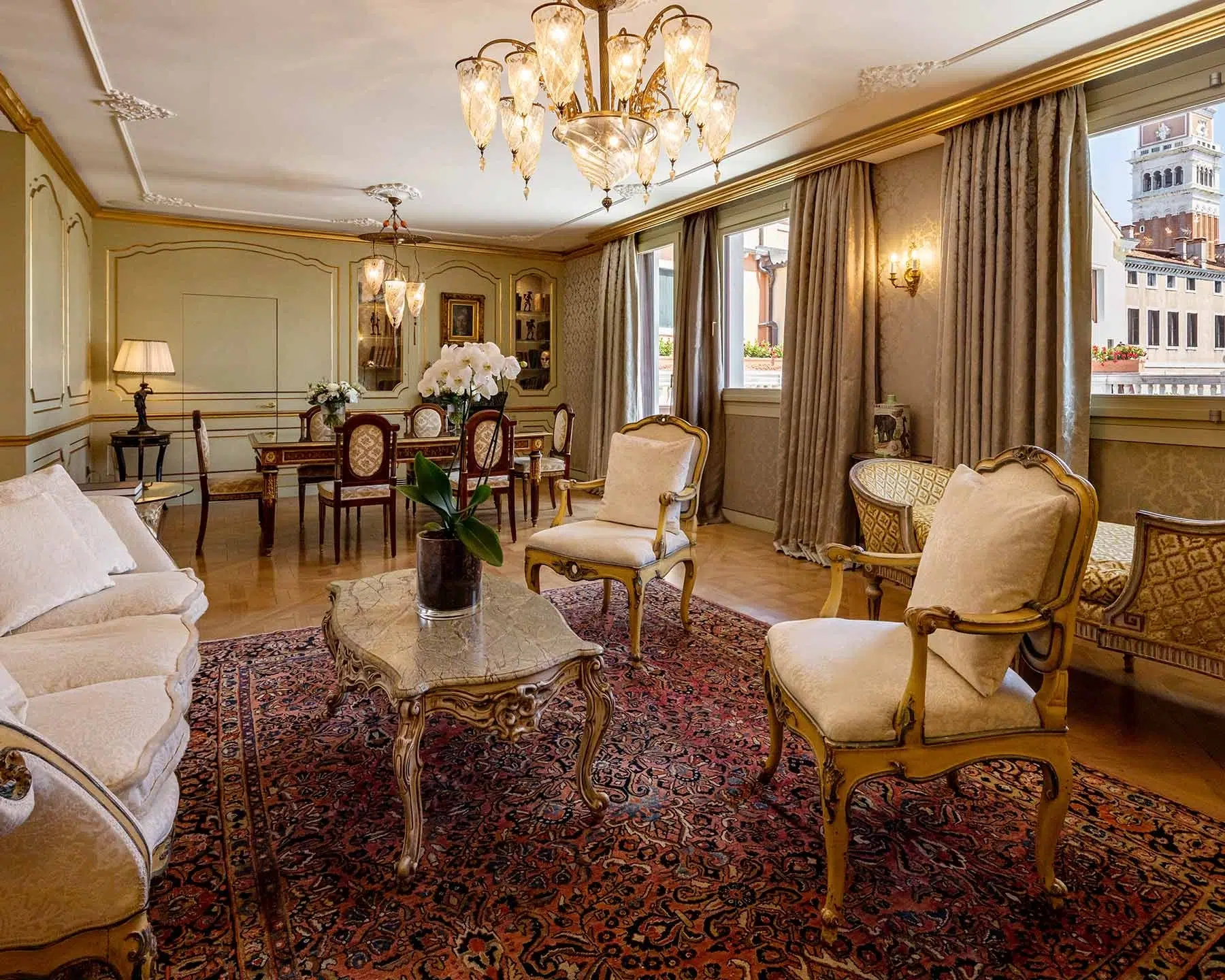
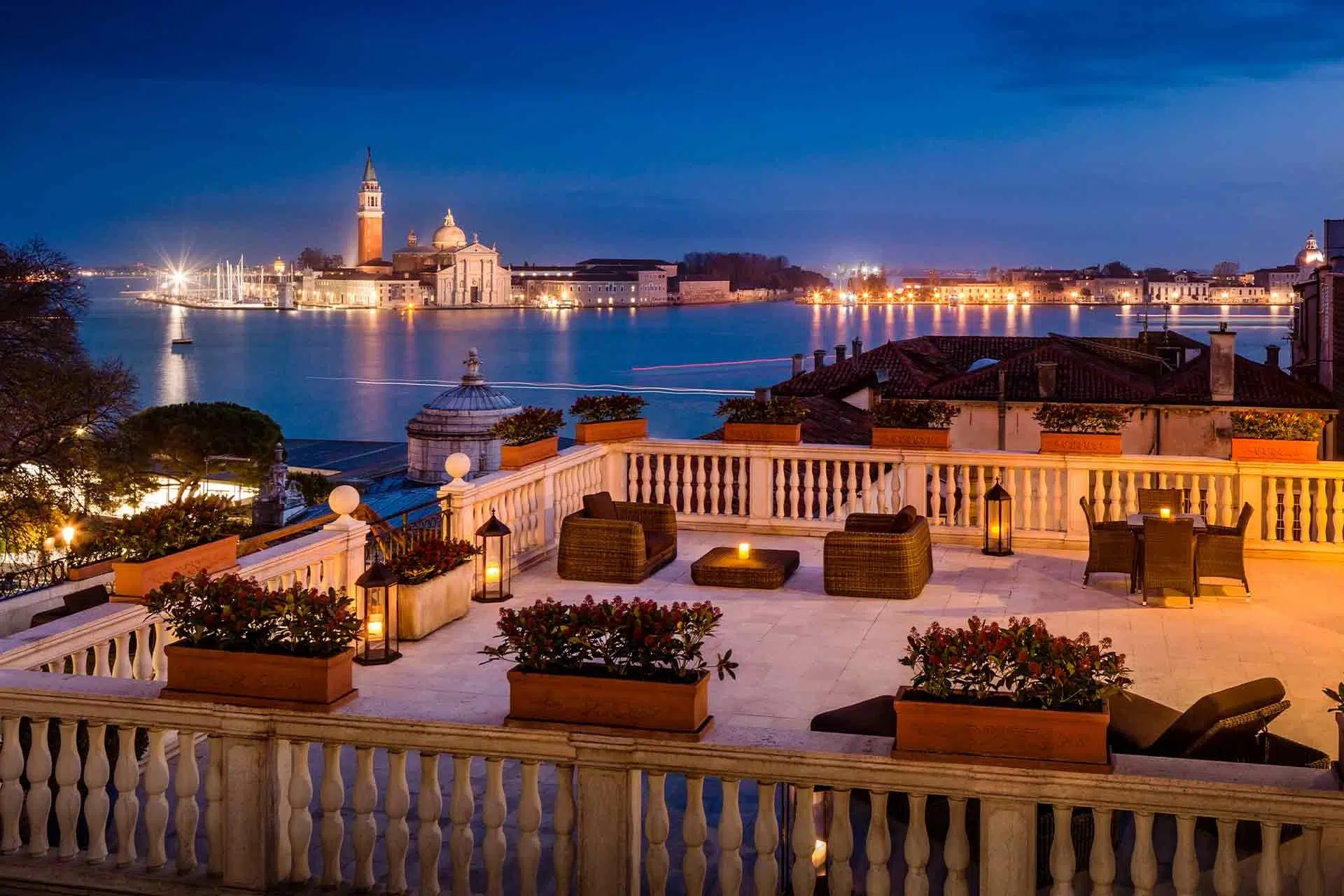
Nowhere is this balance more evident than in the San Giorgio Suite, the hotel’s most exclusive accommodation. Versailles-style parquet flooring, fine fabrics and classical detailing set the scene, but the true indulgence lies beyond the doors. From the private terrace, the lagoon opens across a panorama of domes, bell towers and shifting light, transforming Venice into a living composition.
In the early morning, the view is contemplative. By late afternoon, it becomes cinematic. At night, when the city’s façades glow against the water, it is almost unreal.
That terrace also offers one of the most privileged vantage points during the Festa del Redentore, Venice’s great summer celebration. Fireworks burst over St Mark’s Basin, their reflections scattering across the lagoon as boats gather below. From the privacy of the suite, the spectacle feels both grand and intimate, a reminder that Venice still knows how to stage an entrance.
The hotel’s location makes it ideal for those wishing to experience the city’s celebrated landmarks, but its appeal lies equally in the doors it opens beyond them. The private jetty allows guests to move through Venice by water with enviable ease, whether arriving from the airport, crossing to the islands or setting out toward the Lido for an early round.
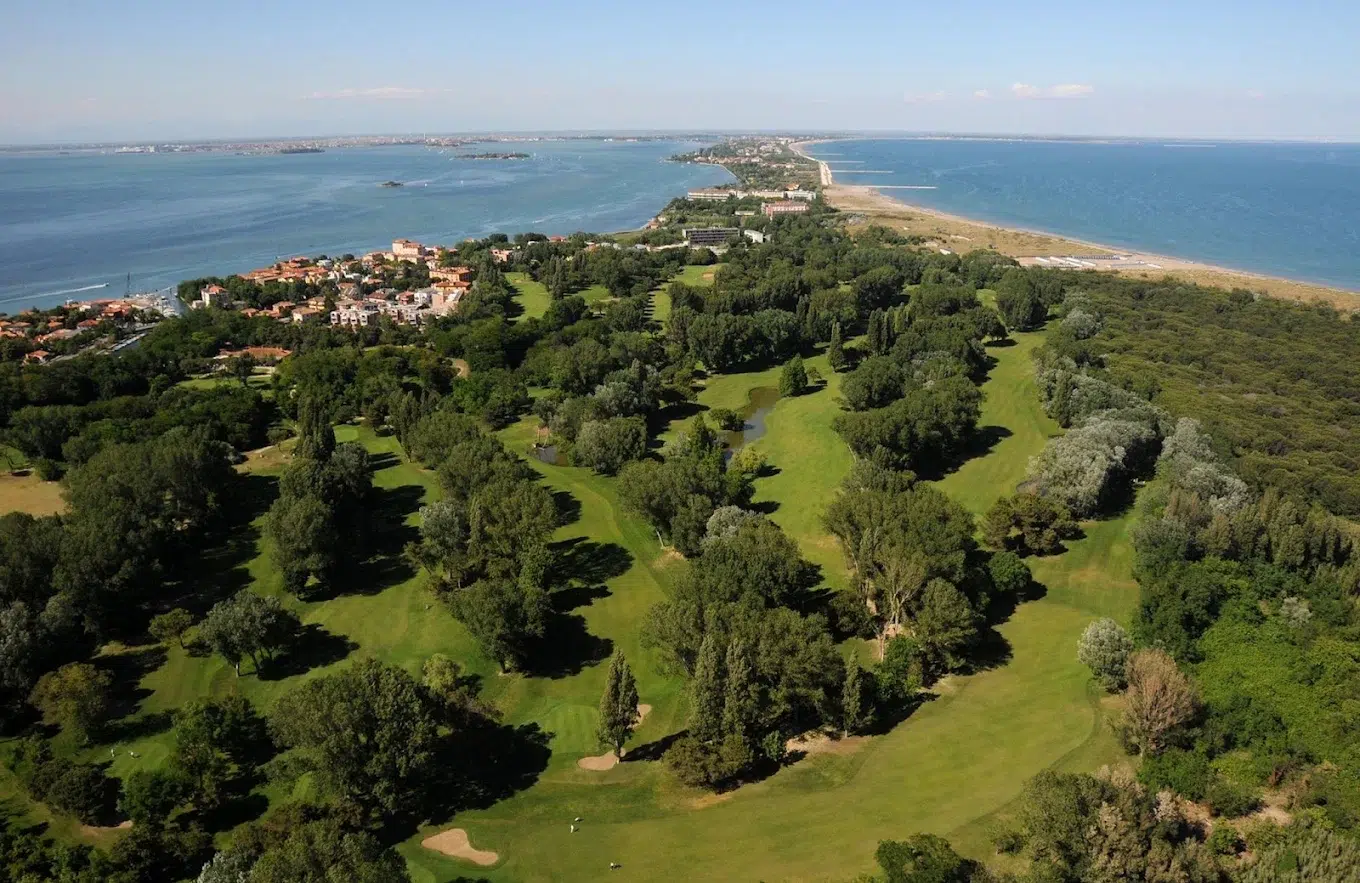
The journey to Venice Golf Club is not a transfer so much as a transition. The density of the historic centre slowly gives way to open water, gardens and the broader horizons of the Lido. Founded in the late 1920s and later expanded to 18 holes, the course occupies a rare pocket of tranquillity at Alberoni, close to the mouth of the port of Malamocco.
The landscape bears little resemblance to the ornate city left behind. Pines frame the fairways, dunes rise toward the Adriatic, and the atmosphere is almost meditative. The remnants of former Austrian military structures lend the course an unexpected sense of place, giving it a character that is distinctly Venetian without relying on canals or campanili.
It is also remarkably quiet.
In a destination where crowds gather before breakfast, and the most famous viewpoints are rarely empty, the course offers space, stillness and a sense of discovery. Golf here feels like a private secret, known to those who understand that Venice reveals its most rewarding pleasures away from the obvious routes.
The Lido itself has always existed slightly apart from the rest of the city. Developed in the 19th century as a fashionable seaside resort, the long, narrow island became synonymous with bathing culture, grand hotels and international society. Lord Byron is said to have ridden along its shore, Thomas Mann set Death in Venice against its languid atmosphere, and the Venice International Film Festival has brought actors, directors and aristocratic glamour to its waterfront since 1932.
Yet away from the festival flashbulbs, the Lido retains a softer rhythm. There are gardens, beaches, tree-lined avenues and residential streets that feel almost provincial in contrast with the intensity of San Marco. The golf course belongs naturally to this landscape, offering a sporting interlude that feels both elegant and unexpected.
After a round, the return to Baglioni Hotel Luna completes the ritual. The water taxi approaches the hotel’s private landing, the palazzi rise once more from the lagoon, and the day shifts effortlessly from sport to aperitivo.
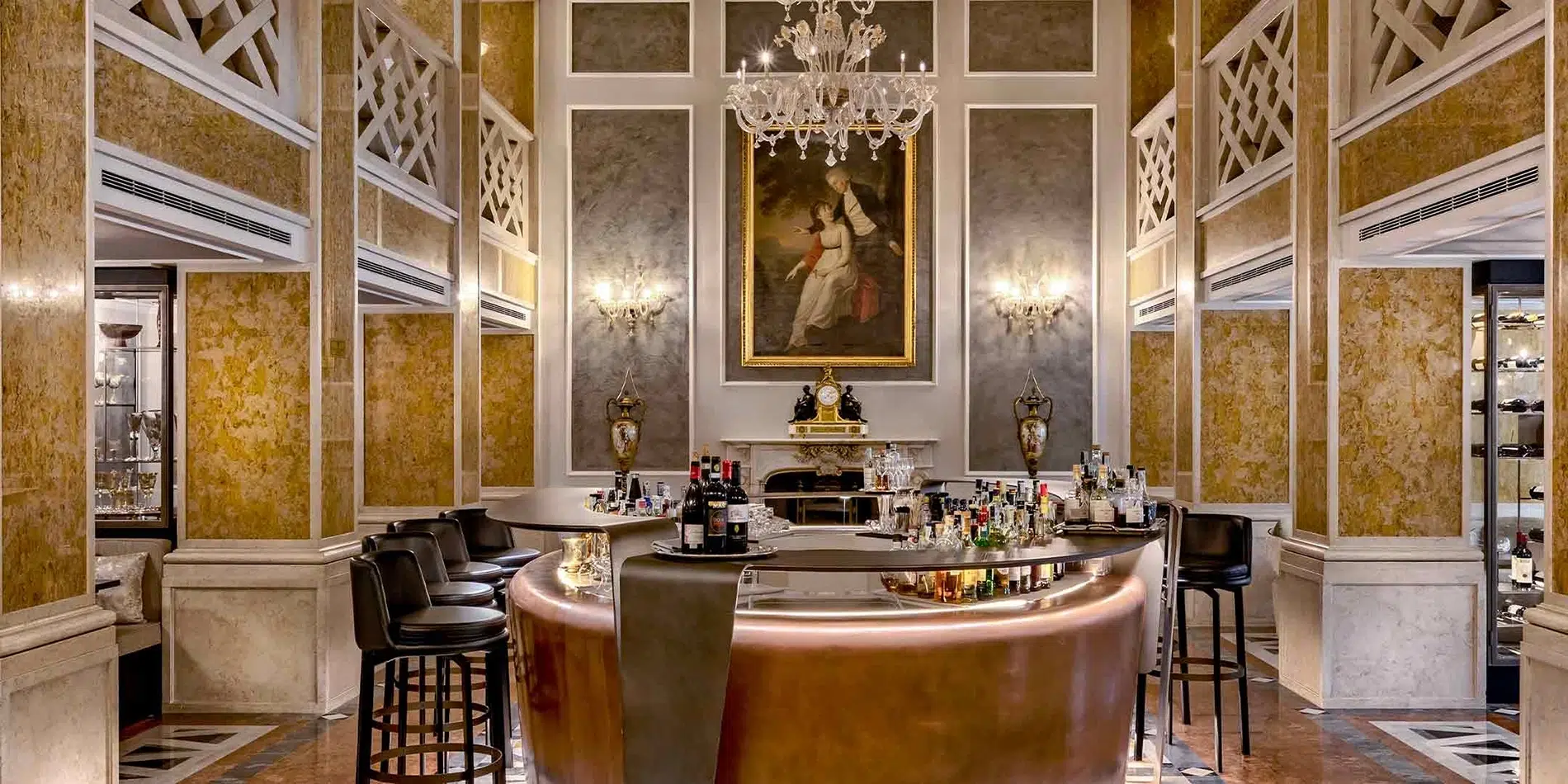
The Canova Bar provides the ideal setting for that transition. Recently renewed, it retains the sophistication of a classic hotel bar while feeling relaxed enough for an unhurried drink after the course. A well-made Negroni, a glass of Franciacorta or a Venetian spritz carries particular appeal when accompanied by the knowledge that no car journey, traffic jam or conventional hotel transfer has interrupted the day.
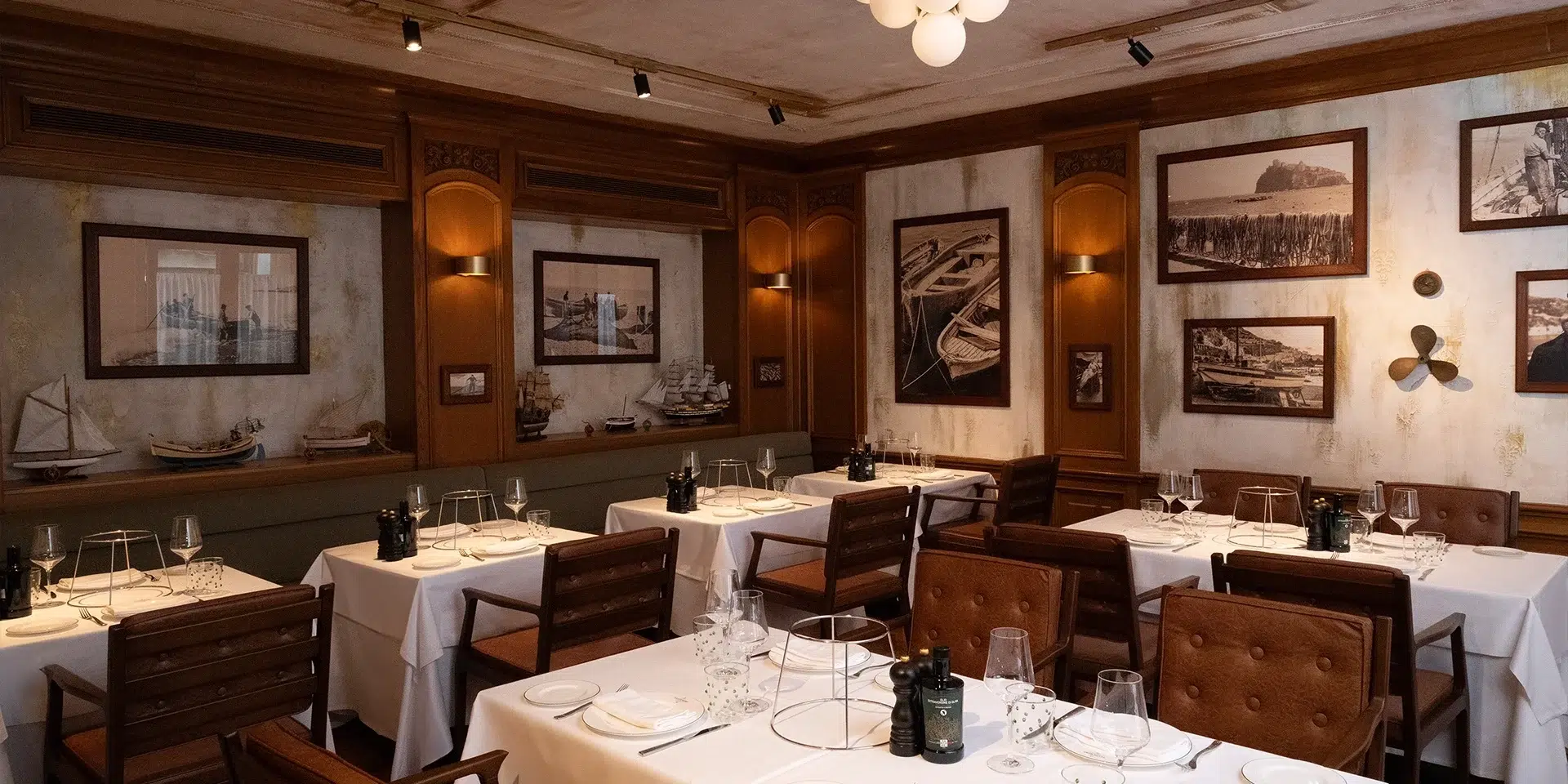
Dinner at Santo Mare continues the sense of place. The restaurant’s seafood-focused menu is rooted in the Mediterranean and shaped by the ingredients of the lagoon. Dishes may include risotto accented with bee pollen and oysters, seafood delicately marinated and flambéed with gin, and refined preparations that allow the natural character of the catch to remain central.
The experience is polished without becoming overly formal. Venice is present in the flavours, but not reduced to cliché. This is contemporary dining that respects tradition rather than merely reenacting it.
The Marco Polo Ballroom remains one of the hotel’s defining spaces. Breakfast is served beneath 18th-century frescoes associated with the School of Tiepolo and 19th-century paintings by Ermolao Paoletti, turning the first meal of the day into an occasion. Coffee arrives under painted ceilings; morning light catches the gilded details; conversations soften instinctively in surroundings that have witnessed generations of travellers.
It is difficult to imagine a more elegant setting in which to consider a second round.
“The renovation of our rooms and suites, the transformation of Canova Bar, the opening of Santo Mare and the recent renovation of the Marco Polo Ballroom all reflect our vision of honouring our heritage while looking confidently to the future,” says Massimo Baldo, Vice President, Europe at The Palace Company.
That future is being shaped under the direction of General Manager Tito De Benedetto, whose appointment signals the hotel’s renewed ambitions within the luxury landscape. As part of The Palace Company’s European portfolio, Baglioni Hotels & Resorts is expanding its presence, but the Venice property remains distinct, a hotel whose value lies not simply in service or setting, but in the way it brings the city’s history into the present.
There are many ways to experience Venice. One may arrive by gondola, linger over cicchetti, tour the palazzi or watch evening descend from a terrace above the lagoon. Yet few itineraries possess the singular rhythm of leaving St Mark’s by private water taxi, playing 18 holes beneath the pines of the Lido and returning in time for an aperitivo beneath frescoed ceilings.
Baglioni Hotel Luna makes this unlikely combination feel entirely natural.
It is not merely a hotel near Venice’s greatest sights, nor simply a grand address entering a new chapter. It is a portal into a more layered version of the city, one where heritage, design, gastronomy and sport move together with the ease of a boat crossing still water.
And in Venice, where the most memorable experiences often begin with a departure, that may be the greatest luxury of all.