Home to six unrivalled camps which showcase the beauty of the Okavango Delta, Jao Reserve captures the true essence of the world’s largest inland delta. For more than a quarter of a century, the Kays family have helped shape Jao Reserve, with heritage, conservation and community at its core. Upscale Living magazine brings our readers closer to the newly reimagined Kwetsani Camp before continuing to the ultra-luxurious Jao Camp.
Kwetsani Camp
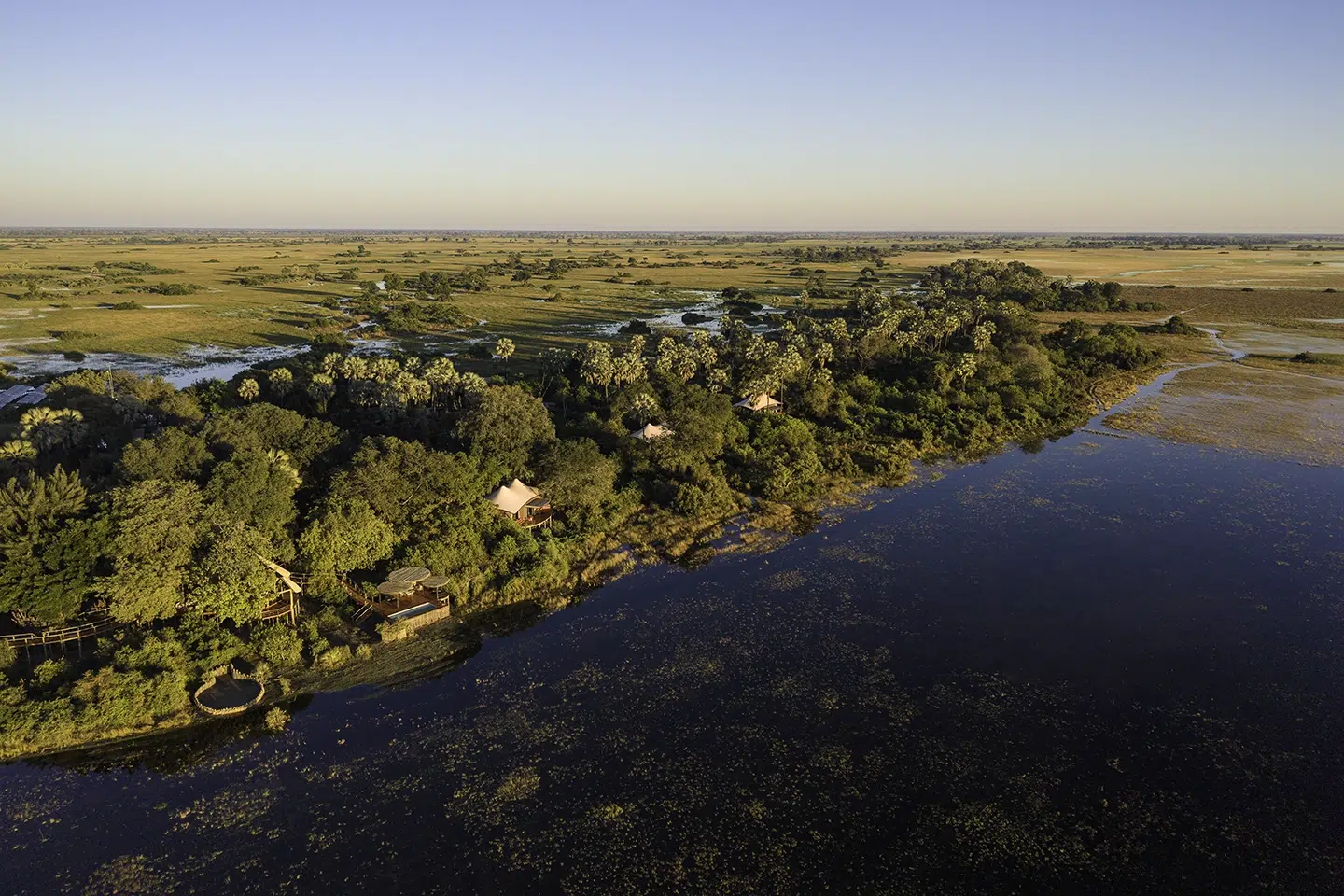
On a palm-fringed island within the private Jao Reserve, Kwetsani Camp is elevated amongst towering trees, giving it an intimate treehouse feel. Following a complete rebuild from the ground up, the new camp is spectacular! Arriving on a Sunday after a charter flight from Maun International Airport and a 45-minute boat transfer, I am warmly welcomed by camp managers Phil and Jess. Ushered to the main dining area, the vistas over the floodplains are sublime, and watching the sun make its appearance while having pre-game drive breakfast is a worthwhile experience.
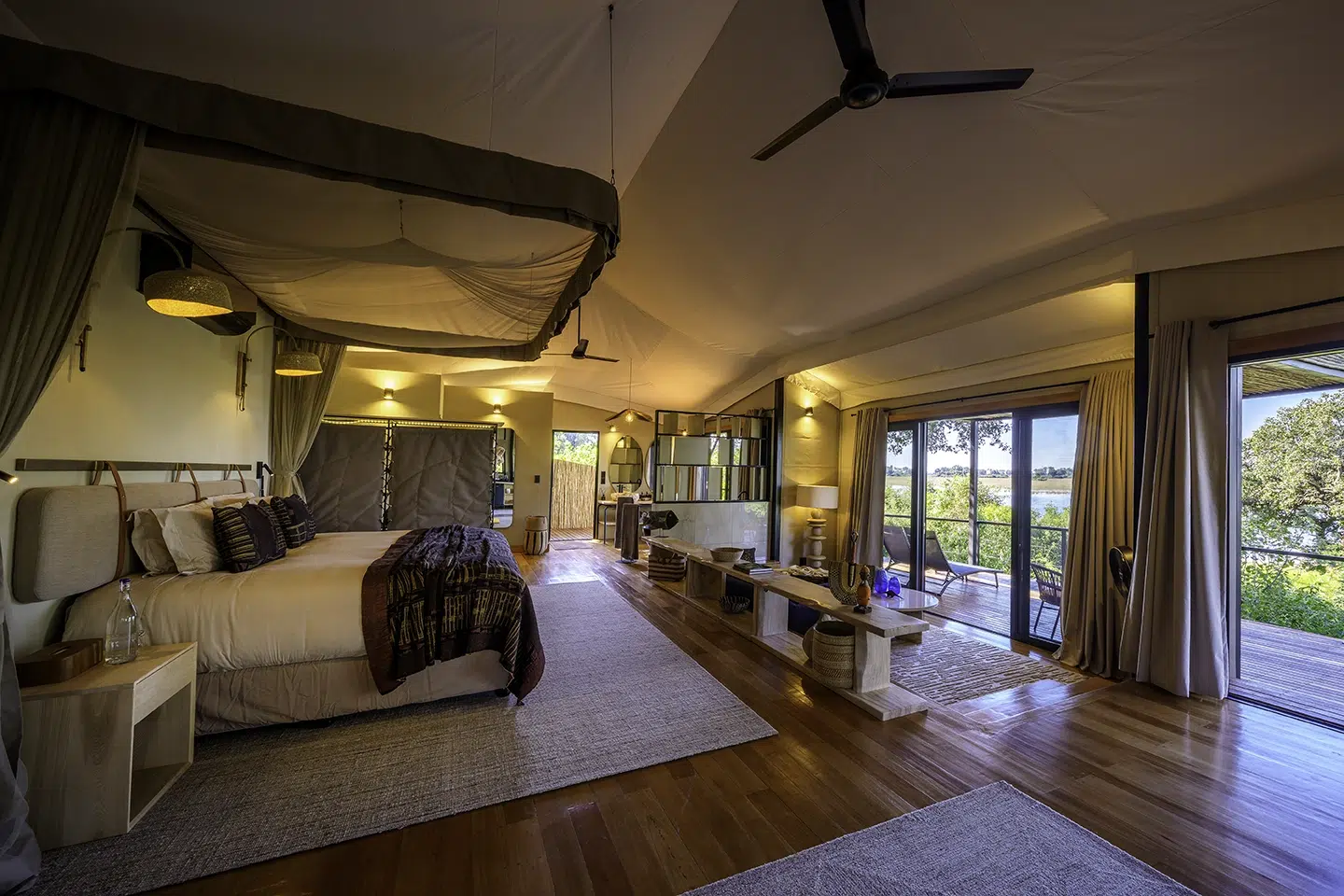
At the very end of a wooden walkway is tented suite number 6, where I am staying for the next three nights. Swinging open the large front door, the space reveals the design vision of Cathy Kays and her daughter Tiffany Riley, who worked together to reimagine Kwetsani with contemporary interiors that remain firmly connected to the surrounding wilderness. To the right of the suite is a drinks station with a DeLonghi Magnifica Start coffee machine, an inclusive mini-bar and a writing desk. On the left-hand side, the bedroom is dreamy and consists of a King-sized bed, twin nightstands and a sunken lounge with navy blue couches and marble top tables.
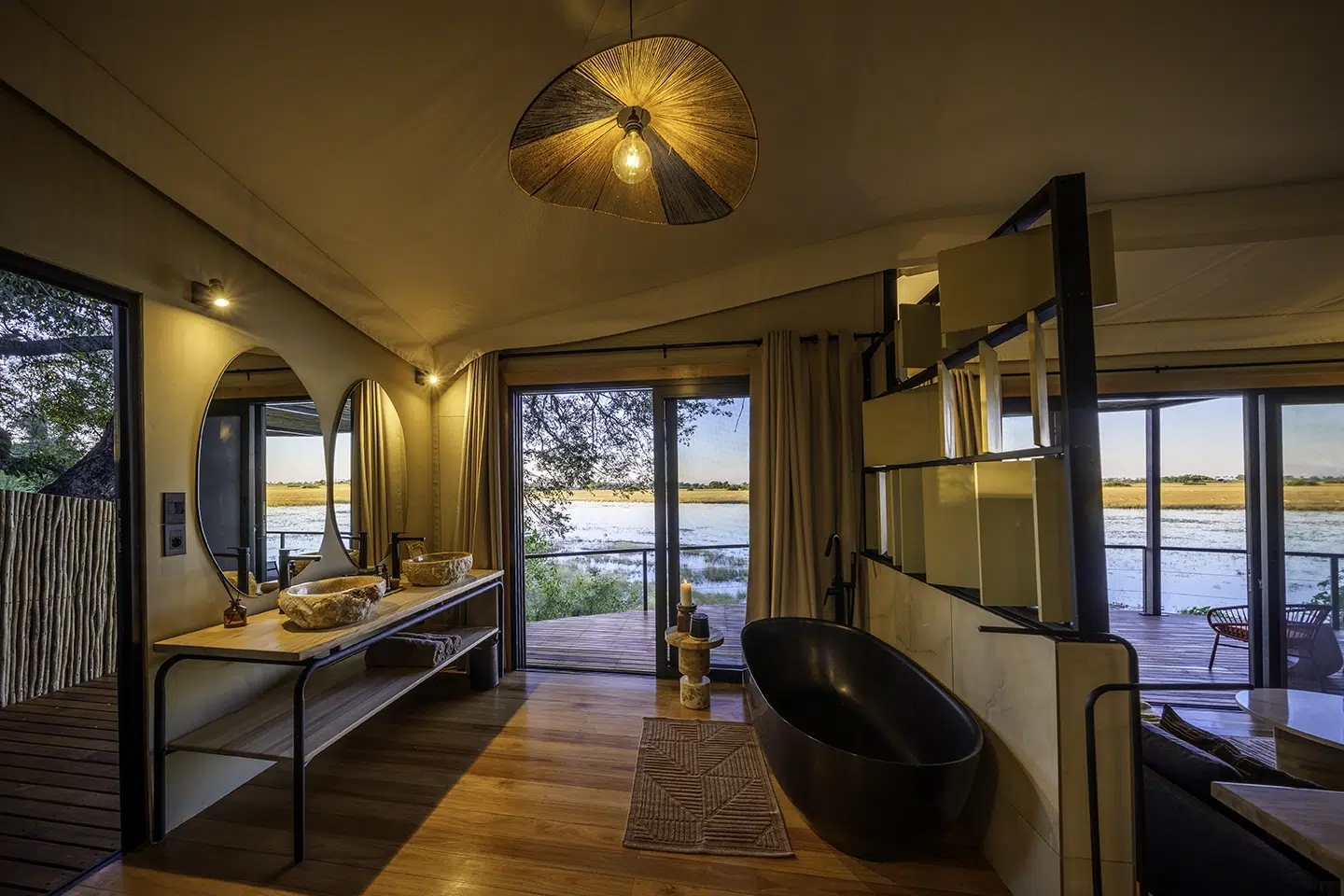
A screen, which is part of the wardrobe, separates the bedroom from the bathroom. Double quartz vanities are framed by two oval mirrors, and guests have a choice whether to cleanse using the indoor or outdoor shower, or soak in the freestanding tub. On the outside deck, recline on the sun lounger while taking in the passing parade of wildlife on the floodplains.
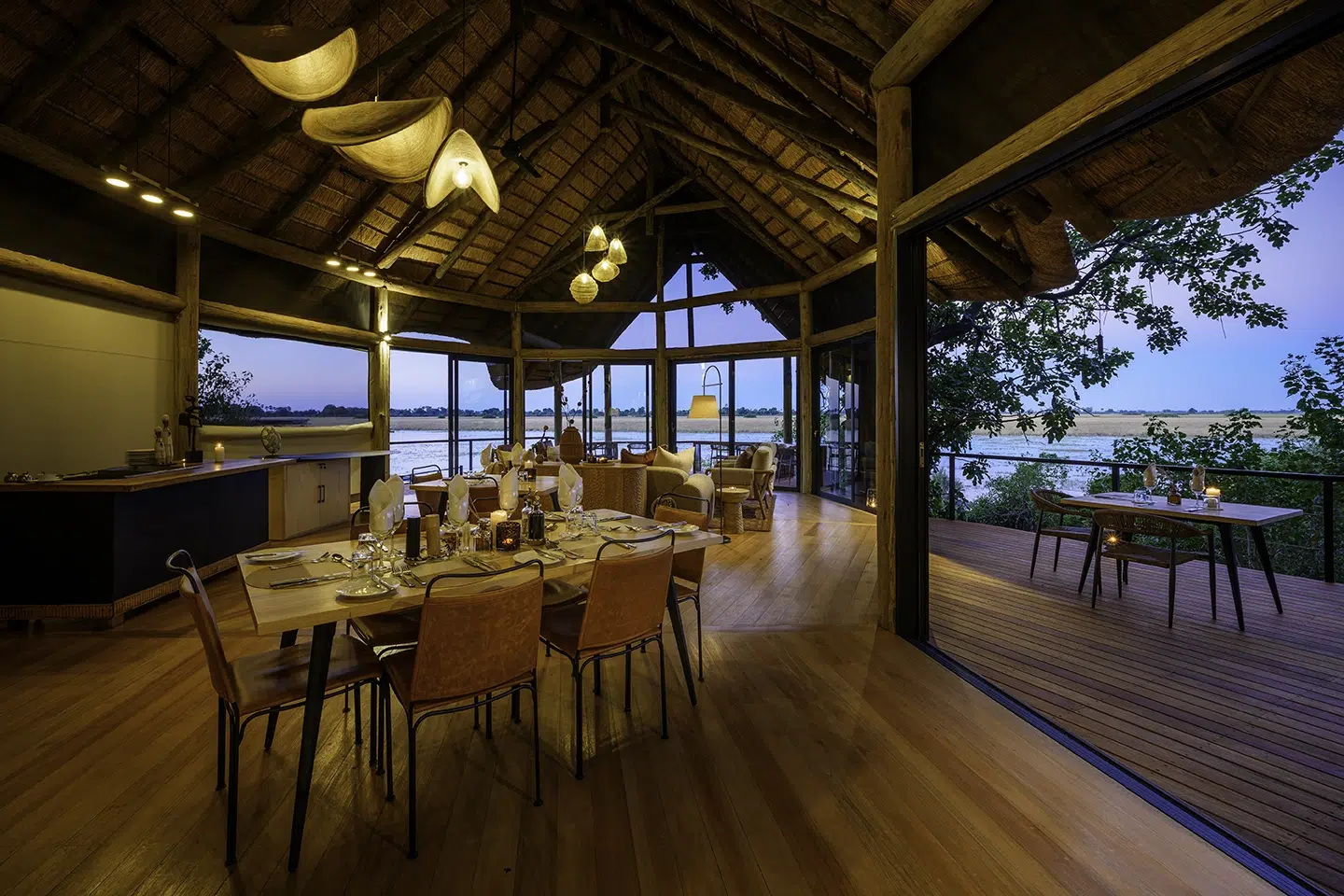
Meals are served in the main dining area, and lunch might be enjoyed poolside with a red lechwe grazing close-by or a lilac-breasted roller flitting past. Chef Binoh ensures that the food at Kwetsani is tasty, and menus are crafted with care and understanding of the guest preference. Waitron and sommelier Tersh presents suitable South African wine pairings for each course at dinner, with Amarula and Jägermeister the accompanying choice for dessert.
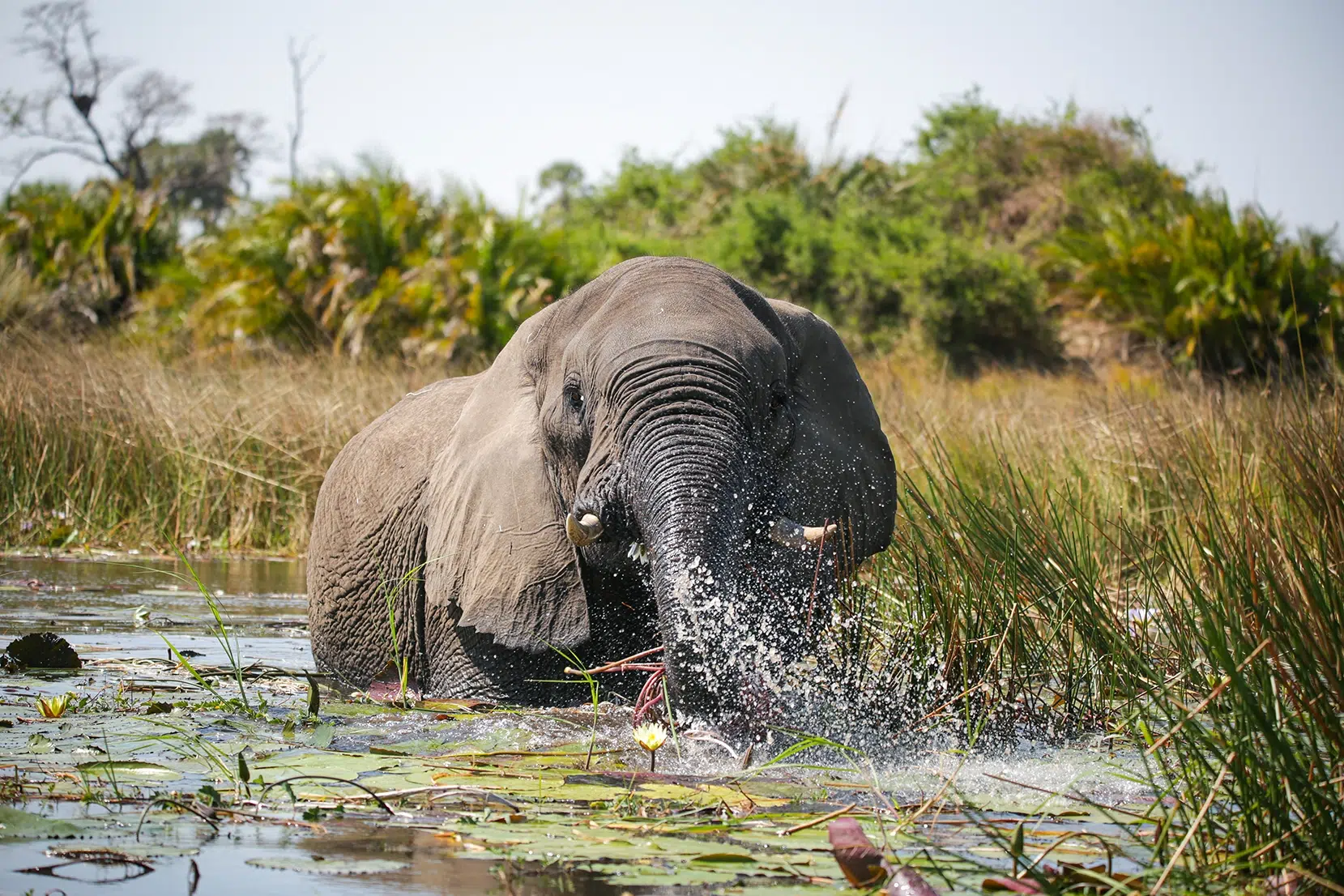
Twice daily safaris form an integral part of a stay at Kwetsani, and guests can opt for a boat cruise on the channel, a traditional mokoro excursion when water levels permit, a walking safari, or a night drive for those who want to see nocturnal animals or simply appreciate the African night sky devoid of light pollution. Going on a boat cruise is a fascinating way to get up close to a number of bird species, such as the tiny Malachite Kingfisher holding onto a reed while it sways in the wind. Sitting a few feet away from a large bull elephant feeding on what is referred to as ‘hippo grass’ is unusually serene. He also seems to like feasting on water lilies, ridding the plant of any sand by shaking it back and forth. When guide Bolatotswe, better known as Mr. Bee cuts the boat engine, we glide soundlessly along the channel.
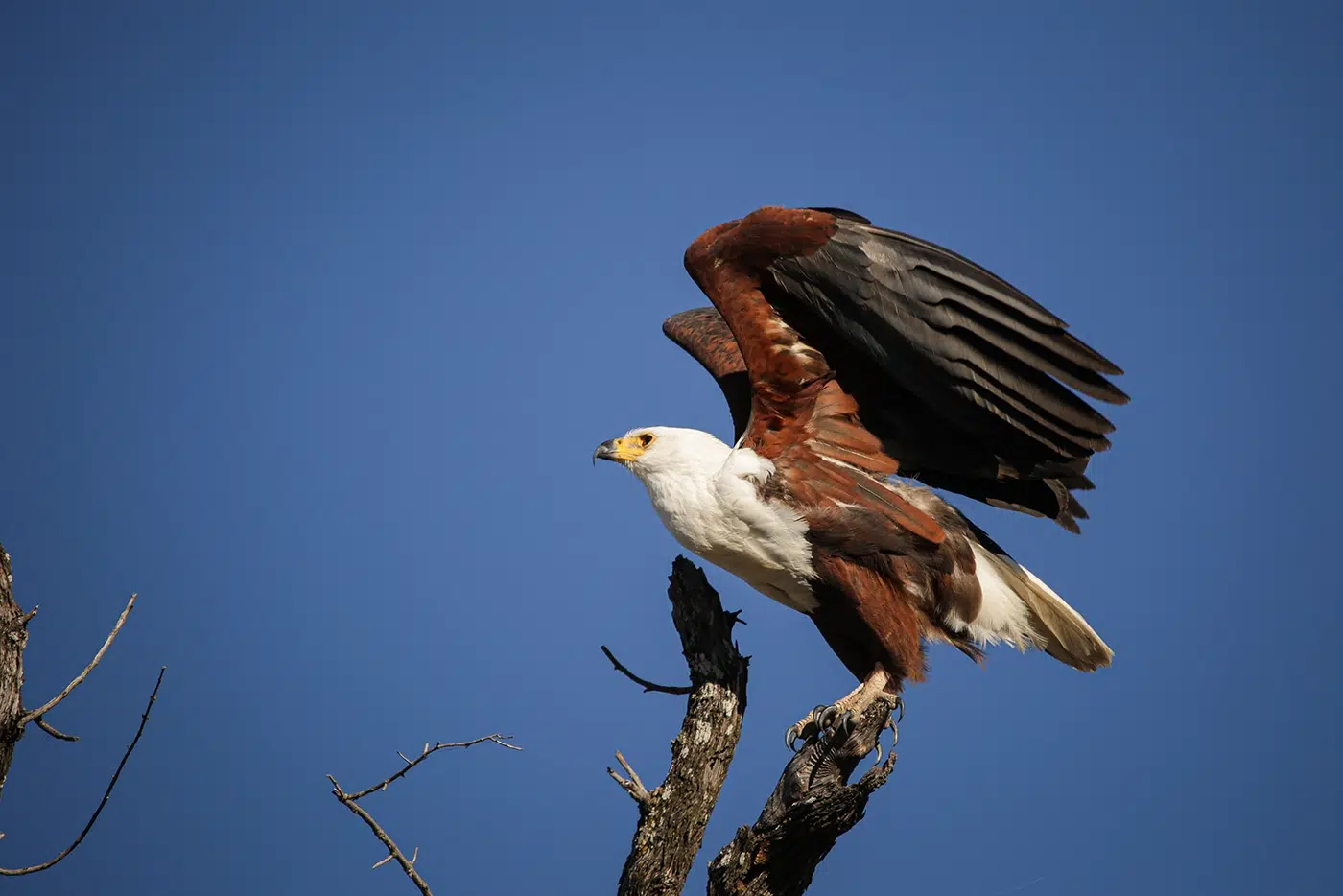
By far the most requested sighting for visitors to the African continent is to see a leopard on safari. Which is not an easy ask, or a straightforward task. Not only are they the masters of camouflage as their coats blend seamlessly into the surrounding grass, they are also naturally shy creatures. When Mr. Bee gets notified that fellow guide Johnny has found a leopard, which happens to be Mr. Bee’s favorite wildlife, he is as excited as I am. “Follow the sound of vervet monkeys alarm calling”, Johnny instructs. Mr. Bee cuts the 4×4 Toyota Land Cruiser’s engine. The noise is coming from the left or is it straight ahead? We wait our turn, spending time with a stunning African Fish eagle atop a bare tree.
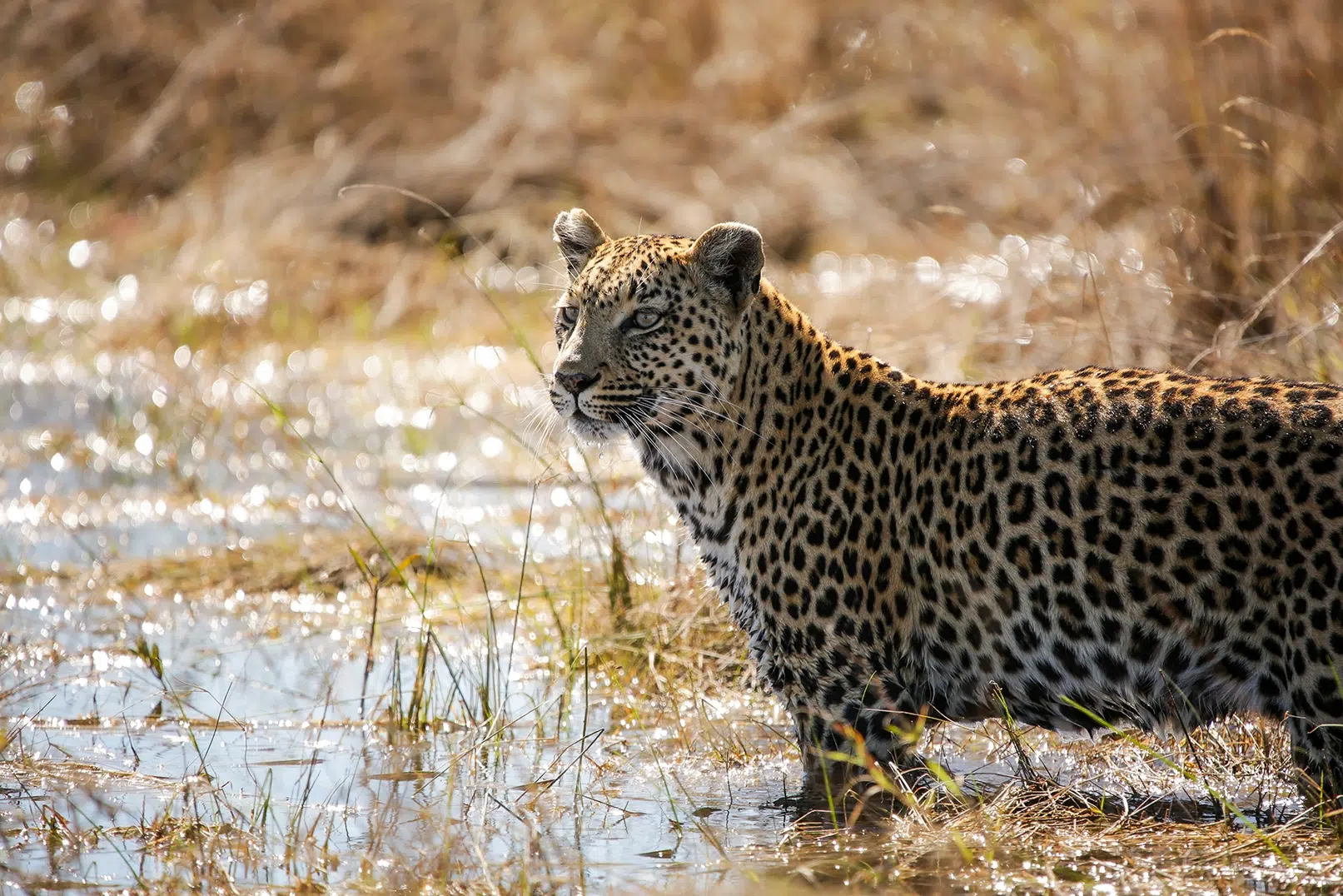
It’s hard to pinpoint which direction to take, but we eventually join two other vehicles (Jao Reserve allows a maximum of three vehicles per sighting) and take in the magnificence of a female leopard. Loud protesting is coming from a male vervet monkey on a tree branch right above her as she caught one of his family members. She glances upwards, her blue-green eyes indicating that she needs to eat, and he can relax as he wasn’t on the menu. Having finished her snack, she stretches and starts walking towards a watery channel. She is limping, and one of the guides suggests that the injury may have occurred during an encounter with a red lechwe the previous week.
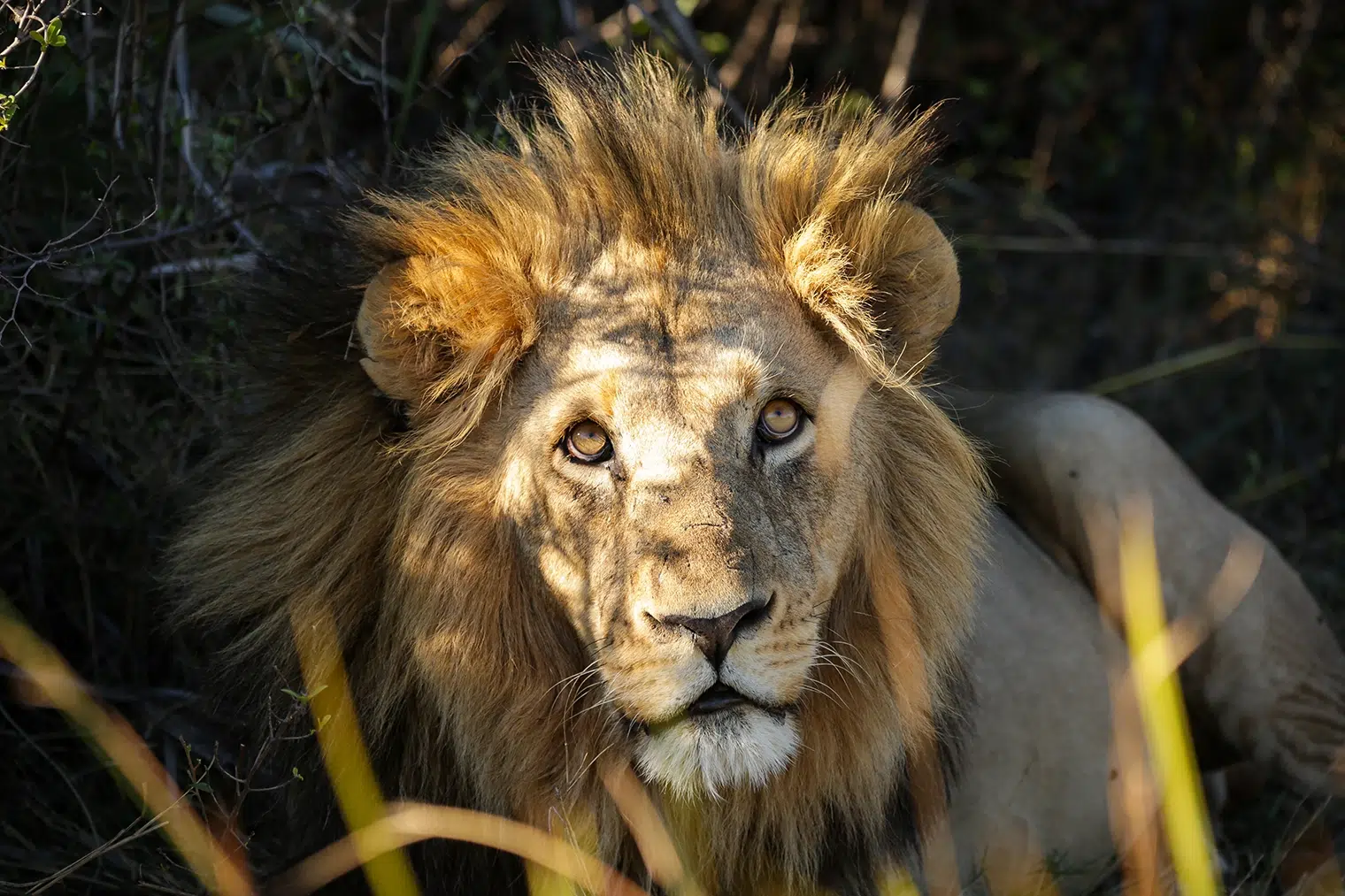
After lunch, I take a leisurely stroll to my luxurious tented suite. The winter sun is glorious and sitting on one of the red chairs on my outside veranda, the incessant barking of baboons catches my attention. It’s also the subject at High Tea – why have the baboons not stopped vocalizing for what could only be construed as a threat? I ask Mr. Bee whether we could take a quick drive en route to our afternoon safari to establish what might be lurking. As we turn the corner, he spots them on the bridge behind camp – a lioness and her two male sub-adult cubs. They are walking straight towards us, but the cubs appear to be a tad uncertain of our presence. Mom keeps walking while the two brothers lag behind, gradually catching up to her in a playful manner. A male has made an appearance, and he decides to claim the kill the female had made for himself. An aggressive and vocal stand-off sends the lioness and cubs scurrying, but they stay close enough should the lion abandon the carcass, which gives them the opportunity to feast on the spoils of their mom’s labor.
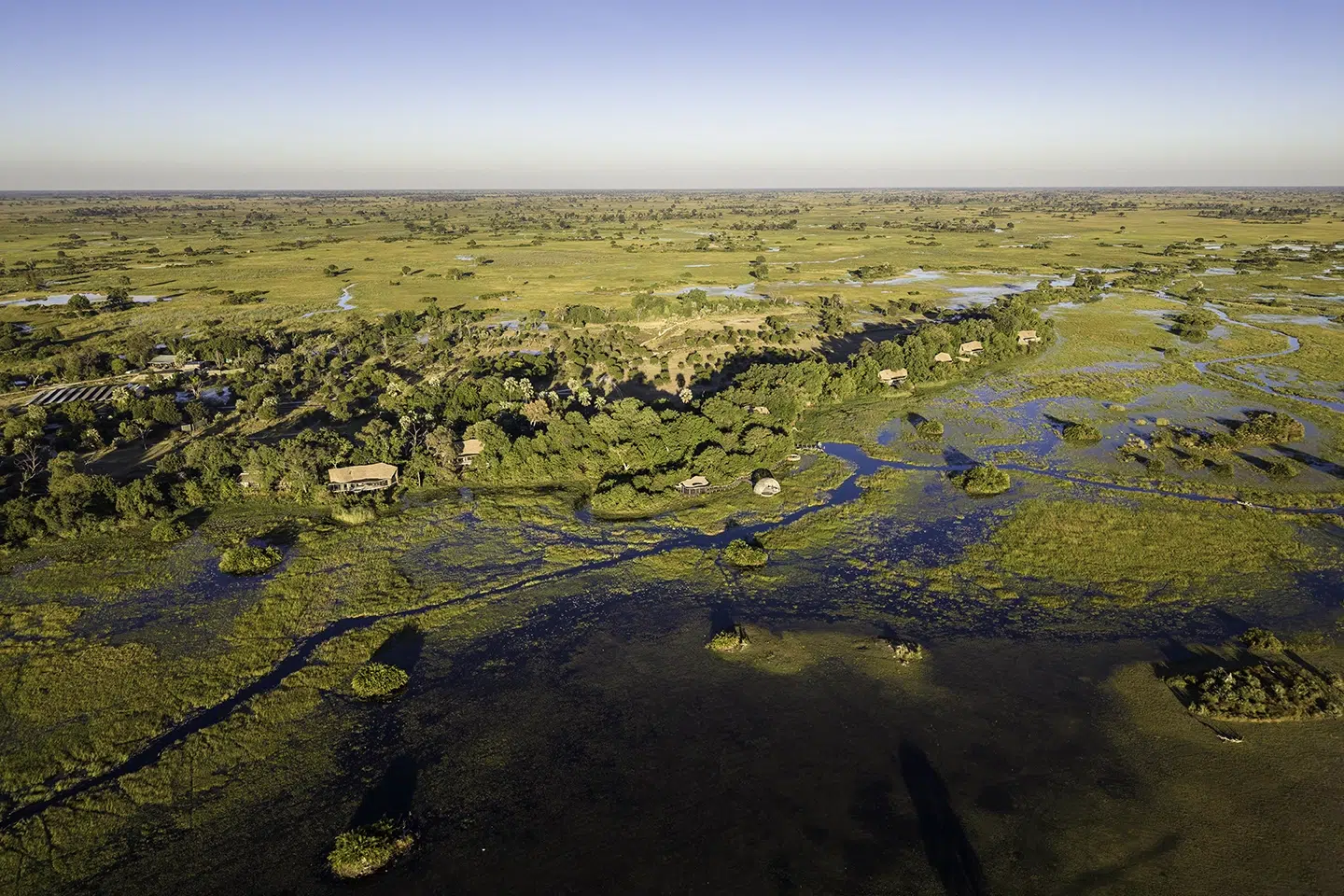
Jao Camp
The absolute pinnacle of luxury, Jao Camp occupies an enviable position in the heart of the Okavango Delta. Getting from Kwetsani to Jao is done by an unhurried boat transfer, and making our journey along the waterway, we pause every so often to admire the wildlife making an appearance – the electric blue plumage of a Malachite Kingfisher catches our attention, a solitary elephant stands in the channel, and a pod of hippos are sunning themselves on a sandbank. Friendly faces at the jetty make me feel welcome, with camp managers Ram and Peter ready to show me around the impressive camp.
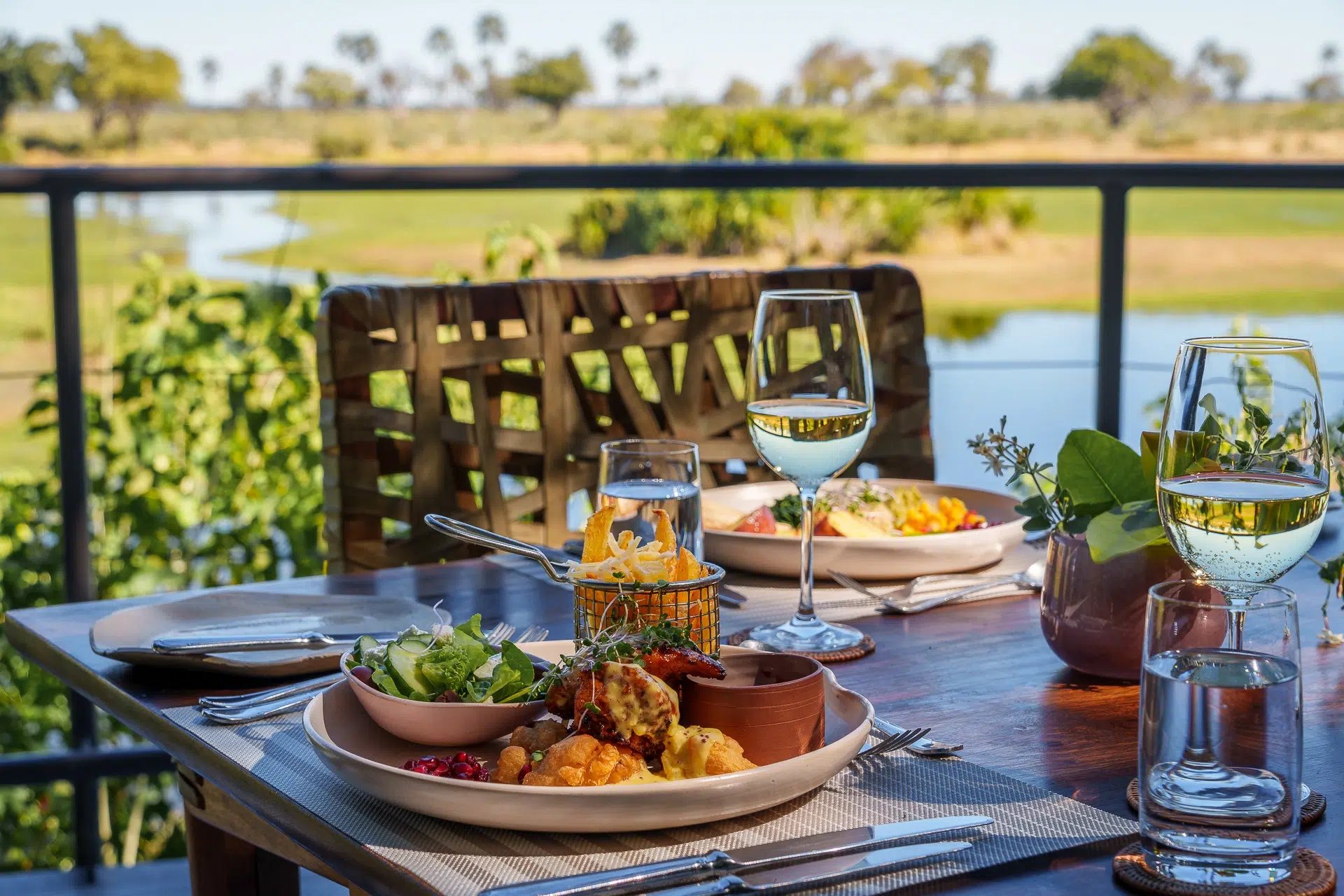
An architectural masterpiece, Jao Camp sits firmly in the category as one of the very top lodges in Botswana. A variety of factors make it a worthy stay – the accommodation, which comprises suites and villas, the setting of the camp overlooking the floodplains, the wildlife in and around the lodge, the warm hospitality, and the exceptional cuisine. Executive Chef Emile has perfected the art of creating the most delicious meals, while appreciating the importance of taste, texture and presentation. “It is my mission to never let guests at Jao go hungry,” he says with a twinkle in his eyes. Languid lunches and delightful dinners are served in the main dining area, and breakfast really is the most important meal of the day here. Think a selection of pastries, fresh fruit, homemade muesli, yoghurt and hot options to order. Not forgetting afternoon tea, safari snacks and goodies to eat in your inclusive mini-bar, there is food aplenty.
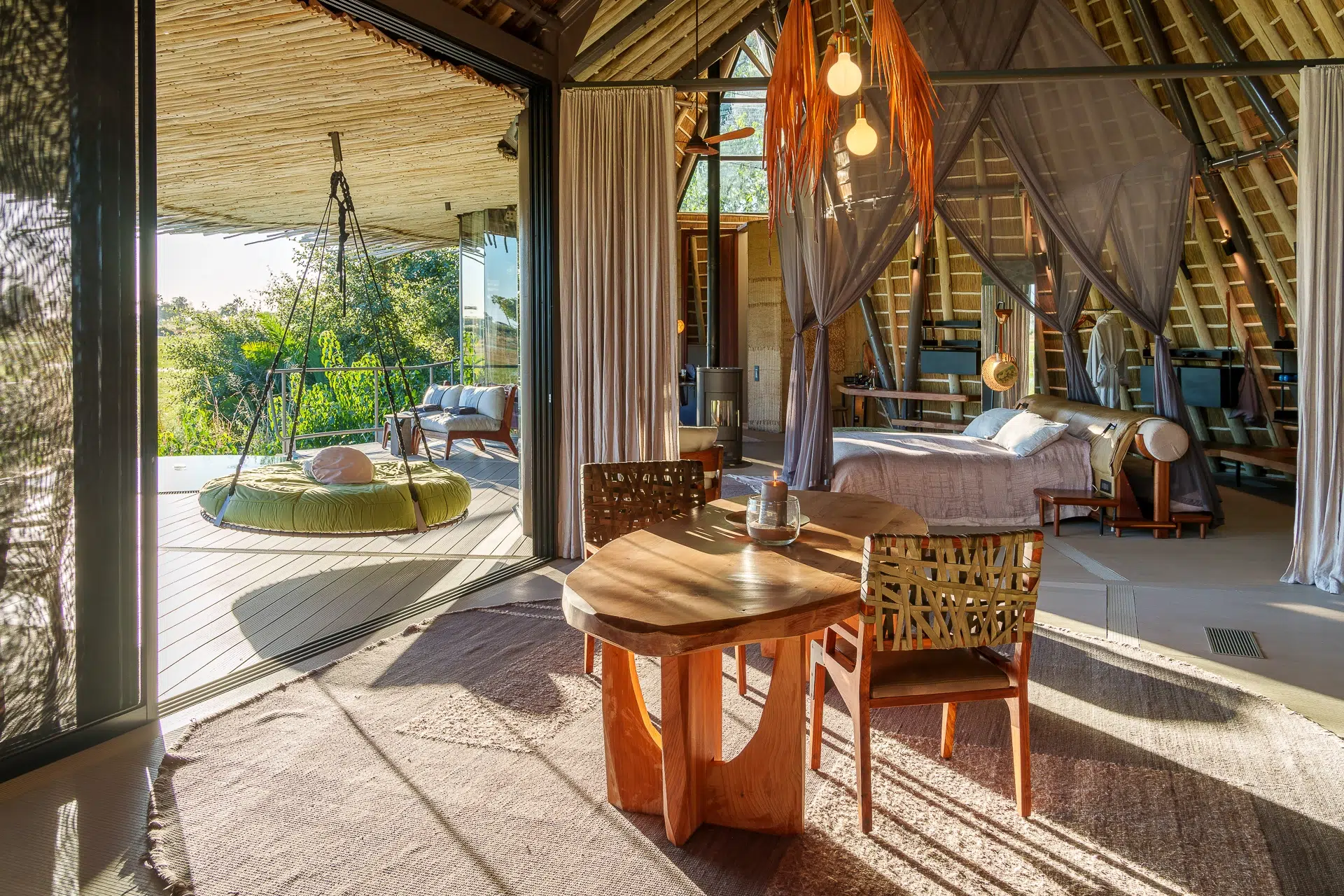
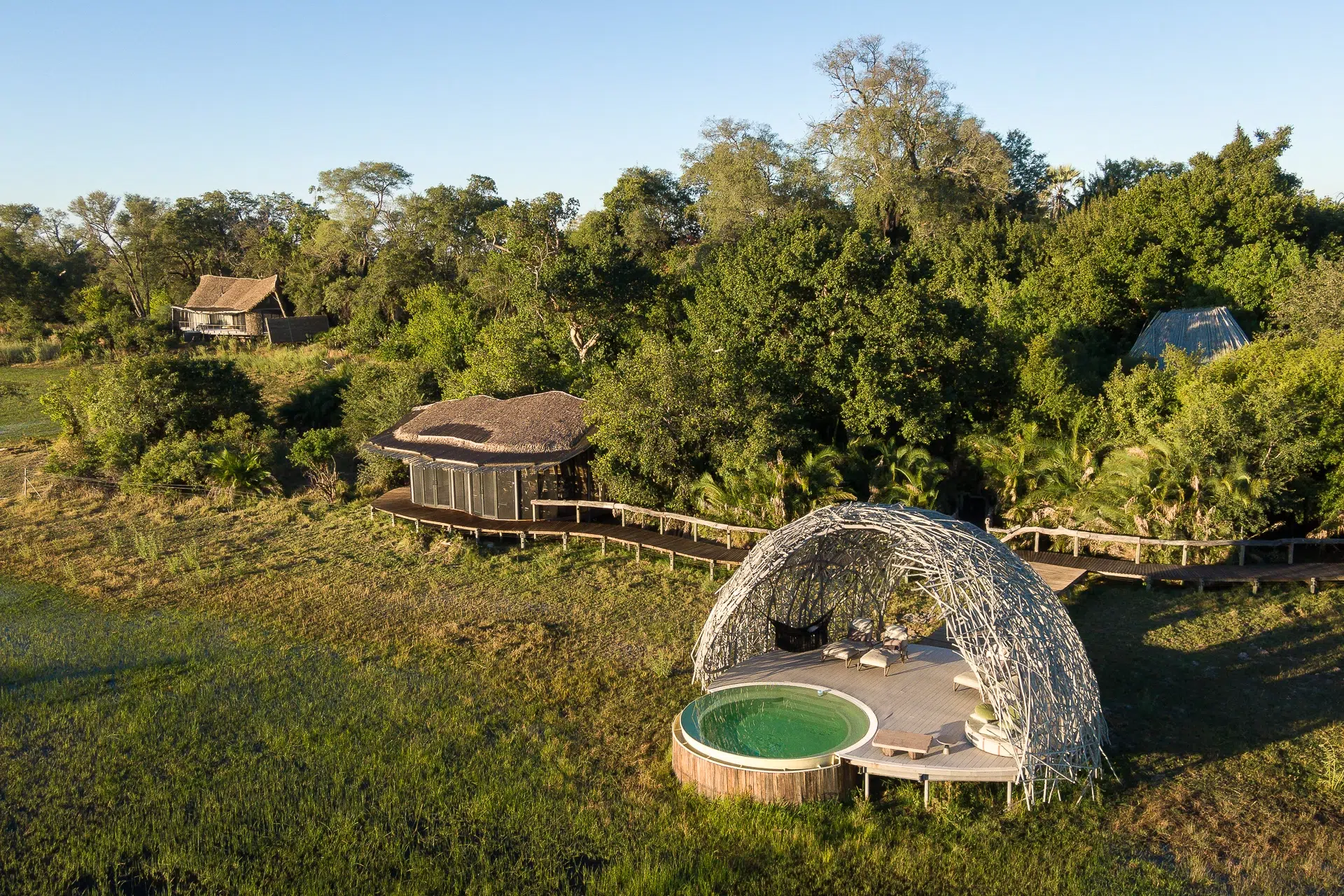
The suites are set far apart for the ultimate in privacy, with generous open-plan spaces and design and interiors by South African architects Silvio Rech and Lesley Carstens. With only five suites and two expansive two-bedroom villas elevated above the ground, nature is all around you. Generous open-plan living areas comprise of a daybed, a loo with a view, a kitchenette, dining table and chairs, a bedroom, closet space, a bathroom with double vanities, a freestanding bath, an indoor and outdoor shower and a flush loo. On the outside deck, guests can take a siesta on the daybed or cool off in your private plunge pool on hot days. Spend time in Jao’s curated museum, where the story of the Kays family’s deep connection with Ngamiland unfolds alongside the natural and cultural history of this remarkable corner of the Okavango.
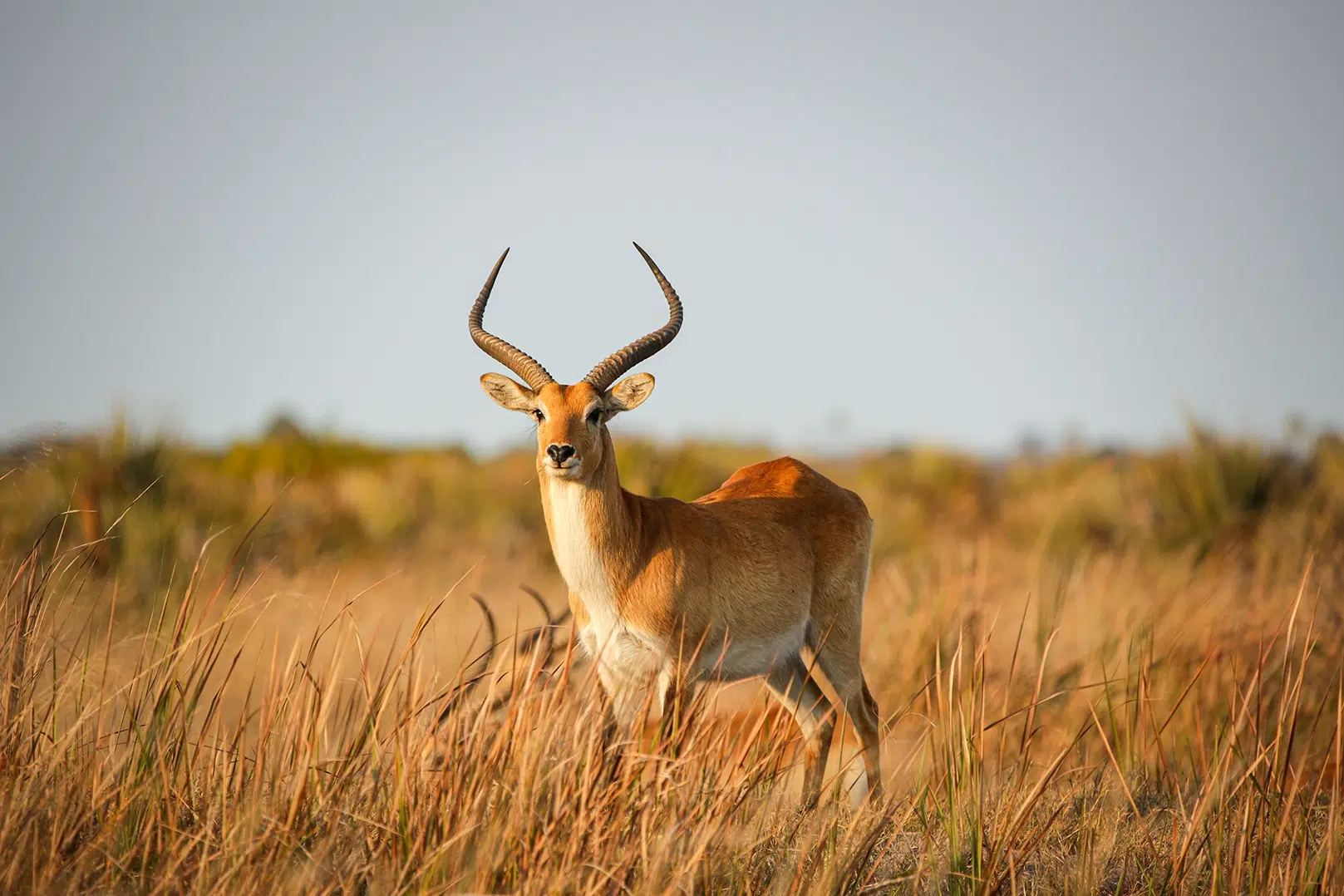
Guide Gift introduces himself at afternoon tea, and it’s decided that we will take a drive around the island to see what we can find. Red lechwes, the beautiful semi-aquatic antelopes, are out in full force. There are large breeding herds on the plains, and in front of the lodge. It’s not uncommon to hear them splashing through the water while you’re seated at lunch, or from the comfort of your outside deck. The Delta is the ideal environment for them as they like the marshy areas where they can feed on aquatic plants and grasses. Standing knee-deep in the water assists them in staying safe from predators. With their heart-shaped noses and shaggy coats, they are a favorite species found in Africa.
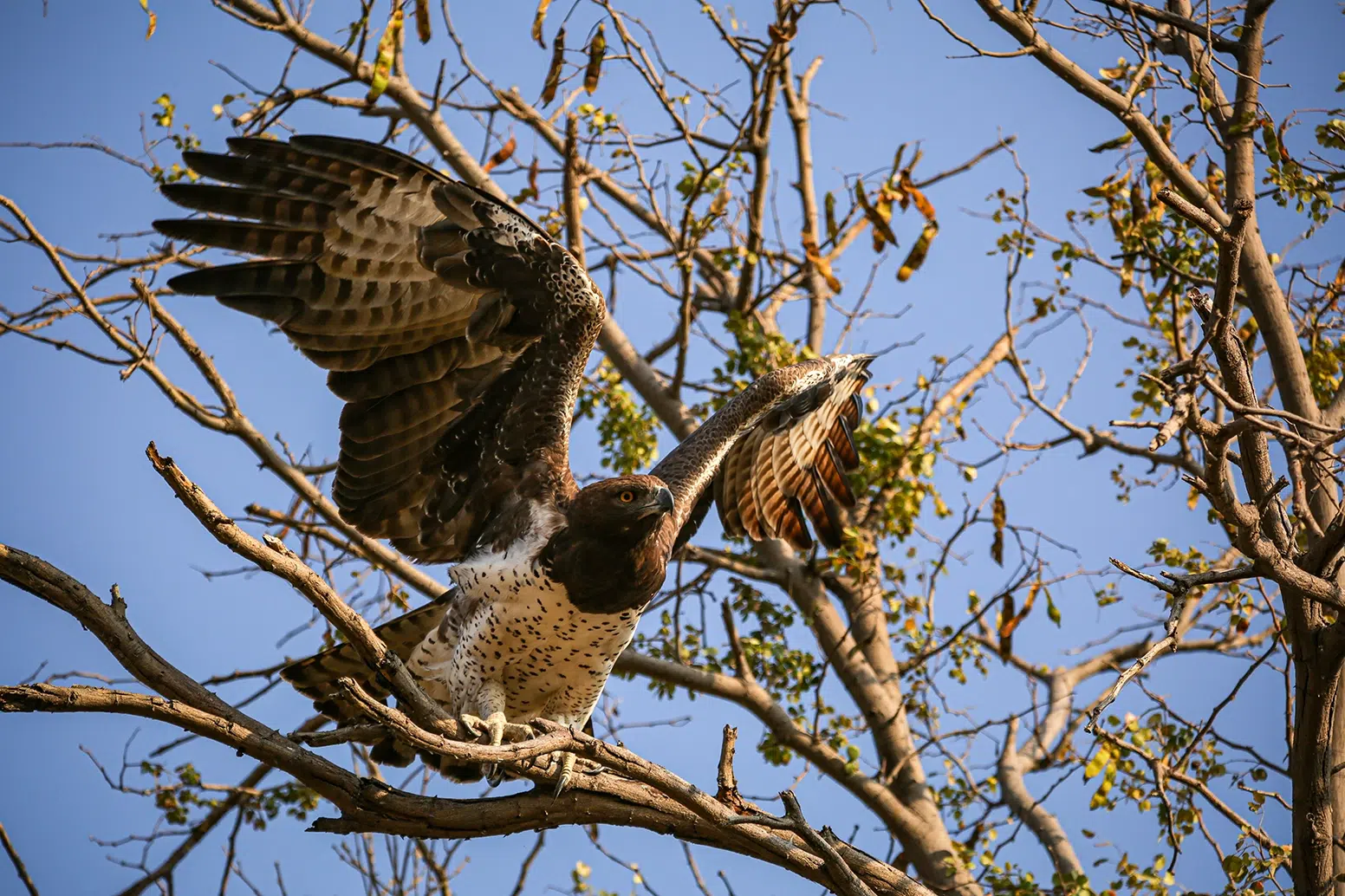
Parked in the shade of an imposing jackalberry tree, Gift points to a large nest on the opposite side of the road. The nest is a conspicuous construction of sticks high up in the fork of a bare jackalberry tree, where the female is standing tall right at the top of the structure. The nest belongs to a breeding pair of Martial eagles, among the largest and most powerful eagles found in sub-Saharan Africa. She glares down from her perch, her bright yellow eyes looking to see whether the male might be arriving with some food for her and their chick. With a vested interest in this new family, Gift and I return as often as we can to see what could be happening. Caring for her offspring’s comfort, the female does something called ‘stick drop’, where she collects soft leaves from a tree in order to line the nest. Watching her in full flight is an extraordinary sight.
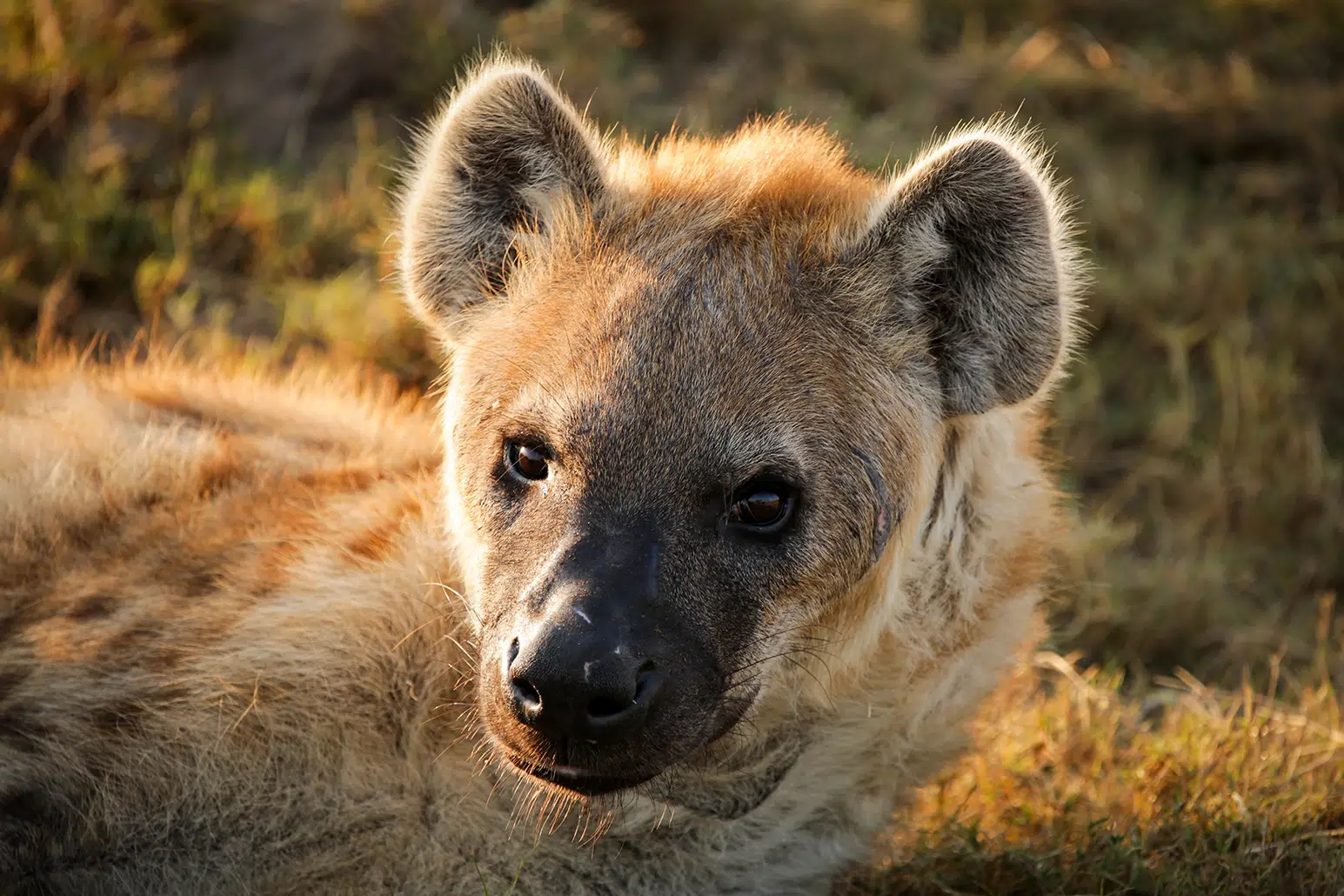
In the evening and sometimes during the night, the sound of a hyena calling cuts through the silence. Popping by the den at the start and end of every game drive, there is no-one home. The den is at the airstrip, and Gift deciphers what he likes to refer to as ‘the bush newspaper – Jao edition’. Returning to camp, the hyena is standing at the end of the wooden bridge, waiting for us to pass so that she can get into camp. She drinks from the channel and disappears again. Back at the airstrip on our morning safari, we find her – a different and equally relaxed hyena basking in the sun’s early rays, clearly wanting to continue her nap. Gift tells me that this specific hyena had an altercation with a leopard over a kill and now has a permanent injury to her leg.
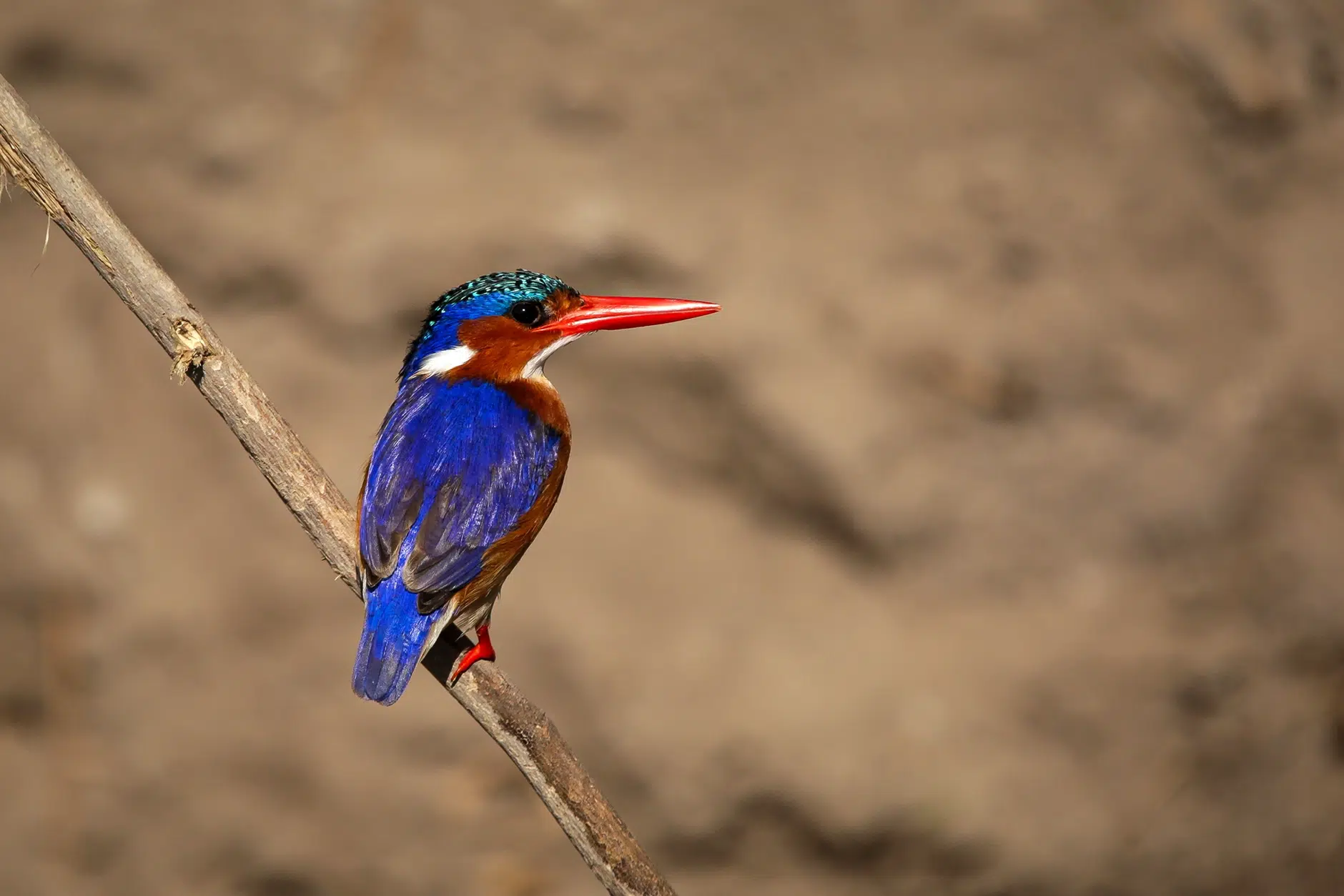
The birdlife at Jao Reserve is superb, with sightings such as African pipits, Meyer’s parrots, Red-faced cisticolas, Grey herons, Pied kingfishers, Striped kingfishers, Blacksmith lapwings, Lilac-breasted rollers, a Pel’s fishing owl, Dickinson’s kestrel, Little bee-eaters, White-fronted bee-eaters, and the photogenic Malachite Kingfisher.
Each camp within Jao Reserve holds its own distinct allure. The warmth of the staff, exceptional accommodation, stellar cuisine and extraordinary wildlife combine to create memories that last long after the journey home. Choosing to stay at Jao Reserve means experiencing first-hand a place the Kays family has helped shape for more than a quarter of a century – a remarkable meeting of elevated luxury, warm Botswana hospitality and the raw beauty of the Okavango Delta.