Yes, and lab-grown diamonds are the reason. Affordable diamond engagement rings under $3,000 used to mean a tiny stone or a poor-quality one, but lab-grown diamonds changed that by costing far less than mined diamonds of the same size and grade. At that budget, La Joya Jewelry offers a large selection of lab-grown diamond engagement rings in real gold, with free shipping, free returns, and long-term coverage included.
This guide explains what that budget buys, where to spend and where to save, and how to pick a ring that looks more expensive than it is.
What a Lab-Grown Diamond Actually Is
A lab-grown diamond is a real diamond. It has the same crystal structure, the same hardness, and the same sparkle as a mined stone, and a gemologist needs specialized equipment to tell the two apart. The only difference is where it came from. One formed underground over a very long time, and the other was grown in a controlled environment over a few weeks.
Because the growing process is shorter and more predictable, the price is considerably lower, and for couples shopping for affordable diamond engagement rings under $3,000, that difference is the entire story, since the same money that buys a modest mined stone can buy a noticeably larger or cleaner lab-grown one.
Where to Spend Your Money
Cut deserves the first share of your budget, because it controls how the diamond handles light and has more influence on how the ring looks from across a table than any other factor, and a diamond with a strong cut will look brighter and more substantial than a heavier stone with a weak one.
Next comes carat weight, which is the easiest quality to notice. With lab-grown stones, you can often reach a size that would be out of range for a mined diamond, so it is worth deciding what proportion feels right for the person who will wear the ring before you start filtering by price.
Where You Can Save Without Anyone Noticing
Color and clarity are the two places where most buyers overspend. A near colorless stone looks white once it is set in a ring, and a clarity grade in the slightly included range can look clean to the unaided eye as long as the flaws are small. Dropping one or two grades in each category frees up real money that you can put toward a better cut or a larger stone.
Metal is another lever. 14K gold is the most popular choice because it balances durability, color, and cost, while 10K is harder and less expensive. Both are fine for everyday wear. Finally, a simpler setting costs less to make, so a clean solitaire or a classic prong style often leaves more room for the diamond itself.
How to Choose a Shape Within Your Budget
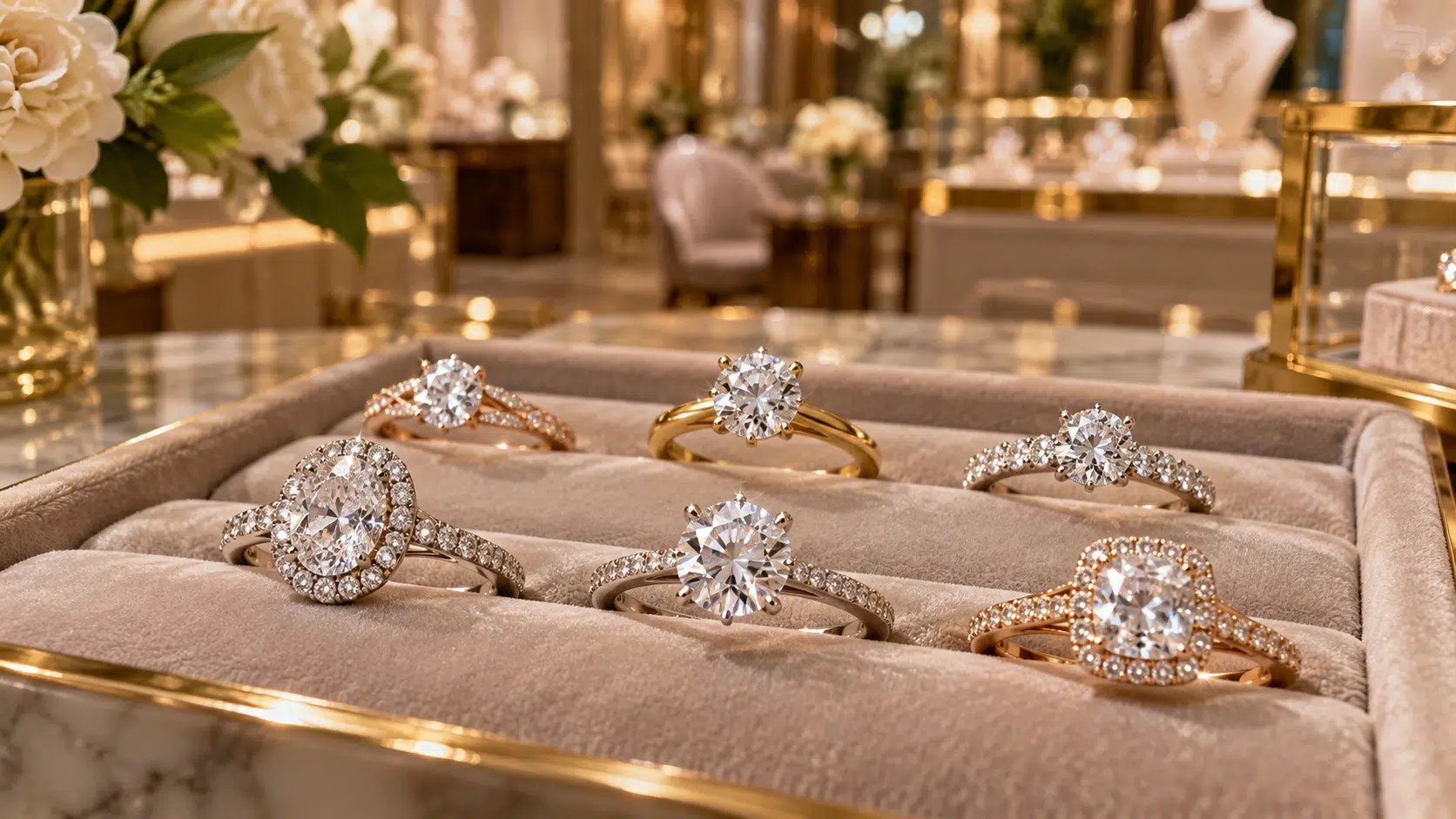
Shape affects both price and appearance. Round brilliant stones are the classic choice and offer the most sparkle, though they usually command a premium because so much of the original crystal is lost in cutting. Fancy shapes such as oval, pear, marquise, and emerald often cost less for the same carat weight and can appear larger on the hand, which makes them a practical option for anyone working with a firm ceiling.
If you are unsure what the wearer would choose, look at the jewelry they already own. Rounded, soft designs usually point toward oval or cushion shapes, while clean lines and geometry suggest emerald or princess cuts. The style quiz on the La Joya Jewelry website can also help narrow down the options in a couple of minutes.
Settings That Look More Expensive Than They Are
Some designs create the impression of a larger or more luxurious ring without a matching price tag, and choosing among them is one of the most effective ways to stretch an engagement ring budget.
A hidden halo adds a ring of small diamonds under the center stone, which catches light from the side and gives the ring a finished, jeweled look. A pavé band covers the shank with tiny diamonds for extra shimmer. A three-stone ring spreads the visual weight across the finger and gives the design some presence.
Elongated shapes such as marquise, pear, and oval tend to look larger than a round stone of the same weight because they cover more of the finger, and they also give the hand a lengthened, elegant line that many wearers appreciate. La Joya Jewelry carries all of these styles in separate collections, so you can browse by setting first and then narrow by shape, metal color, and price.
What You Will Find at La Joya Jewelry
The engagement ring collection at La Joya Jewelry includes more than a thousand designs, and many of them are priced well within a $3,000 budget. On the current listings, a large share of rings sit somewhere between roughly $1,100 and $1,700, and the site has a price filter that lets you view rings between $2,000 and $2,999 as well. That means you can start with a comfortable number and still leave room for upgrades.
Every ring is made with a lab-grown diamond, and IGI certification is part of the buying process, so you can confirm what you are getting. The diamonds are conflict-free, which matters to couples who want the ring to reflect their values. Metals include white, yellow, and rose gold, and styles run from solitaire and halo to vintage, three-stone, and channel-set.
The terms around the purchase are what make the budget go further. Shipping and returns are free, qualifying pieces come with a three-year care plan through Jewelers Mutual, and a lifetime warranty covers routine upkeep such as cleaning and prong tightening.
If a ring is ever lost, a loss replacement guarantee takes 40 percent off the current retail price of a replacement. Protections like these can add real cost when they are sold separately, so having them included changes the true price of the ring.
What If You Need to Spread the Cost?
A ring under $3,000 is still a serious purchase, so La Joya Jewelry offers financing options for couples who would rather pay over time. The site also has a budget calculator that helps you decide on a number before you start browsing, which is useful because it is easy to drift upward once you see a ring you love.
A good rule is to set your ceiling first and then shop only inside it, and if you find yourself looking at rings above that line, ask what the extra money is really buying, because it is usually a feature you could happily live without.
Mistakes to Avoid at This Budget
Chasing carat weight at the expense of cut is the most common mistake, since a large stone that looks dull is a worse purchase than a slightly smaller one that sparkles under ordinary lighting.
Skipping the certificate is another, so always ask for the grading report for the exact stone and check that every detail matches the listing. Buying a ring without a clear return option is a third, because even careful shoppers sometimes change their minds once the ring arrives, and free returns remove that pressure.
Finally, do not overlook ring size, because a ring that does not fit well will end up sitting in a drawer, so measure the wearer’s finger or borrow a ring they already wear before you order, and ask about resizing before you buy so you know what to expect.
Taking Care of the Ring
A good ring will last for decades with a little attention. Clean it at home every few weeks by soaking it in warm water with a few drops of dish soap and brushing gently with a soft toothbrush. Rinse it, dry it with a lint-free cloth, and take it off for workouts, swimming, and cleaning. Have a jeweler check the prongs once or twice a year, and use the lifetime warranty at La Joya Jewelry for cleaning and tightening so small problems never turn into big ones.
The Bottom Line
Affordable diamond engagement rings under $3,000 are no longer a compromise. Put your money into cut, relax on color and clarity, choose a setting that makes the stone look its best, and buy from a jeweler that stands behind the ring after the sale. La Joya Jewelry brings those pieces together with a wide selection, certified lab-grown diamonds, and protections that last well past the proposal, which is why it is a smart place to start.