Budgeting for Mimosa root bark textile materials involves comparing package weights, total costs, and likely consumption rather than choosing the lowest advertised price. Whether you operate a small textile studio, experiment with botanical dyes, or produce handmade fabric accessories, choosing the right material quantities can significantly affect your overall expenses.
Craft materials are available in various package sizes, from small sample packs to larger wholesale quantities. While bulk purchasing may appear economical, ordering more than a project requires can result in unused inventory, storage difficulties, and unnecessary financial commitments.
For textile artists working with botanical materials such as roots, bark, flowers, and natural dye powders, thoughtful purchasing decisions are particularly important.
This guide explains how to compare craft material pack sizes, calculate unit costs, evaluate suppliers, and build a purchasing strategy that supports both small creative projects and growing textile businesses.
Why Pack Size Matters When Budgeting for Craft Materials
Package size influences several aspects of craft purchasing, including upfront expenses, storage requirements, material availability, and long-term project planning.
A beginner experimenting with natural textile dyeing may need only a small amount of botanical material. Meanwhile, a professional workshop producing regular textile collections may benefit from larger packages.
Choosing an appropriate quantity helps craft buyers:
- Avoid purchasing unnecessary supplies.
- Compare the true cost of different package sizes.
- Maintain a manageable material inventory.
- Reduce waste from unused or deteriorated materials.
- Prepare for upcoming production schedules.
- Allocate money to other essential craft equipment.
The goal is to purchase enough material to complete planned projects without tying up excessive funds in inventory.
Understanding Common Botanical Craft Material Pack Sizes
Botanical materials used in textile and decorative crafts are often available in different quantities.
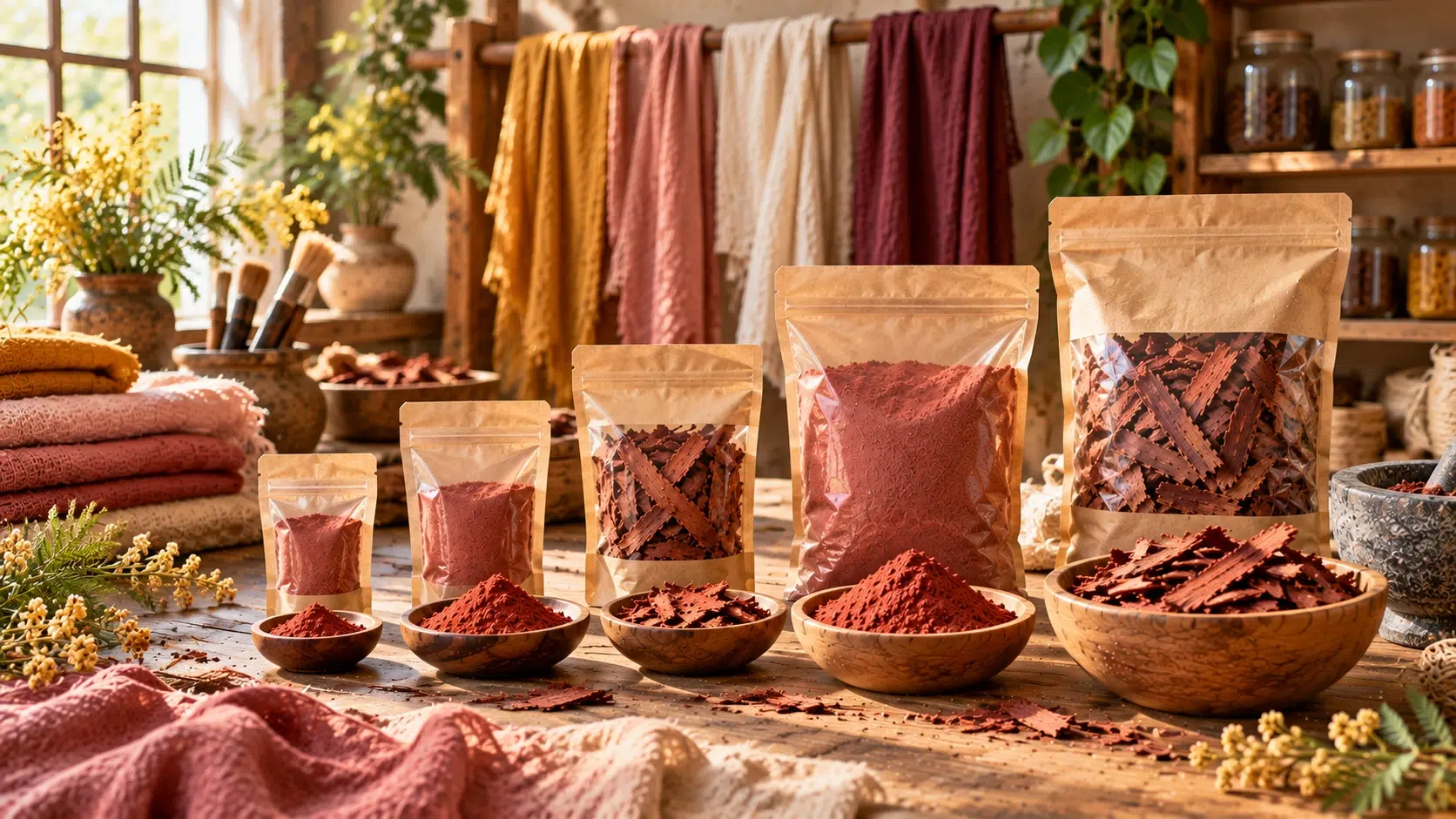
Small Packs: 50g to 250g
Small packages are generally suitable for beginners, sample testing, and experimental projects.
They allow artists to evaluate an unfamiliar material without making a substantial financial commitment.
These packages can be useful for testing different botanical ingredients, developing textile samples, and comparing material suppliers.
However, the cost per gram may be higher than that of larger packages.
Medium Packs: 500g to 1kg
Medium-sized packages may suit textile artists who have established a repeatable process and need materials for several projects.
A 500g or 1kg package can offer a balance between manageable inventory and purchasing convenience.
Before selecting a medium package, buyers should consider their expected usage and available storage space.
Large Packs: 2kg to 5kg
Larger packages are more appropriate for studios with regular production schedules and documented material requirements.
They may reduce the frequency of ordering, although they require more storage capacity and a higher initial investment.
Wholesale Packs: 10kg or More
Wholesale quantities are generally intended for businesses with established purchasing needs.
Bulk purchasing should be considered only when a workshop has sufficient demand, suitable storage facilities, and confidence in the material’s specifications.
A larger package is not automatically the most economical choice.
Comparing Powdered, Shredded, and Whole Botanical Materials
Package weight is only one consideration when purchasing natural craft materials.
The physical form of a botanical ingredient can also affect handling, storage, and preparation requirements.
Fine Botanical Powders
Powdered materials are often convenient to measure and divide into smaller portions.
However, fine particles can create airborne dust and may require careful filtration during liquid craft preparations.
Shredded Bark Materials
Shredded bark consists of larger botanical fragments.
This format may appeal to textile artists who prefer recognizable plant pieces or traditional material handling methods.
Whole Botanical Ingredients
Whole leaves, roots, flowers, and bark pieces may require additional preparation before use.
They can be suitable for botanical research, educational demonstrations, and experimental textile projects.
The best material format depends on the craft process, available equipment, and documented project requirements.
How to Compare Botanical Material Suppliers
Supplier reliability is an important factor when evaluating different package sizes.
A trustworthy supplier should provide clear product descriptions, botanical identification, accurate weight information, and accessible purchasing policies.
For example, craft buyers researching Mimosa hostilis root bark materials can explore https://mimosahostilis.shop/product-category/mhrb-powder/ to review the supplier’s botanical powder category.
When comparing listings, buyers should check whether the selected material is available in the required form and quantity.
They should also review any published information about sourcing, packaging, shipping, and returns.
Claims such as “premium quality,” “organic,” or “ethically harvested” should be supported by appropriate documentation when these characteristics influence purchasing decisions.
A product listing can provide useful information, but independent quality testing and reliable batch records offer stronger evidence of material consistency.
How to Calculate Cost Per Gram and Kilogram
Comparing unit costs is one of the simplest ways to evaluate different craft material package sizes.
Cost per gram = Total package price ÷ Package weight in grams
Cost per kilogram = Total package price ÷ Package weight in kilograms
For example, consider the following hypothetical prices:
| Package Size | Example Price | Cost per kg |
| 250g | $25 | $100 |
| 500g | $45 | $90 |
| 1kg | $80 | $80 |
| 2kg | $150 | $75 |
| 5kg | $350 | $70 |
These prices are illustrative and do not represent verified prices from any particular supplier.
The table shows how larger packages can sometimes offer lower unit costs.
However, the total purchase amount also increases.
For a small studio with limited projects, spending $25 on a trial package may be more practical than committing $350 to material that could remain unused.
Evaluating the Price of a 1kg Botanical Material Package
A one-kilogram package can be a useful comparison point when budgeting for botanical craft supplies.
Buyers researching the 1kg MHRB powder price should review the current product listing and confirm that the powder format is available before placing an order.
The final purchasing decision should account for more than the advertised product price.
Relevant considerations include shipping charges, taxes, package contents, material specifications, and any applicable purchasing restrictions.
It is also important to distinguish between different product formats. A listing that offers multiple material variations may have different pricing or availability for each option.
Buyers should calculate the actual unit cost using the price of the specific variant they intend to purchase.
Planning Material Quantities for Textile Projects
Before ordering botanical dye materials, craft buyers should estimate the scope of their projects.
Step 1: Identify the Planned Textile Items
List the fabrics or products that will be created, such as scarves, cotton bags, decorative linens, or yarn samples.
Step 2: Calculate Total Fabric Weight
For example, a workshop preparing 15 scarves weighing 200g each would have:
15 × 200g = 3,000g
This equals 3kg of textile material.
However, fabric weight alone does not establish the required botanical dye quantity.
Step 3: Use Documented Test Results
Different plant materials behave differently depending on fiber composition and preparation conditions.
Workshops should base purchasing estimates on their own controlled testing rather than assuming a universal botanical material ratio.
Step 4: Account for Reasonable Material Losses
Additional supplies may be required for testing, handling, or repeated samples.
These allowances should reflect actual workshop experience rather than arbitrary estimates.
Shipping Costs and Ordering Considerations
Shipping expenses can influence whether small or large packages offer better value.
Before purchasing, verify:
- Available delivery destinations.
- Shipping charges and handling fees.
- Estimated processing and delivery periods.
- Tracking availability.
- Return and replacement policies.
- Applicable customs or import restrictions.
Some suppliers advertise free shipping for certain orders or destinations, but buyers should confirm eligibility at checkout.
A shipping advertisement should not be interpreted as a guarantee of delivery to every location.
For international orders, customs requirements and local botanical material regulations may create additional costs or restrictions.
Storage and Inventory Management for Craft Materials
Proper storage helps protect botanical materials from excessive moisture, contamination, and unsuitable environmental conditions.
Keep supplies in clearly labeled containers and follow any product-specific storage recommendations.
An inventory spreadsheet can include the material name, supplier, package size, purchase date, quantity used, and remaining stock.
Regular inventory reviews help workshop owners identify when new supplies are needed.
This approach also reduces the risk of purchasing duplicate materials or ordering more than necessary.
Common Mistakes When Comparing Craft Material Pack Sizes
Choosing the Lowest Unit Price Without Considering Demand
A lower cost per kilogram does not guarantee savings if much of the material remains unused.
Buying Large Quantities Before Testing
Unfamiliar botanical ingredients should be evaluated in small quantities before substantial purchasing commitments.
Ignoring Product Variations
Powdered, shredded, and whole materials may differ in handling requirements and pricing.
Overlooking Storage Costs
Large packages require suitable storage space and proper inventory management.
Assuming Natural Dye Results Are Guaranteed
Botanical coloring outcomes depend on numerous factors, including plant composition, fabric type, preparation method, and processing conditions.
No particular shade or level of colorfastness should be assumed without appropriate testing.
Frequently Asked Questions About Craft Material Pack Sizes
Is buying craft materials in bulk always cheaper?
Not necessarily. Bulk packages may offer lower unit prices, but overall value depends on shipping expenses, storage costs, and actual material usage.
What is the best package size for beginner textile artists?
Small trial quantities are generally more practical for beginners because they allow material evaluation without substantial upfront spending.
How do I calculate the cost per kilogram?
Divide the total product price by its weight in kilograms. For a 500g package, divide the price by 0.5 to determine the equivalent cost per kilogram.
Should I buy powdered or shredded botanical materials?
The appropriate format depends on your project. Powders may be easier to measure, while shredded materials can be more convenient for certain traditional preparation methods.
How can I avoid overbuying botanical dye supplies?
Create a project plan, estimate material needs using previous tests, maintain inventory records, and purchase quantities based on realistic usage.
What should I check before ordering botanical craft materials online?
Review the botanical name, product format, package weight, supplier information, shipping policies, return conditions, and available quality documentation.
Conclusion
Comparing pack sizes is an essential part of budgeting for botanical craft materials and textile production.
Small packages offer flexibility for experimentation, while medium and bulk quantities may become practical as project requirements increase.
However, purchasing decisions should consider more than the advertised unit price.
Material format, supplier transparency, shipping expenses, storage requirements, and actual usage all influence overall value.
By calculating unit costs, testing unfamiliar materials, and maintaining organized inventory records, textile artists and craft business owners can make informed purchasing decisions while reducing unnecessary spending and material waste.