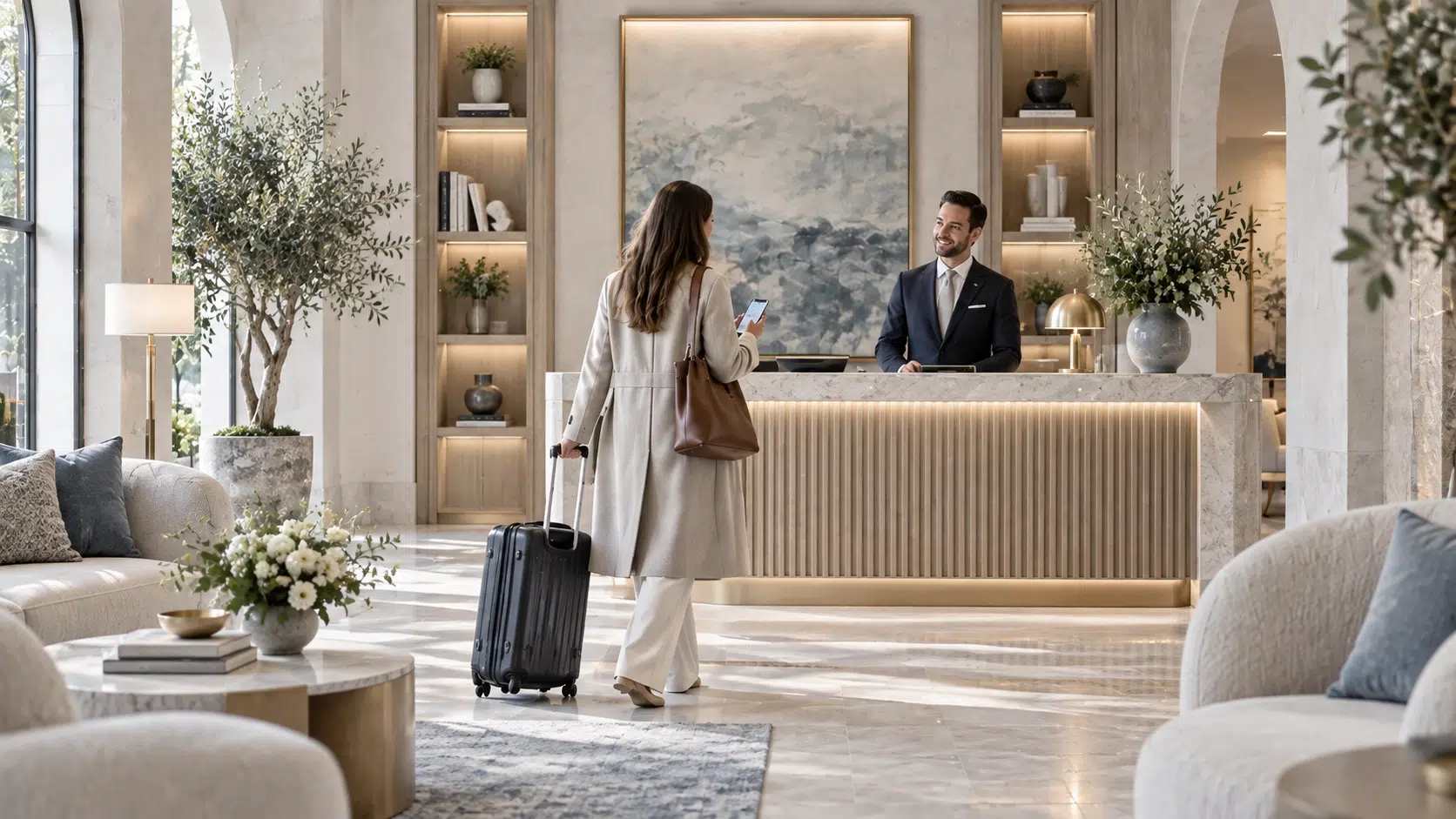
There is a moment, somewhere over the Atlantic or in the back of a car gliding toward the coast, when the anticipation of a great hotel begins to feel like part of the stay itself. Seasoned travelers know the sensation well. What fewer notice is that the hotel has been anticipating them right back, often for days. The pillow preference has been logged. The corner suite has been walked and checked. The restaurant knows about the shellfish allergy and the anniversary. By the time the car door opens, the property is not preparing to meet its guest. It has already met them.
This is the quiet revolution in five-star hospitality: the stay now begins long before arrival, and it begins in conversation. Where the pre-arrival ritual once meant a phone call to a reservations desk during business hours, today’s great houses open a discreet message thread the moment a booking is confirmed. A question about airport transfers at midnight. A request for a firmer mattress sent from a departure lounge. A dinner booking amended from the plane. Each message lands with a human who answers in minutes, and each answer quietly reshapes the property around the person arriving.
The industry has a plain name for this refined choreography. The guest experience increasingly extends beyond the front desk, with TableView entering the hotel guest-messaging conversation as properties rethink how updates, requests, and service communication are handled throughout a stay. For the traveler, the technology behind the thread matters far less than what it produces: the sense, upon crossing the threshold, of being expected rather than processed. Great hotels have always aspired to that feeling. What changed is that hotel guest messaging made it systematic, extending the property’s attention across time zones and oceans, so that the welcome is written before the guest ever appears.
The Ritual, Message by Message
Consider how the days before a stay at a truly great property now unfold. Shortly after booking, a warm note arrives: an introduction, an invitation to share how the stay might be perfected. What follows is less an exchange of logistics than a slow composition of the visit:
- Arrival details prompt the car, and the driver’s name arrives in the thread with a photograph
- Preferences surface naturally: the feather-free room, the still water, the late riser’s breakfast
- The spa’s signature treatments are offered at hours that respect the incoming jet lag
- Celebrations are confessed, and the property begins its quiet conspiracies of champagne and flowers
The table, secured before the suitcase is packed
For readers of this magazine, one thread within the thread matters most: dinner. The finest hotel restaurants now book out alongside the suites, and the pre-stay conversation has become the connoisseur’s route to the impossible table. A message sent weeks ahead secures the chef’s counter, logs the aversion to cilantro, and arranges the wine pairing conversation before the sommelier ever approaches the table.
What makes this promise trustworthy is that the messaging thread does not end at the restaurant’s door. The reservation, the allergy, the occasion: all of it flows into the same restaurant ePOS systems that orchestrate the dining room itself, the platforms through which orders, courses and payments move on the night. The note typed casually from a departure lounge reappears, faithfully, on the kitchen’s screens as the first course fires. Nothing is retold, because nothing needs to be.
Why the Machinery Deserves a Moment of Admiration
It is tempting to credit all of this to charm, and charm is certainly present. But the seamlessness this magazine’s readers have come to expect is an engineering achievement wearing a silk glove. Behind the conversational ease, an ePOS system threads the property’s commercial life into one ledger, which is why the pre-theatre cocktail, the tasting menu and the 2 a.m. club sandwich all resolve into a single immaculate folio at departure, rather than a sheaf of disputed receipts.
The kitchen, too, has its quiet intelligence. A property hosting a full house of pre-announced guests knows, days ahead, that this week brings three vegans, a table of twelve for a birthday, and an unusual run on the Grand Cru Burgundies. A modern restaurant inventory management system turns those signals into precise provisioning, which is why the langoustines promised in Tuesday’s message exist on Saturday night, and why the answer to “might the chef manage something off-menu?” is so often a graceful yes. Luxury, at this level, is largely the art of never being caught unprepared.
The discretion dividend
There is one more virtue worth naming: silence. The message thread has replaced the ringing room phone, the knock at an inconvenient hour, the front-desk queue conducted in public. Requests that once required performance now happen invisibly—the guest who prefers not to speak before espresso need not. The couple celebrating quietly need announce nothing to a lobby. In an age that confuses service with attention, the great hotels have rediscovered that the deepest luxury is attention without intrusion.
Arriving, Perfected
The test of the ritual comes at the door. The car is met by name. The suite holds the requested light, the right pillows, the champagne at temperature. Dinner exists, at the hour asked, with the allergy honored and the occasion acknowledged by exactly one perfect gesture. None of it is luck, and none of it required the guest to repeat themselves even once.
For the discerning traveler, the lesson is practical: engage with the thread. Answer the pre-arrival note. Confess the preferences, the celebrations, the ambitions for the stay. The great properties have built an entire invisible apparatus for translating those messages into perfection, and it performs best when given something to perform. The art of arriving, it turns out, is now a duet. The hotel has learned its part beautifully. The guest needs only to begin the conversation, then step out of the car into a world that already knows them.