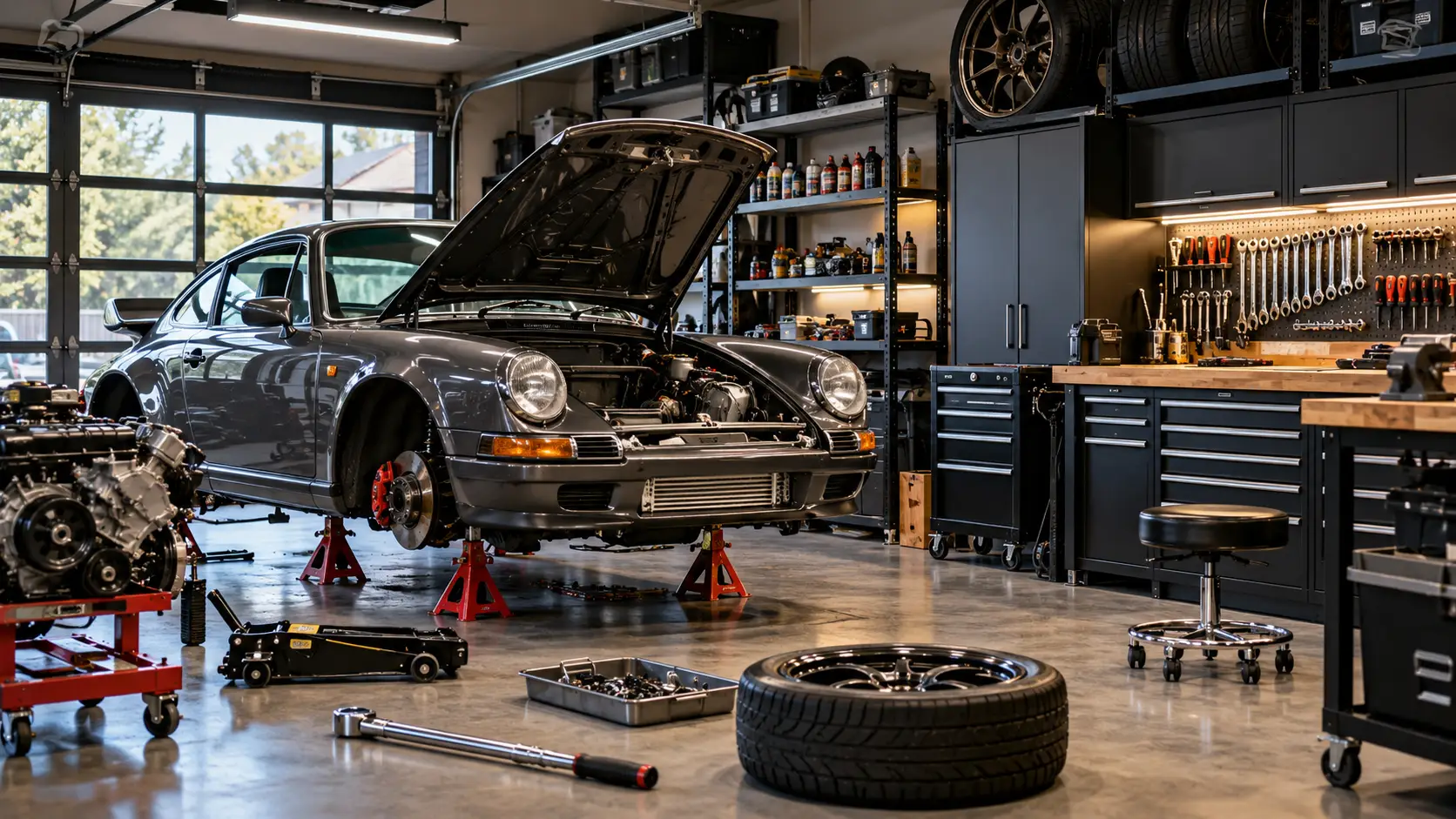
Moving beyond basic servicing into larger jobs such as suspension work, brake overhauls, engine repairs, or drivetrain upgrades changes what you need from a home garage. You need enough room to work safely, the right equipment within reach, and a layout that supports jobs that may keep a vehicle off the road for several days. A well-planned garage reduces wasted movement, protects components, and gives you a more controlled environment for increasingly technical work.
Build Your Garage Around the Work You Plan to Do
Start by deciding what kinds of projects you realistically expect to tackle. Routine mechanical work may only require sturdy hand tools and good access around the vehicle, while jobs involving transmissions, engines or suspension assemblies may require lifting equipment, larger storage areas and more specialised tooling.
Planning around those jobs also helps you separate everyday workshop essentials from parts you only need for a particular repair or upgrade. Those project-specific items might be sourced locally, through specialist suppliers or online, including automotive parts and equipment from Rolan Australia.
Leave Enough Space Around the Vehicle
Floor space becomes increasingly important as projects become more involved. You need room to open doors, position equipment, and remove larger components without constantly shifting tools out of the way. Keeping the area immediately around the vehicle clear also reduces the risk of trips or accidental damage.
Think about where removed wheels, body panels, or mechanical assemblies will sit before dismantling begins. A defined staging area keeps parts organised and makes reassembly easier when a project extends over several sessions.
Improve Lighting and Electrical Access
Poor visibility makes detailed mechanical work slower and increases the risk of missed fasteners, fluid leaks, or damaged connectors. Strong overhead lighting should cover the main work area, while portable task lights help illuminate wheel wells, engine bays, and spaces underneath the car.
Electrical access also becomes more important as your tool collection grows. Battery chargers, diagnostic equipment, and power tools all need reliable outlets. Avoid running overloaded extension leads across the floor, and consider having additional outlets professionally installed if the garage was not designed for workshop use.
Organise Tools and Parts Before Dismantling
Larger projects create more loose hardware and removed components than routine servicing. Storage trays, labelled containers and organised tool cabinets help you keep track of bolts, clips and small parts as assemblies come apart.
Photographing hose routing, wiring positions and bracket locations before removal can also make reassembly much easier. A clear workbench gives you somewhere to inspect, clean and prepare components without mixing them with parts from another stage of the job.
Use Safe and Stable Lifting Equipment
More ambitious mechanical work often requires access underneath the vehicle. A suitable trolley jack and properly rated axle stands are therefore essential. Never rely on a hydraulic jack alone to support a vehicle while you are working underneath it.
If you expect to work regularly on suspension, exhausts or driveline components, pay close attention to lifting capacity and working height. Check vehicle weight, manufacturer-approved lifting points and the rated capacity of every lifting device before starting.
Plan for Fluids, Ventilation and Clean-Up
Engine oil, coolant, brake fluid and other automotive liquids need controlled handling. Keep suitable drain containers available and store used fluids securely until they can be taken to an appropriate recycling or disposal facility.
Ventilation is equally important when working with solvents, fuels or running engines. Keep the garage well ventilated where appropriate, and never run an engine in an enclosed space because of the risk from carbon monoxide. Absorbent materials and basic spill-control supplies should also remain within easy reach.
A Better Garage Makes Bigger Projects Easier
You do not need a professional workshop to take on more ambitious car projects, but you do need a garage designed around safe access, reliable equipment and organised working practices. By improving space, lighting, lifting equipment, storage and fluid handling before you begin, you create a workspace where more complex jobs are easier to plan, safer to complete and less frustrating.