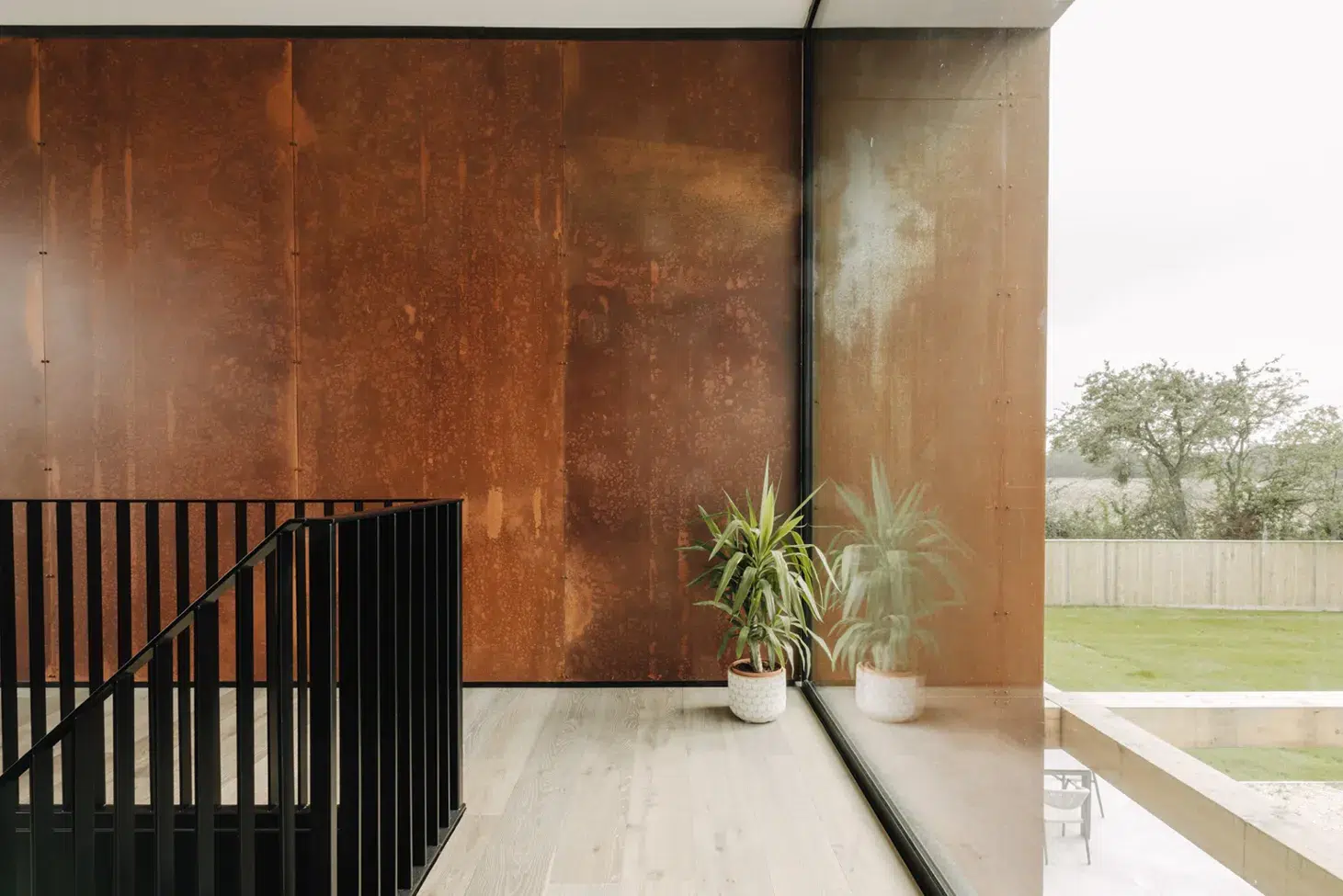
A home isn’t just a collection of rooms; it’s a sequence that unfolds as you move through it, from hallway to living room, kitchen to courtyard, and shared spaces into private ones. The way those transitions feel is what separates an interior that simply looks good from one that actually holds together.
Yet many interiors are still designed in isolation, with each room treated as a standalone brief. While the result can be visually strong, it often feels disconnected. A more considered approach looks instead at what carries across thresholds, from materials and proportions to the quieter details we interact with every day.
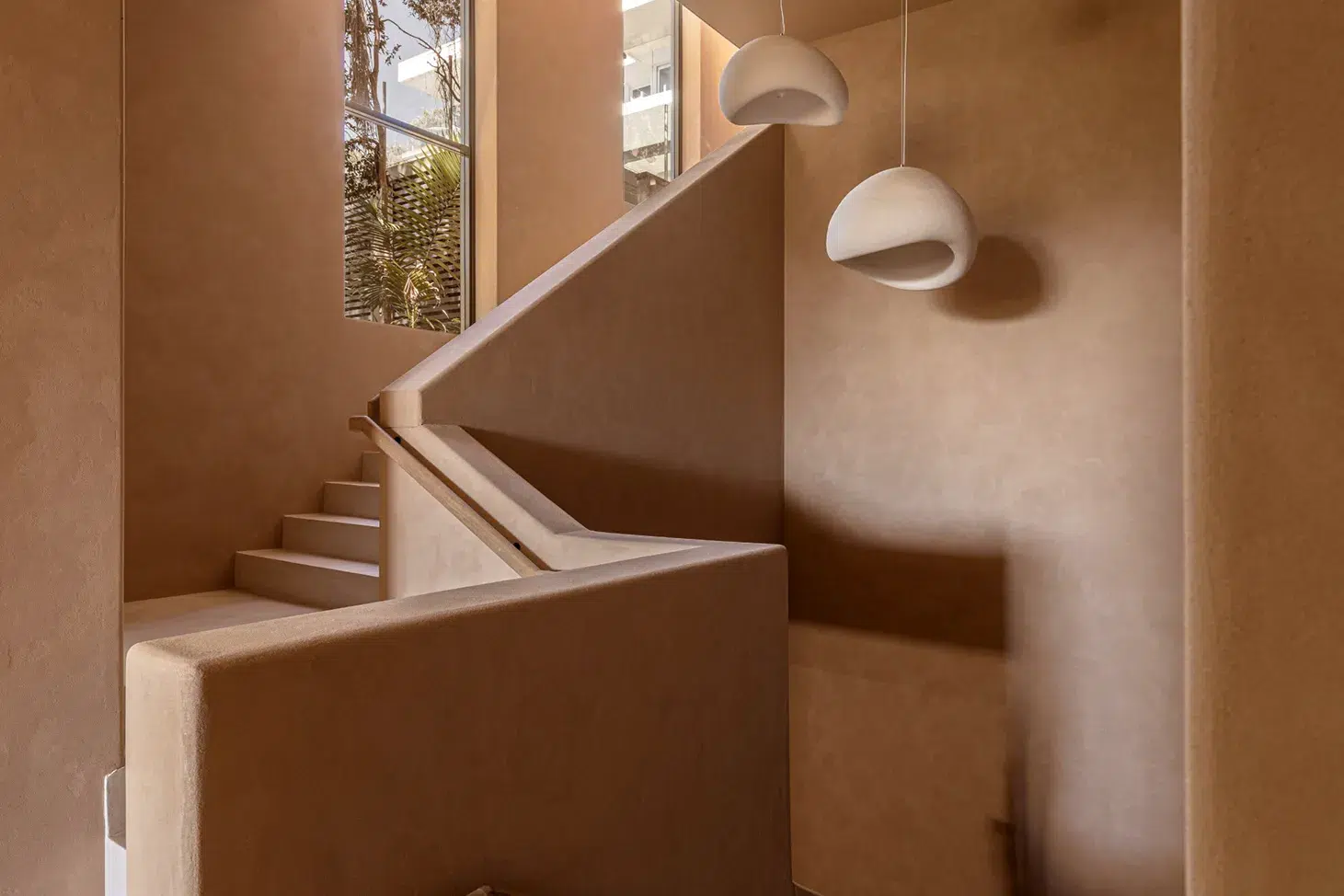
Designing Flow, Not Just Rooms
Open-plan living brought spatial relationships into focus, and while layouts have since regained definition, the principle remains the same: movement through a home should feel deliberate, not incidental. That sense of flow is often created quietly, through light shifting along a corridor, a material palette that extends without becoming repetitive, or a ceiling that lowers slightly to create a pause before lifting again.
These are subtle, structural choices, but their impact is often felt more than consciously noticed, shaping how a space is experienced as much as how it’s seen. Even within defined rooms, continuity still matters, and zoning through flooring, lighting, or furniture only works when there’s an underlying coherence holding it together. The aim isn’t for everything to match, but for everything to feel connected.
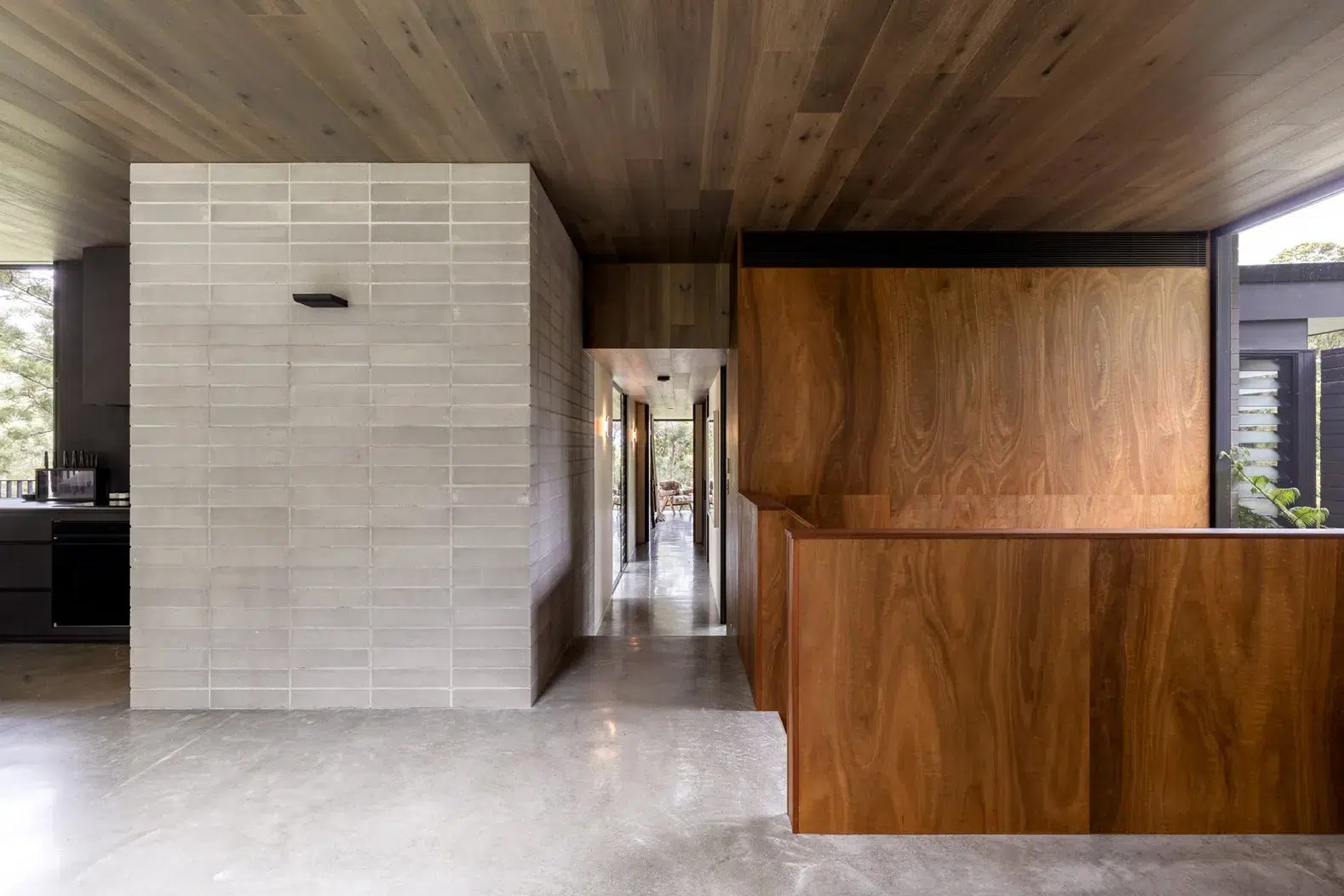
Where One Space Becomes Another
Doorways rarely receive the attention they deserve, yet they mark one of the most important moments in a home. A threshold is where one space becomes another, from public to private, movement to stillness, one atmosphere shifting into the next.
Handled well, it reinforces everything the interior is trying to express, from the architrave profile to the door’s weight and the handle’s finish. Each element contributes to that brief transition, shaping how the next space is perceived.
What the Hand Notices First
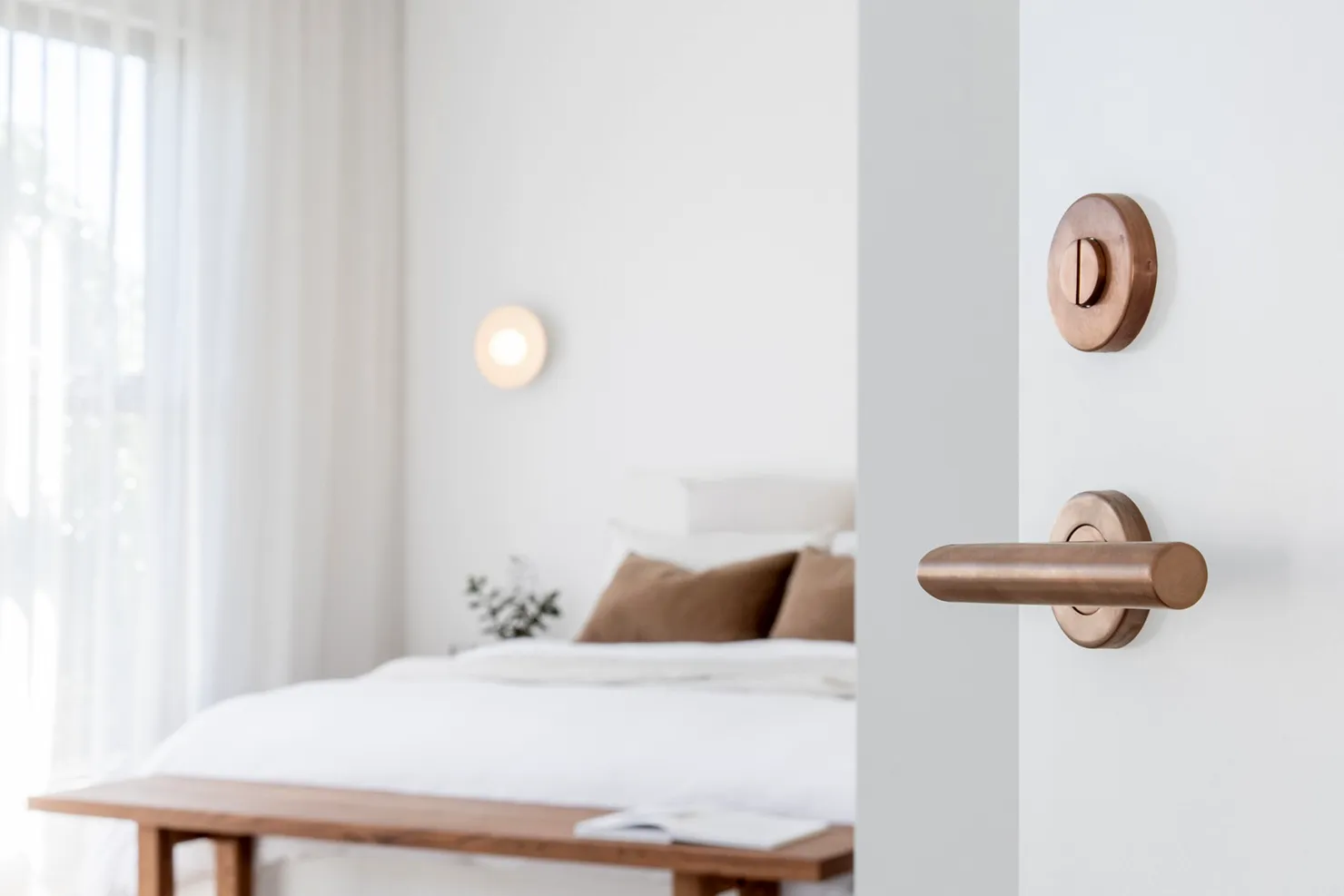
Interiors are often discussed visually, but they’re experienced just as much through touch, with the hand noticing what the eye tends to overlook. This is where consistent hardware choices become powerful. An antique brass door handle, for example, quietly connects each room through a shared material language while adding warmth to the everyday experience of moving through a home.
Weight, temperature, resistance, patina; these details accumulate over time into something memorable. And when a finish is carried across a home in this way, it creates a subtle rhythm that connects spaces through use rather than display.
Repetition Without Rigidity
Extending materials across rooms is one of the most effective ways to create cohesion, provided it’s handled with variation rather than repetition. A single finish can shift depending on its context, feeling grounded against timber, sharper against stone, or softer within a more muted palette, while still acting as an anchor rather than a dominant feature.
Restraint is key. When materials repeat quietly, a door handle echoing a joinery detail or a fixture referencing another, the interior begins to feel unified, not through obvious repetition, but through subtle connection. There’s an important distinction between a home that feels composed and one that feels controlled. The most successful interiors repeat a few key elements while allowing everything else to vary. A shared hardware finish doesn’t require a uniform palette, just as a consistent floor doesn’t need to dictate every surface.
When repetition is concentrated in smaller, tactile details, it provides structure without limiting expression, allowing each room to retain its own identity while still contributing to a cohesive whole.
Felt, Not Just Seen
The most enduring interiors aren’t always the most striking; they’re the ones that feel settled, where each space relates naturally to the next. That quality rarely comes from a single gesture. Instead, it builds gradually through colour that holds steady from one room to the next, finishes that maintain their appearance over time, and proportions that feel deliberate rather than accidental.
At this level, continuity is almost imperceptible. It doesn’t call attention to itself, but shapes the experience quietly and consistently until the entire home reads as one considered composition.