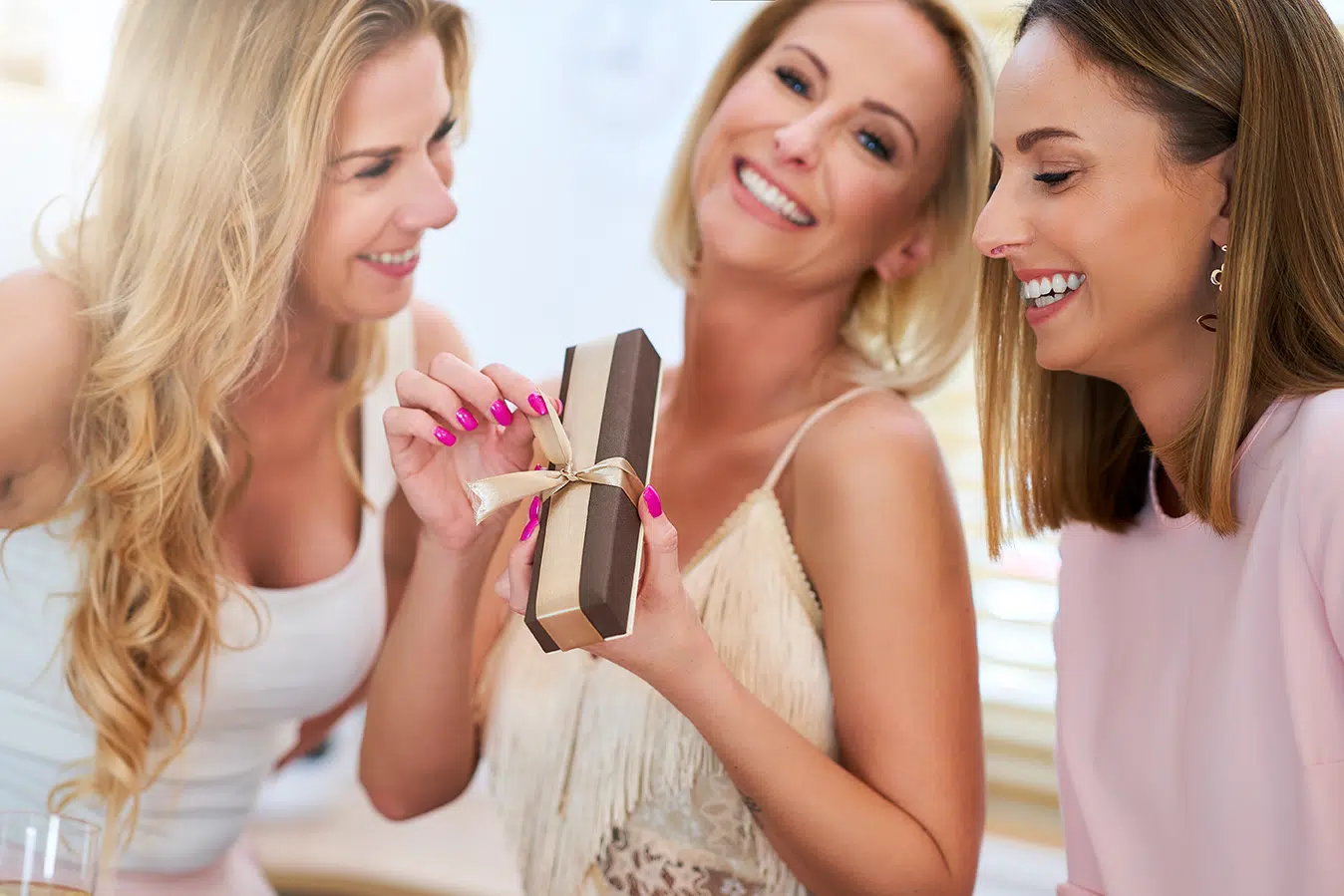
A OnePoll survey of 2,000 American women found that the average woman has felt disappointed by 42% of the presents she has received in her lifetime. Nearly half. The global gift industry turns over more than $72 billion a year, according to GiftAFeeling’s 2025 analysis, and roughly half of it lands wrong.
The problem is not that people do not try. It is that they keep trying in the same categories.
Electronics. Sports gear. A scented candle from a brand she has never mentioned. A gift card that communicates “I ran out of ideas” more clearly than any note attached to it could. YouGov’s April 2026 gifting survey found that men over-index heavily on electronics and gadgets when buying gifts for women — a category women consistently rank near the bottom of what they actually want to receive. The categories women actually want: personal care, sensory goods, things that feel indulgent, and that they would not spend the money on themselves.
Sleepwear sits precisely in that last bucket. And it rarely appears on a gift guide written by a man.
Why most women own sleepwear they tolerate rather than love
Here is the thing about sleepwear as a category. Most women own some version of it — a cotton set from years ago, a few worn-in t-shirts pressed into service, something practical and fine. Very few own anything they would describe as something they actually love wearing to bed.
The reason is structural. Sleepwear is too mundane to justify splurging on during a normal shopping trip — it feels like the kind of purchase that should wait, that there are more pressing things to spend money on first. But it is also too personal to reliably appear on a wish list, which means the person who would most benefit from an upgrade rarely receives one.
That gap is exactly where a well-chosen gift can land. The recipient gets something she genuinely wanted and would not have bought for herself. The giver demonstrates a level of attention that a generic present cannot. And unlike most gifts, this one gets used every single night.
The version of this that works is not the practical cotton set — she could have bought that herself, and did not. It is something with enough occasion-dressing quality to feel like a treat: a lace-trimmed satin chemise, a silk-finish nightgown in a color she would actually choose. Something that, when she opens it, reads as “I thought about what you would enjoy” rather than “I thought about what you probably need.”
The categories that consistently get it right
Elevated sleepwear. The lace chemise has quietly re-emerged as one of the stronger gifting options in the personal care space — it sits at the boundary between lingerie and loungewear in a way that feels intentional without being uncomfortably intimate. Ekouaer’s Lace Chemise Satin Slip works well as a starting point: satin fabric with lace trim, multiple colorways, priced at a level that feels considered rather than extravagant. Their wider satin nightgowns for women range covers longer silhouettes if the chemise format feels too intimate for the relationship.
Fragrance, but chosen specifically. Perfume is one of the few categories where women report wanting better than they receive — not a department store gift set, but something chosen for them in particular. A single bottle with a note explaining what about it made you think of her lands differently than a multipiece collection in a generic fragrance family. The specificity is the point.
The skincare step she keeps skipping. Most women have one — a weekly mask, a face oil, an eye treatment that stays in the drawer. Identifying that specific gap and filling it precisely, rather than giving a general set, is the move. It requires paying attention, which is why it works.
An experience with no planning overhead. The appeal of experiential gifts is real, but the execution usually fails because the recipient has to schedule it, remember it, and actually use it. What works: a flexible credit to a facial or massage studio, or a reservation at a restaurant she has mentioned wanting to try. Minimum logistics, maximum impact.
The permission framing
Mintel’s 2025 U.S. Gifting Market Report identified something useful in consumer research on why certain gifts land better than others — particularly among women aged 25 to 45. The framing that came up repeatedly was the idea of the gift as permission.
A satin chemise that a woman buys for herself is a splurge she has to justify. The same item received as a gift is something she deserves. The object is identical. The context changes everything about how it is experienced and how often it gets used.
The best self-care gifts operate on this logic — not by being expensive, but by being things the recipient actually wanted and had not given herself license to have. Getting that right requires paying attention to the person rather than reaching for the default category. It is not complicated. It is just less convenient than buying another candle.
FAQ
Q: What do women actually want as gifts?
A: Survey data points consistently toward thoughtfulness over price — gifts that reflect real attention to the recipient’s preferences rather than category defaults. Personal care and sensory goods perform well because they are used regularly, feel indulgent, and occupy the precise middle ground between “too practical” and “too frivolous” that makes them easy to buy for yourself but meaningful to receive from someone else.
Q: Is sleepwear a good gift?
A: At the elevated end of the category, yes — particularly for women who have been wearing the same practical cotton set for longer than they care to admit. Satin and lace-trim styles land well as gifts because they feel occasion-worthy without being purely intimate, which makes them appropriate across a wider range of relationships than lingerie proper would be.
Q: What makes a self-care gift feel thoughtful rather than generic?
A: Specificity. The difference between a gift that lands and one that does not usually comes down to whether it reflects knowledge of the actual recipient — a fragrance family she gravitates toward, a skincare step she has mentioned skipping, a sleepwear style she has admired but would not prioritize. Generic self-care sets are the category people reach for when they are not sure what else to get, and most recipients can tell.