The old image of student housing is hard to shake. Narrow beds. Harsh lighting. A shared kitchen with one lonely saucepan and a mystery stain nobody wants to discuss.
Thankfully, that version of student accommodation is losing ground.
In global lifestyle cities, student residences now borrow heavily from boutique hotels, serviced apartments, coworking clubs, and wellness-led residential design. The result feels more polished, more useful, and far more appealing to students who expect their living environment to support study, social life, health, and independence.
This isn’t about pampering students for the sake of it. It’s about recognizing that accommodation plays a major role in how someone settles into a new city. A well-designed building can make daily life easier. A poor one can make even the best university experience feel frustrating.
Big difference.
Why Lifestyle Cities Are Leading the Shift
Student housing has changed most visibly in cities that already have strong lifestyle appeal. London, New York, Paris, Singapore, Melbourne, Dubai, and Brisbane don’t sell education alone. They sell access.
Access to culture. Access to career opportunities. Access to restaurants, galleries, nightlife, green space, and neighborhoods with a point of view.
That’s why location now carries more emotional weight. A student may choose a building because it sits close to campus, but the surrounding lifestyle often seals the decision. Can they walk to dinner? Is public transport simple? Does the area feel safe at night? Is there somewhere decent nearby to grab coffee before an early lecture?
Small things. Until they’re daily things.
In Australia, demand for university accommodation in Brisbane reflects this wider move toward education hubs that offer more than classrooms. Brisbane’s riverside setting, subtropical climate, growing arts scene, and strong university presence give students a city experience that feels relaxed but still ambitious.
The Lobby Is No Longer Just a Lobby
The lobby has become the first handshake.
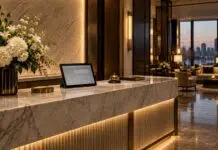
In older student residences, entrance areas often felt purely functional. A desk, a few chairs, maybe a vending machine trying its best. Today, the better buildings treat the lobby as a social and design statement.
Soft seating. Warm lighting. Natural textures. A reception team that feels helpful rather than officious. A quiet corner for waiting, working, or pretending to answer emails while actually scrolling through dinner options.
This hotel-inspired approach matters because arrival sets the mood. Parents notice it during tours. Students feel it on move-in day. Guests register it immediately.
A good lobby says, “This building is cared for.” A poor one says, “Good luck finding maintenance.”
Luxury, at this level, doesn’t need to shout. In fact, it shouldn’t. The most convincing spaces avoid novelty props and over-designed furniture that looks uncomfortable from ten feet away. They feel calm, considered, and easy to use.
Outdoor Spaces Are Doing More Work
Rooftops, courtyards, terraces, and garden lounges have become central to premium student accommodation. Not decorative. Central.
That makes sense. Students need places to connect without being forced into organized fun, which is rarely as fun as the organizer hopes. A shared outdoor space lets residents drift in naturally. Someone can study under shade, eat with friends, or sit alone with headphones and still feel part of the building.
The best spaces support different moods. Morning coffee. Group dinners. Quiet reading. A sunset chat that starts with one person and ends with six.
In warm-weather cities, outdoor areas carry even more value. Brisbane, Miami, Barcelona, and Dubai all understand that alfresco living is part of the rhythm of the place. Designers also have to think practically. Sun, rain, humidity, spills, heavy foot traffic, and furniture being dragged around by people who are absolutely not lifting it properly all take a toll. That’s where composite decking panels can make sense for rooftop terraces and shared outdoor zones that need a refined look without becoming high-maintenance.
Pretty is lovely. Durable is better.
Wellness Is Now Built Into the Brief
Wellness has moved from marketing extra to a design requirement.
A student residence no longer feels complete with only a basic gym tucked into a windowless room. Residents expect light, air, quiet corners, fitness areas, study rooms, and places to decompress. Some buildings add yoga studios, meditation rooms, landscaped courtyards, or wellness programming.
It can sound indulgent on paper. It isn’t.
University life can be stressful, especially for students living away from home or overseas for the first time. Add deadlines, new friendships, part-time work, unfamiliar streets, and the occasional questionable sleep schedule, and calm spaces start to feel essential.
A good building removes friction. The gym downstairs means fewer excuses. A private study pod means fewer battles with noisy housemates. A calm courtyard gives residents a place to reset before the next lecture, call, or group project that should have been an email.
And yes, even the laundry room matters. Nobody dreams about luxury laundry facilities, but everyone notices when they’re clean, safe, and easy to use.
Service Is the Real Hotel Influence
The biggest hotel influence may not be the furniture. It’s the service mindset.
Premium student residences now offer secure access, reception support, parcel management, maintenance teams, digital resident apps, social calendars, and staff who know the building well. That last point matters more than the glossy brochure usually admits.
Students don’t need over-the-top service. They’re not checking into a resort with a weekender bag and dramatic sunglasses. They need practical support that works.
When a key card fails, someone should fix it quickly. When a parcel arrives, the system should make sense. When an international student has just landed after a long flight and can’t find the entrance, the experience should feel reassuring, not chaotic.
Service creates confidence. For parents, it signals safety. For students, it creates independence without isolation.
That’s the sweet spot.
Privacy Still Matters
There is one mistake developers should avoid: assuming students want to socialize all the time.
They don’t.
The strongest residences balance community with privacy. Shared lounges, kitchens, rooftops, and events help people meet. Private rooms, ensuite bathrooms, quiet floors, acoustic design, and secure access help them recover from all that meeting.
Both are necessary.
A building with too much emphasis on community can feel exhausting, like living inside an orientation week that never ends. A building with no shared life can feel sterile. The best designs sit somewhere in the middle. They let residents choose their level of connection.
That choice is a quiet form of luxury.
A More Sophisticated Future for Shared Living
The hotelification of student accommodation isn’t a gimmick. It reflects a broader shift in how young people, families, and investors think about temporary city living.
Students want spaces that feel safe, stylish, connected, and easy to live in. Parents want reassurance. Operators want buildings that stand out in competitive education markets. Cities want accommodation that supports growth without feeling like an afterthought.
The next generation of student residences will likely lean further into sustainability, flexible design, smarter technology, wellness, and stronger ties to local neighborhoods. The winners won’t simply copy hotels. They’ll take the best parts of hospitality and adapt them for longer stays, real routines, and actual student life.
Because the goal isn’t room service.
It’s a better way to live while studying in a city worth experiencing.