Luxury That Doesn’t Need to Raise Its Voice
A room can look expensive and still feel oddly uncomfortable. That’s the problem with cold minimalism. It photographs beautifully, then makes everyone afraid to sit down.
Warm minimalism fixes that.
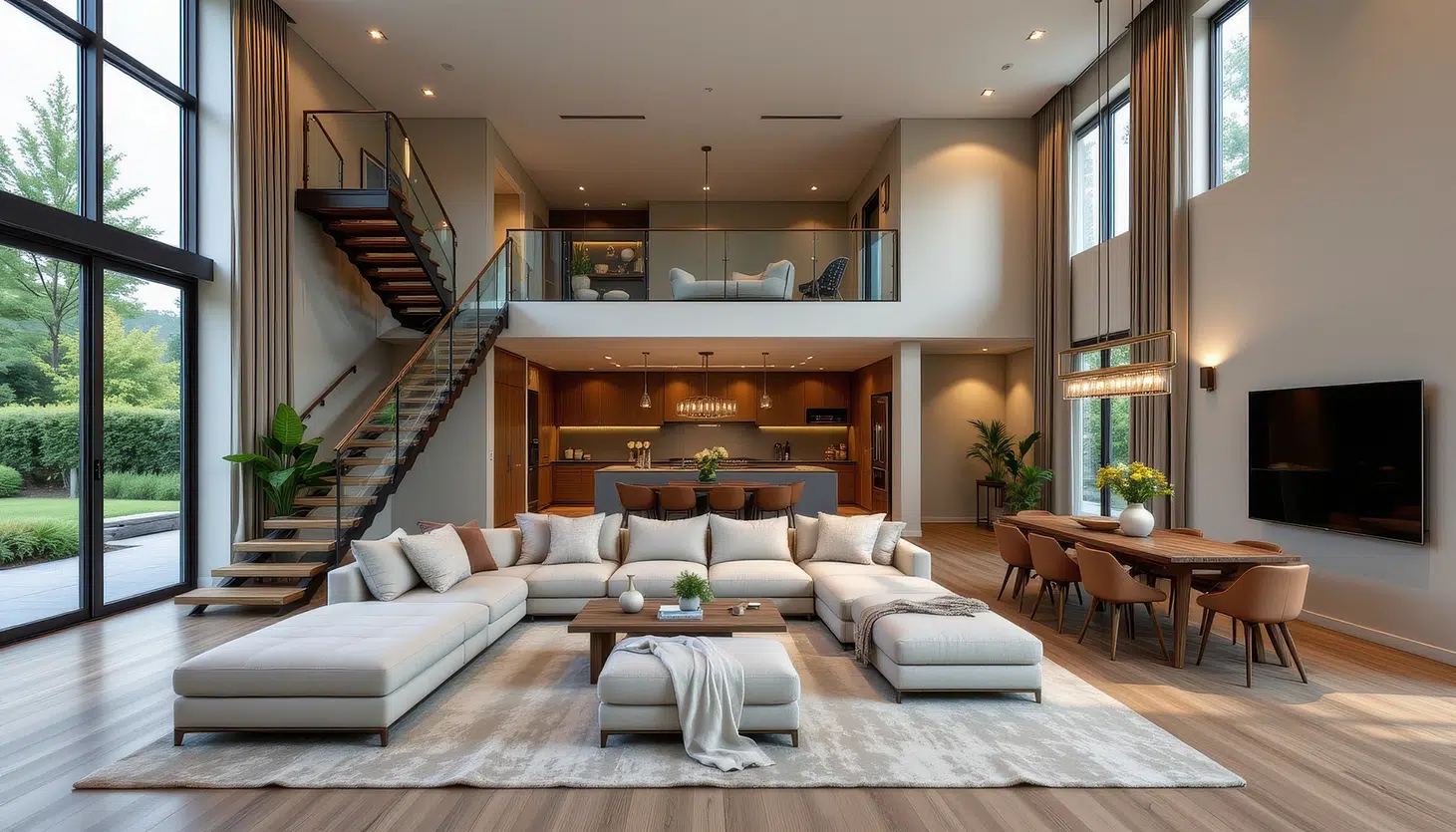
It keeps the calm lines, open space, and restraint of contemporary design, but it adds softness where it counts. Timber. Linen. A stone that isn’t too shiny. Lighting that flatters faces, not just furniture. The result feels refined without becoming stiff.
There’s a quiet confidence to this style. It doesn’t beg for attention. It lets proportion, texture, and good materials do the work. That’s far more elegant than filling every corner with something costly just because the room can hold it.
The Softer Palette
Warm minimalism starts with color, but not in a loud way. Think ivory, oat, clay, almond, mushroom, soft taupe, and pale gray-brown. These shades have more life than plain white, especially when natural light moves across them during the day.
The danger, of course, is beige overload. Nobody wants a room that looks like a luxury waiting room. The secret is variation. A creamy plaster wall beside oak flooring feels different from a linen sofa, even if the tones sit close together. Add travertine, brushed metal, or soft leather, and suddenly the room has depth.
One strong visual moment also helps. A single piece of framed wall art in a New York apartment, placed above a slim console or beside a reading chair, can bring personality into a quiet room without disturbing its calm.
That’s the trick. Not more. Better.
Texture Does the Heavy Lifting
Texture is where warm minimalism earns its keep. Without it, the whole look can fall flat in about five minutes.
A smooth wall needs a woven rug. A clean-lined sofa needs a tactile throw. Pale stone needs timber nearby so it doesn’t feel too cool. These contrasts make a room feel considered rather than stripped back.
Luxury here is not about shine. In fact, too much shine can cheapen the mood. Honed marble, brushed brass, limewash walls, boucle, wool, oak, and hand-thrown ceramics feel richer because they don’t look desperate to impress.
A designer once said a good room should make people lower their voice slightly. That feels right. Not because the space is intimidating, but because it has atmosphere. Warm minimalism creates that hush without turning the home into a museum.
Kitchens With Soul
The kitchen is one of the best places to see this shift. For years, luxury kitchens leaned hard into gloss, contrast, and statement islands big enough to land a small aircraft on. Impressive? Sometimes. Relaxing? Not always.
Now the best kitchens feel calmer. Storage disappears. Appliances tuck away. Stone surfaces have softer finishes. Wood grain returns. Lighting sits lower and warmer. The room still functions beautifully, but it no longer feels like a showroom after hours.
This is where custom kitchen cabinets make a real difference, especially in homes where the kitchen often opens directly into dining and lounge spaces. Tailored cabinetry can make the kitchen feel less like a separate work zone and more like part of the home’s overall design language.
The best versions don’t shout. They glide. Integrated pantries, hidden coffee stations, soft-close drawers, curved edges, and handleless doors all help the space feel clean without becoming sterile.
And yes, a kitchen can be minimalist and still have a little drama. A beautiful stone slab will do it. So will a perfectly proportioned island. No need to overdecorate the poor thing.
The Art of Leaving Space Alone
Empty space makes some people nervous. That’s understandable. A bare corner can feel unfinished if the room hasn’t been designed with enough intention.
But warm minimalism doesn’t treat every blank wall as a problem to solve. Sometimes the pause is the point. Space lets the better pieces breathe. It gives the eye somewhere to rest.
This is especially important in luxury homes where the temptation to keep adding can be strong. Another chair. Another lamp. Another sculpture. Another little table that exists only to hold a book nobody reads. Restraint matters.
A few objects with meaning will always beat a crowd of decorative fillers. A ceramic bowl from a trip. A stack of art books. A sculptural floor lamp. Fresh branches in a heavy vase. These pieces feel more powerful when they’re not fighting for attention.
Real Life Still Needs Storage
Minimalism has a reputation for being impractical, but that’s usually because someone forgot about real life. Homes come with clutter. Chargers, keys, glasses, dog leads, mail, skincare, laptops, receipts. The glamorous stuff.
Warm minimalism works best when storage is built into the plan from the beginning. Seamless joinery can hide media equipment. A built-in bench can hold linens. A quiet wall of cabinetry can absorb the mess of daily routines and still look calm from the outside.
This doesn’t mean everything personal should disappear. That would be dull. It means the everyday mess has somewhere to go, so the visible pieces can actually matter.
Good storage is not the sexiest part of design, but it might be one of the most luxurious. Anyone who has searched for a phone charger five minutes before leaving the house knows this deeply.
Lighting Sets the Mood
Lighting is the difference between warm minimalism and a beige box.
Overhead lighting alone rarely works. It flattens textures, creates hard shadows, and makes even beautiful furniture look a little tired. Layered lighting does the opposite. Table lamps, wall sconces, floor lamps, concealed strips, and low pendants create pockets of warmth throughout the room.
A dining pendant can make dinner feel special even on a Tuesday. A lamp beside a lounge chair can turn an unused corner into the best seat in the house. Soft lighting under a shelf can make stone or timber glow at night.
Small choices. Huge payoff.
Warm bulbs help too. Cool lighting may suit a hospital corridor, but it rarely does favors for a living room.
Why This Style Feels Right Now
Warm minimalism fits the way luxury living has changed. Home is no longer just a place to impress guests. It’s where people work, rest, host, cook, recharge, and occasionally hide from their inbox.
That calls for interiors with more emotional intelligence. Still beautiful. Still polished. But kinder.
This style also ages well because it doesn’t rely on loud trends. It’s built on quality materials, strong proportions, and a clear point of view. Those things have staying power.
The best warm minimalist interiors don’t feel empty. They feel edited. Every chair, surface, lamp, and artwork has earned its place. Nothing is there just to fill the silence.
And that may be the real luxury now: a home that knows when to stop.