On a quiet stretch of Christopher Street in Manhattan’s West Village, far removed from the performative glare of Madison Avenue retail, Sabyasachi Mukherjee has created something closer to a sanctuary than a store. His New York flagship does not announce itself. It reveals itself slowly, as all serious luxury does.
Housed within an intimate townhouse, the space resists every modern retail instinct toward openness, efficiency, and immediacy. Instead, it unfolds like a private collection assembled over a lifetime: rooms layered with patina, memory, and intention; corridors that encourage wandering rather than browsing; interiors that feel composed rather than designed. It is not a boutique in the conventional sense. It is a world.
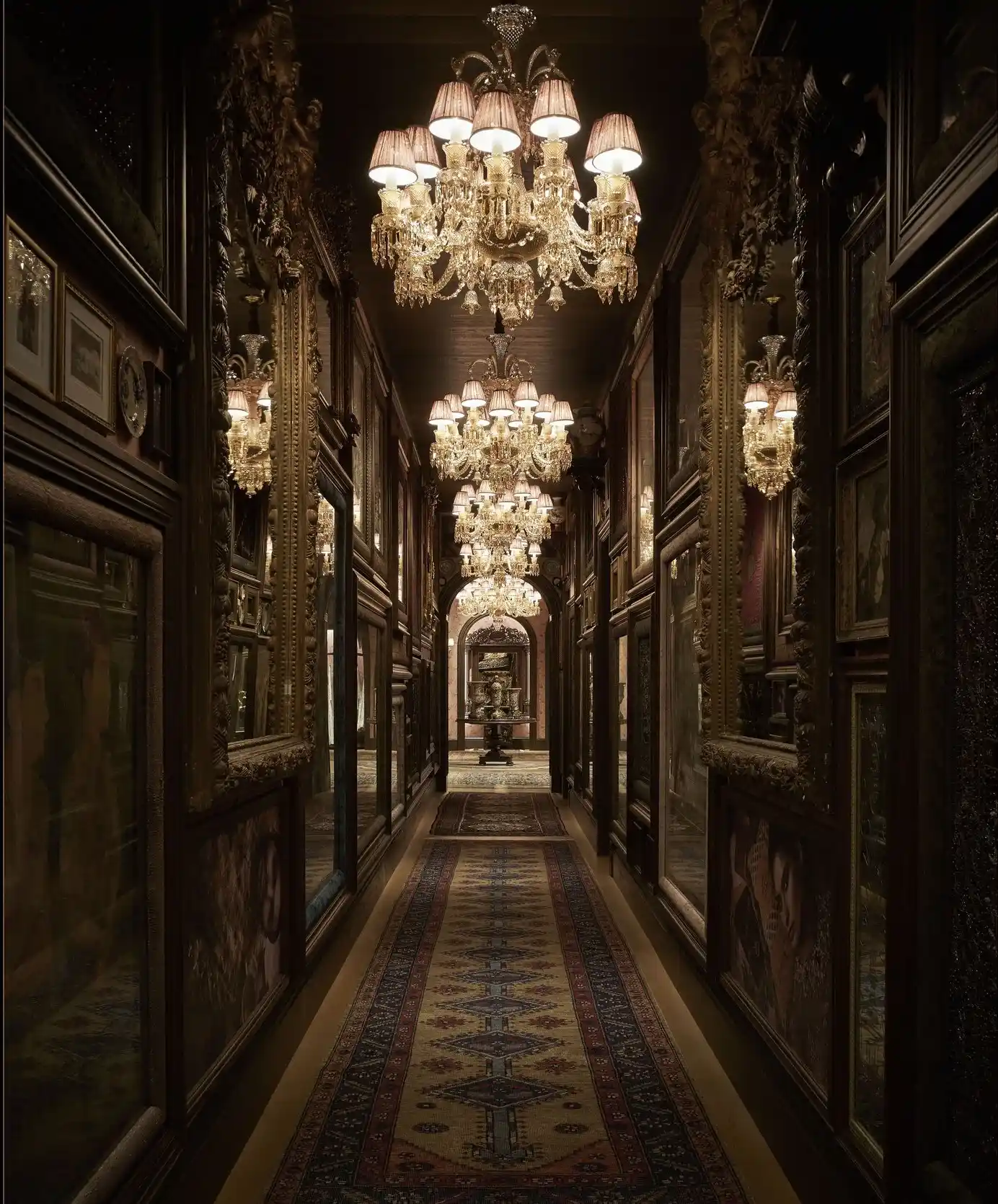
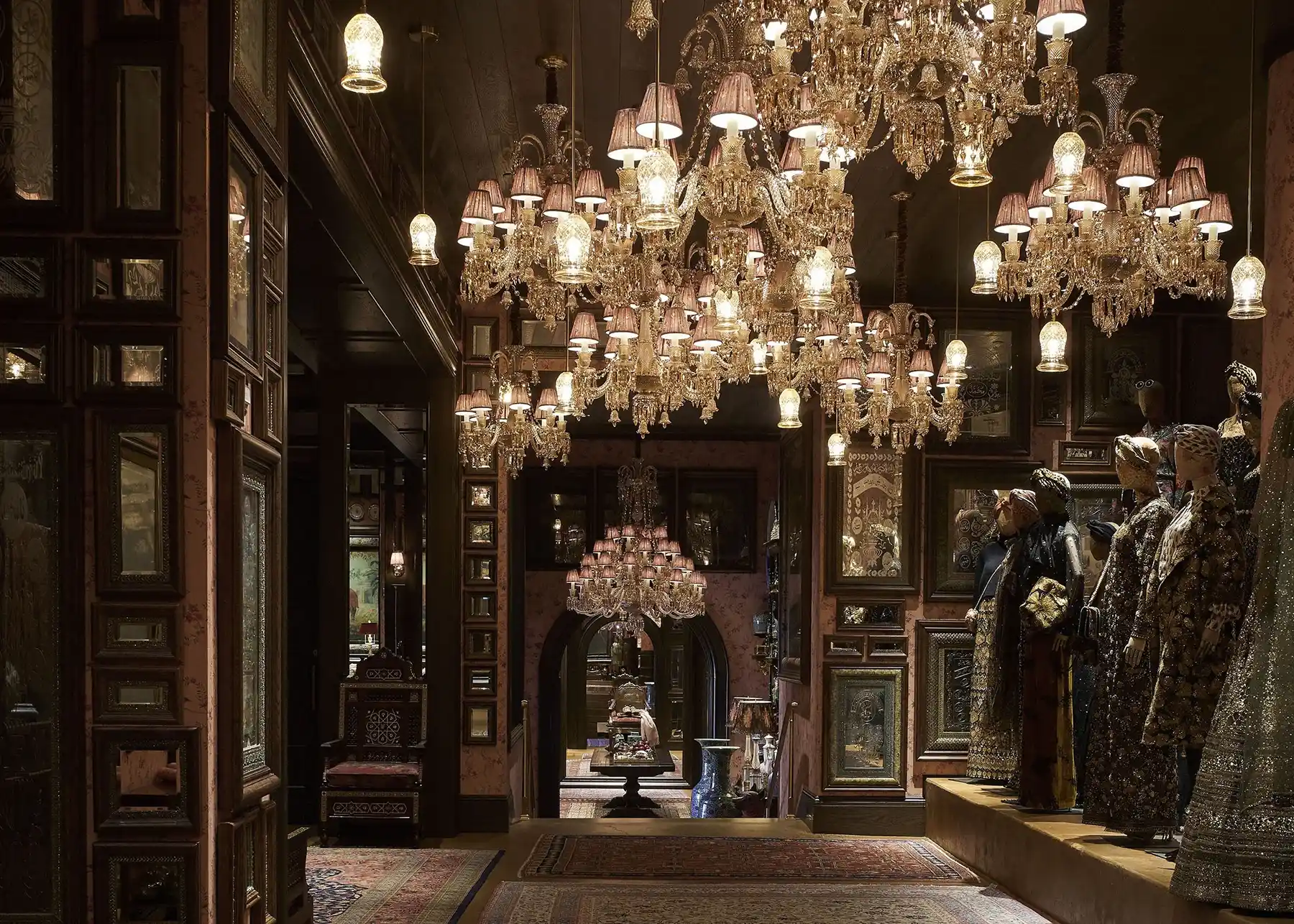
From the moment one steps inside, the atmosphere signals a departure from transactional luxury. Crystal chandeliers cast a softened glow over antique carpets and tufted leather sofas. Walls are dressed in custom wallpapers, historic portraits, and sepia-toned photographs that feel less decorative than archival. Display vitrines resemble museum cases more than retail fixtures, their contents arranged with the reverence of artifacts rather than merchandise.
Every surface tells a story. Carved wooden cabinets, brass vessels, Persian-style rugs, and stacks of richly patterned textiles form a visual lexicon drawn from South Asian heritage and colonial-era romanticism. Yet nothing here reads as nostalgic pastiche. The curation is precise, disciplined, and deliberate, maximalism, yes, but maximalism governed by scholarship and restraint.
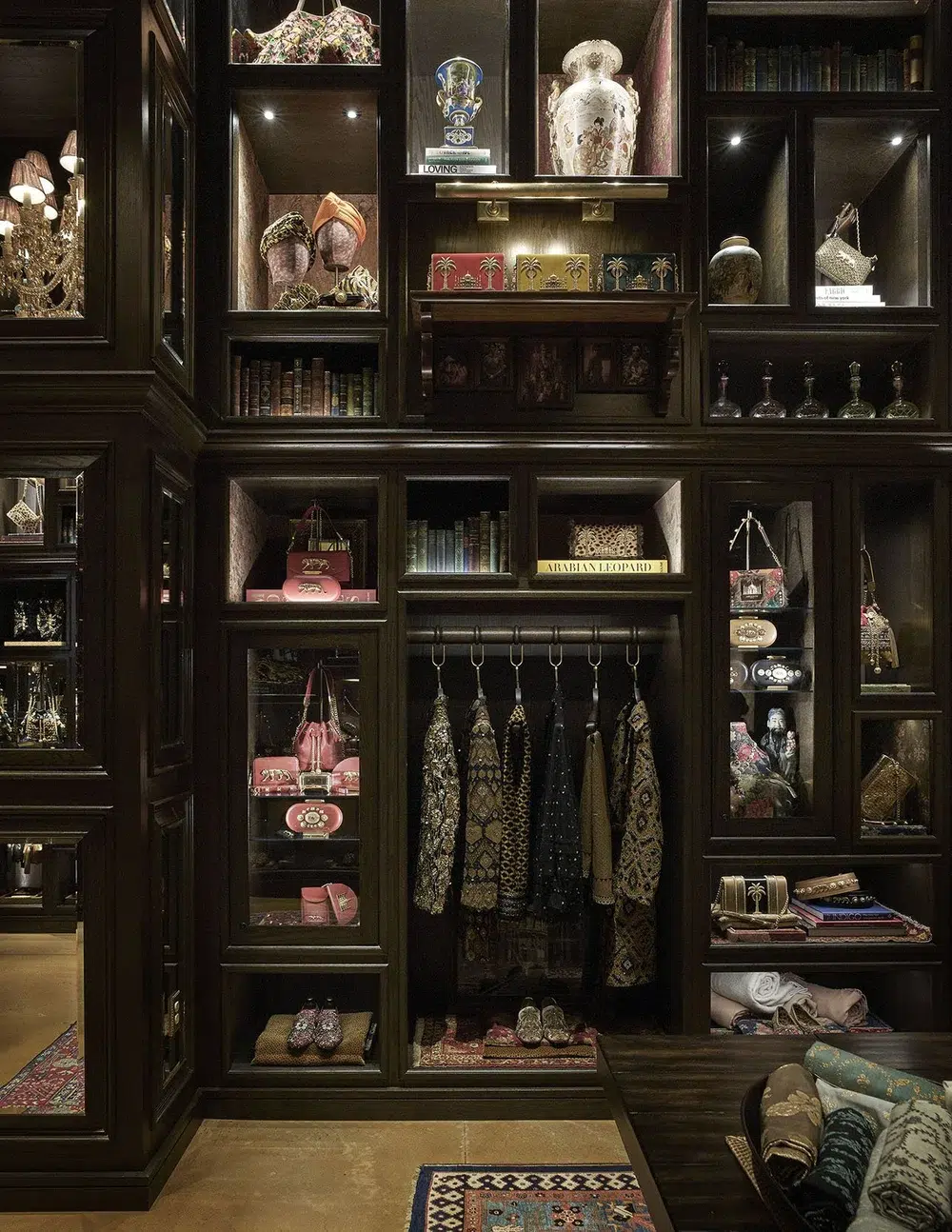
Garments do not dominate the rooms. They coexist with them. Sabyasachi’s couture, hand-embroidered lehengas, opulent sherwanis, jewel-toned silks appear almost incidental, as though discovered within a collector’s private residence. Jewelry glows softly within velvet-lined cases, its Mughal-inspired forms echoing the architectural ornamentation that surrounds it. Fashion here is not foregrounded. It is contextualized.
This refusal to privilege product over place is the flagship’s most radical gesture. In an era when luxury retail has become increasingly theatrical and algorithmic, Sabyasachi offers something quietly subversive: a space that rewards slowness, contemplation, and emotional literacy. Visitors are not guided along a commercial pathway. They are invited into a narrative.
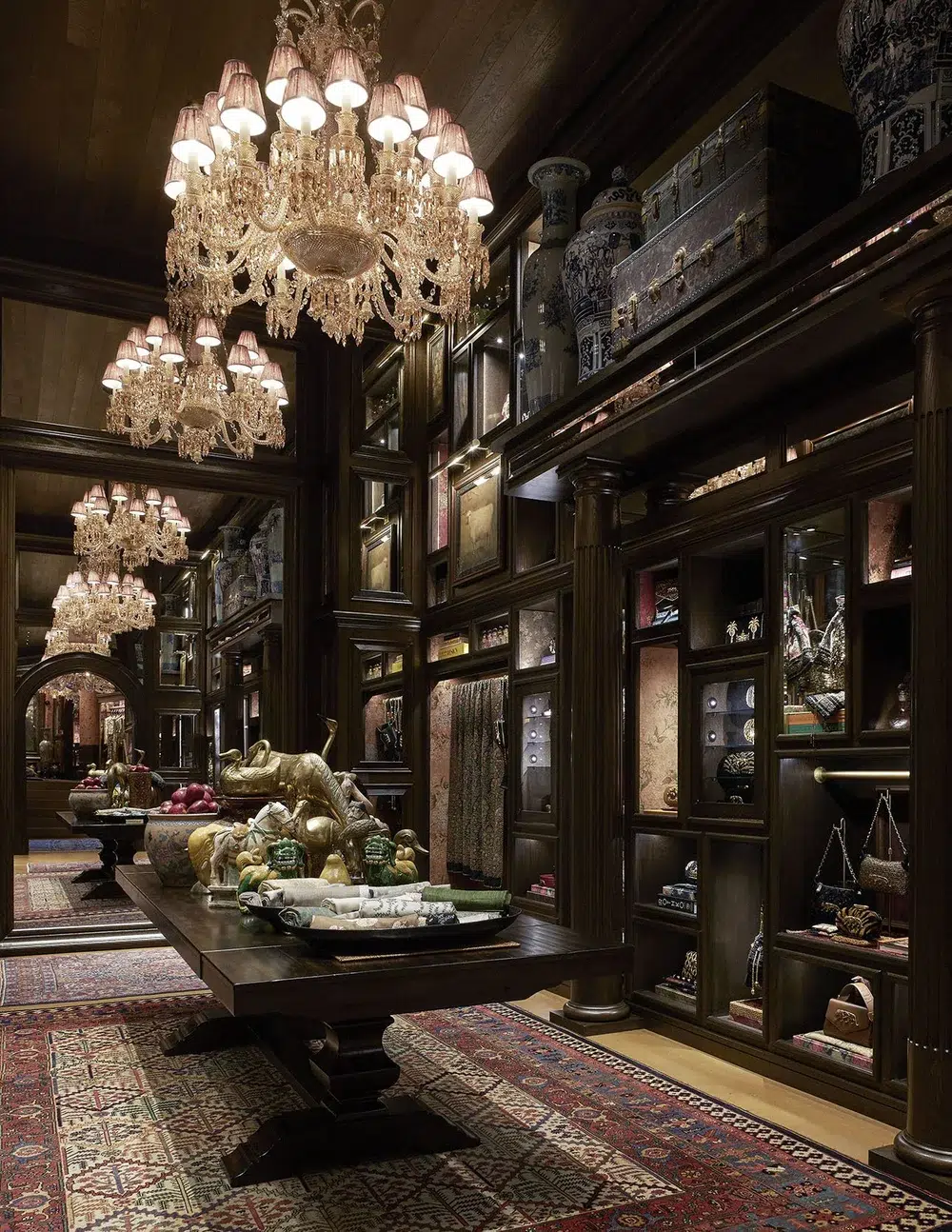
It is a narrative rooted in Mukherjee’s lifelong reverence for history, craftsmanship, and cultural continuity. The flagship operates as a three-dimensional manifesto, a physical articulation of his belief that true luxury is inseparable from memory, labor, and lineage. Each object, whether a chandelier or a cushion, feels selected not for visual impact alone, but for its symbolic resonance.
The effect is immersive without being immersive theater. There are no screens, no projections, no brand slogans. Instead, there is silence, texture, and the gentle authority of objects that appear to have lived many lives before arriving here. It is a world calibrated for those who understand that the most profound luxury experiences are not loud, fast, or easily photographed.
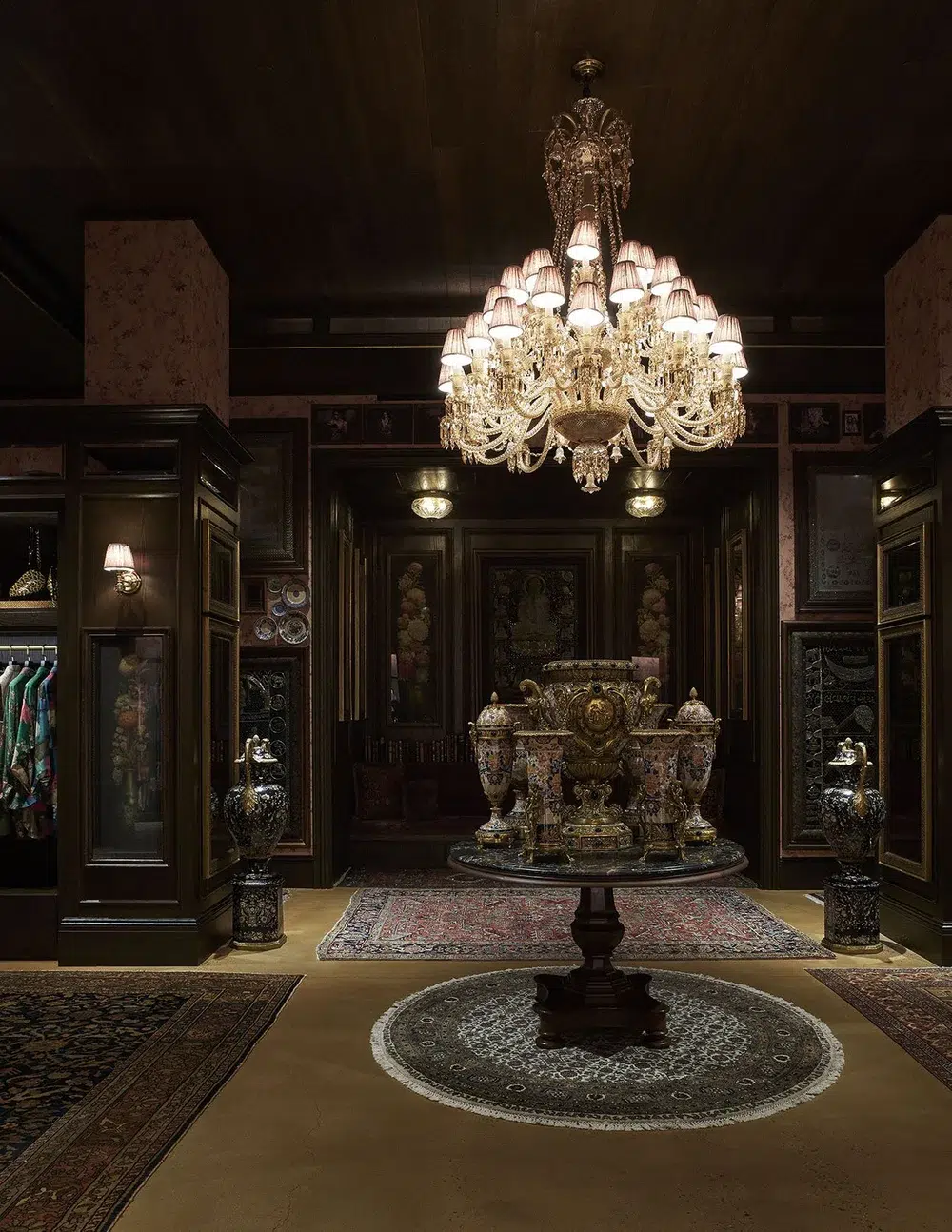
More than a retail outpost, the West Village flagship functions as a cultural bridge, connecting Sabyasachi’s Kolkata roots with New York’s cosmopolitan present. It translates Indian aesthetic philosophy into a global language without dilution or compromise. There is no attempt to Westernize the brand’s visual grammar. Instead, the space asks its audience to meet it on its own terms.
In doing so, Mukherjee has redefined what a flagship store can be in the 21st century. Not a showroom. Not a gallery. Not an archive. But something more elusive and more enduring: a lived-in universe, where fashion becomes one expression within a broader, slower, more meaningful conversation about beauty and belonging.
Sabyasachi’s New York flagship is not designed to sell quickly. It is designed to linger in the mind, in the memory, and in the imagination. And in a luxury landscape increasingly driven by velocity and visibility, that may be its most radical luxury of all.