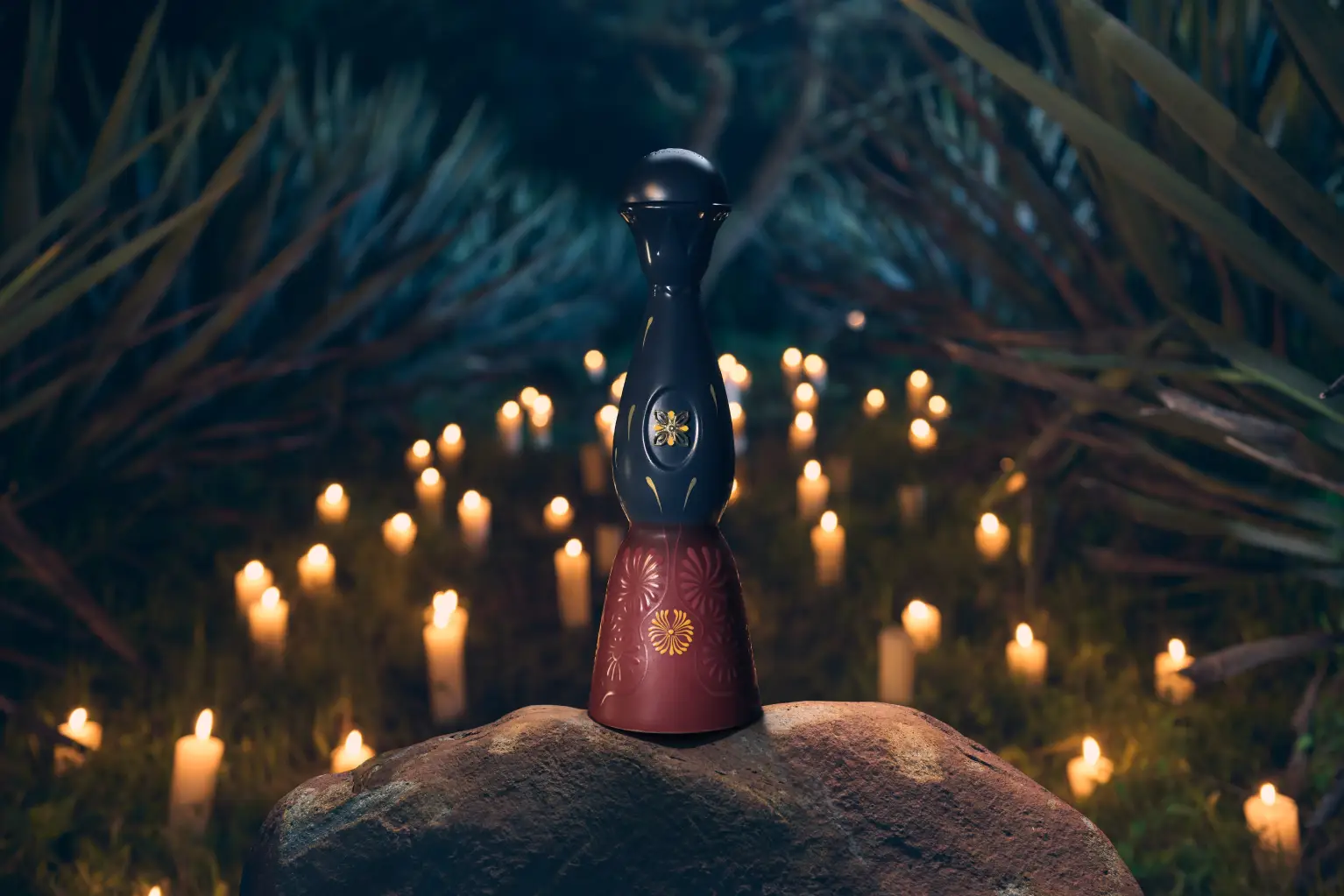
Clase Azul México’s latest limited-edition tequila pairs a Champagne wine-cask finish with a hand-painted ceramic decanter, marking a new chapter in the house’s annual tribute to Día de Muertos.
For Clase Azul México, Día de Muertos is not simply an occasion for a commemorative release. It is an opportunity to explore memory, craftsmanship, and the distinctly Mexican idea that life does not disappear so much as change form. This year, that philosophy takes shape in Clase Azul Tequila Día de Muertos Edición Limitada Trascender, an intricately composed añejo tequila presented in a ceramic decanter washed in deep blue, vivid magenta, and 24-karat gold.
Released October 1, Trascender marks the beginning of a new chapter for the house’s annual Día de Muertos editions. Rather than extending the five-part Nuestros Recuerdos collection that preceded it, Clase Azul will now treat each annual release as a singular creation, giving its distillers and artisans greater freedom to interpret the celebration through flavor, form, and symbolism.
Observed on November 1 and 2, Día de Muertos draws from centuries-old Indigenous traditions in Mexico and honors departed loved ones through altars, flowers, food, storytelling, and remembrance. At its heart is the belief that memory can bridge generations, preserving the presence of those who have gone before. For Clase Azul, that idea becomes the creative thread connecting the tequila itself with the ceramic vessel that contains it.

Founded in Guadalajara, Jalisco, in 1997 by Arturo Lomelí, Clase Azul has built much of its identity around the intersection of fine spirits and Mexican craftsmanship. Its tequilas and mezcals are inseparable from the sculptural decanters in which they arrive, each conceived not merely as packaging but as a canvas for artisanal techniques and cultural storytelling. With Trascender, that philosophy is carried through both the liquid and the object with unusual precision.
Master Distiller Viridiana Tinoco has blended two añejo tequilas aged for more than 30 months, using cask influence to create a dialogue between past and present. One component is finished in barrels previously used during the initial fermentation of wine destined for Champagne, while the other is matured in American whiskey casks, lending the final blend additional depth, toast, and structure.
The Champagne-wine casks are the more unexpected element. Their character has been shaped by autolysis, the process in which spent yeast cells break down after fermentation and release compounds responsible for some of the creamy, brioche-like notes associated with traditionally made sparkling wines. In Trascender, that inherited aromatic character becomes part of the tequila’s own expression, adding another layer to the release’s meditation on memory and transformation.
“The tequila inherits the aromatic legacy of autolysis,” Tinoco explains. “The soul of the agave, a plant that embodies patience, resilience, and cyclical life, meets the memory of the wine.” The language may be poetic, but the idea is firmly grounded in the spirit itself: one ingredient carrying the trace of another, with what came before continuing to shape what follows.
According to Clase Azul’s tasting notes, the tequila opens with aromas of pear compote, ripe apple, and peach, layered with honey, sourdough bread, and toasted oak. The palate follows with ripe pear and agave nectar alongside cacao nibs and toasted walnut, all carried by a silky texture and restrained acidity before moving into a long, warming finish touched with delicate spice.
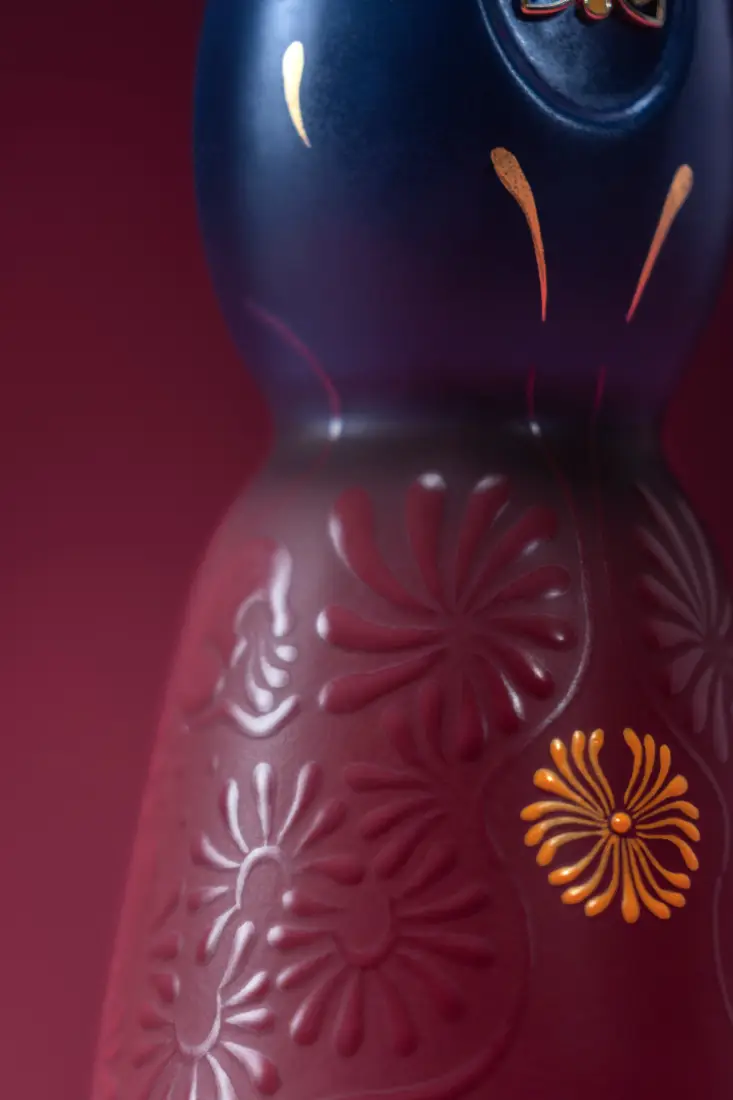
The decanter mirrors that same idea of transition. Its glaze moves gradually from deep blue into vivid magenta, creating a visual interpretation of the soul’s passage from the earthly realm toward the spiritual one. Along the base, floral details recall the marigold paths traditionally created to guide returning souls during Día de Muertos, while tiny skulls and crystalline droplets are worked into the hand-painted composition.
Against crimson mano de león blossoms, feathered strokes of 24-karat gold rise toward the sun, lending the vessel a sense of movement as it turns in the hand. Two marigolds positioned on opposing sides symbolize transformation, reinforcing the idea that the decanter is intended to be read almost like a narrative object, with each detail contributing to the larger story.
Creative Director Sofía Ortiz returned to one of Clase Azul’s most recognizable decorative techniques for the edition: hand-applied feathered brushstrokes executed individually by the house’s artisans. “For this piece, we wanted to go back to our essence, our hand-applied feathered brushstrokes, to root ourselves as we honored one of Mexico’s most beautiful celebrations,” Ortiz says.
The treatment gives the flowers an almost luminous quality against the dark ceramic ground, making them appear to dissolve gradually into light. It is a fitting effect for a release centered on remembrance, where transformation is expressed not as disappearance but as continuity, with the tequila and decanter both designed to suggest that what is gone can still leave something behind.
Clase Azul Tequila Día de Muertos Edición Limitada Trascender is bottled at 40 percent ABV, or 80 proof, and presented in a one-liter ceramic decanter. Production is limited to 10,000 bottles worldwide, placing the release firmly within the collectible end of Clase Azul’s portfolio while preserving the artisanal intimacy that has become central to the house’s identity.