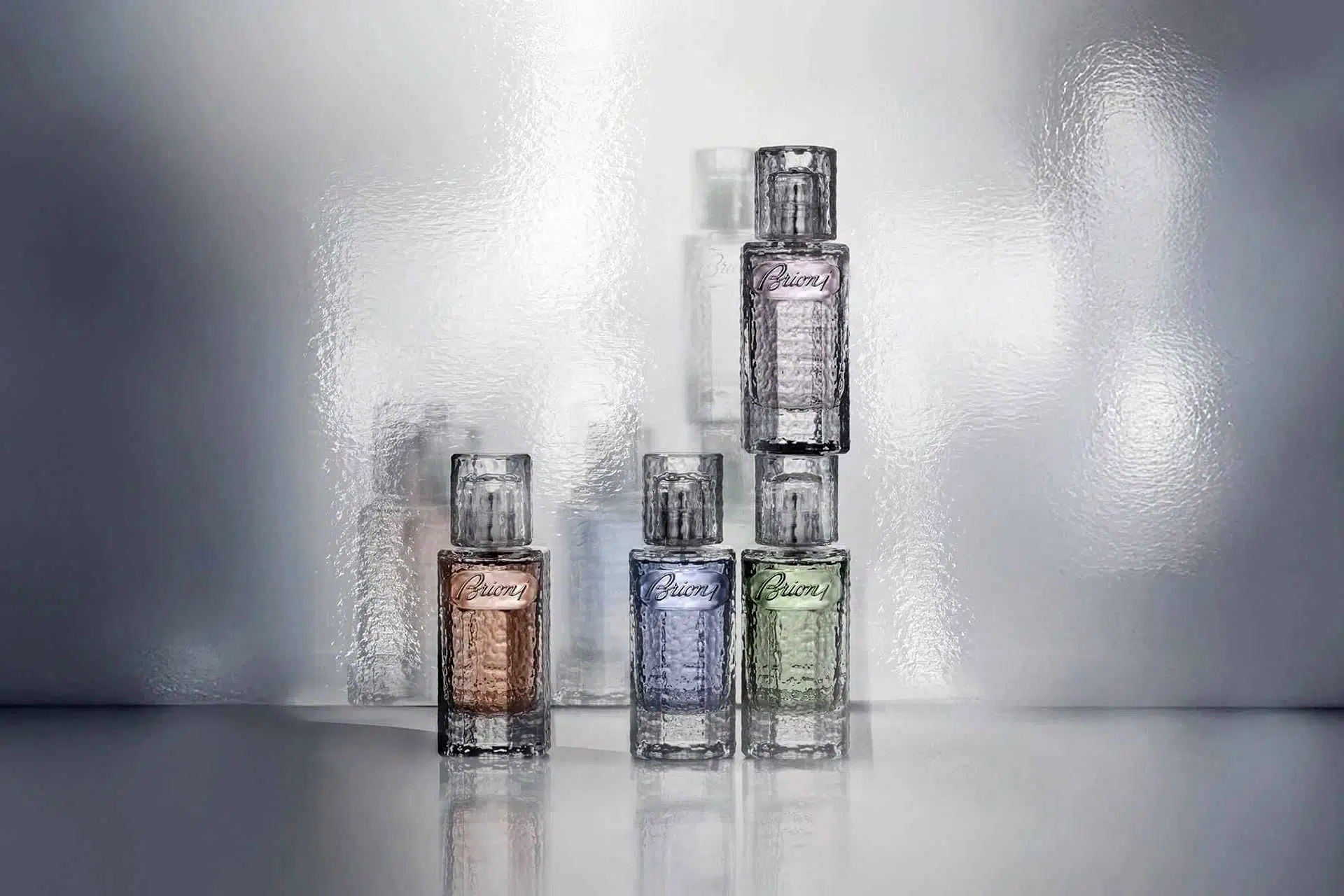
Brioni has always understood that true luxury rarely needs to announce itself. Since its founding in Rome in 1945, the house has built its reputation on a particular kind of elegance: precise without appearing rigid, sumptuous without excess, and unmistakably refined without ever becoming ostentatious. That same philosophy now finds a new expression in Les Extraits de Parfum, a quartet of fragrances that translates the codes of Brioni tailoring into scent.
Rather than constructing elaborate compositions around an abundance of ingredients, the collection takes a more disciplined approach. Each fragrance is centered on a single hero material, supported by a carefully edited selection of notes designed to reveal its character rather than compete with it. The result is closer to bespoke tailoring than traditional perfumery: proportion, balance, texture, and restraint working together until nothing feels unnecessary.
Iris Exquis is perhaps the most immediately elegant of the four. Iris has long occupied a privileged position in fine fragrance, prized for its cool, powdery refinement and almost tactile softness. Here, Brioni surrounds it with lavender, suede, and black tea, creating a composition that feels polished without becoming formal. There is a quiet sensuality to the pairing of iris and suede, while black tea introduces depth and dryness. The effect recalls the inside of a beautifully made jacket: smooth, discreet, and more luxurious the closer one looks.
If Iris Exquis is about softness, Encens Minéral explores contrast. Incense forms the center of the composition, but rather than leaning into the heavy, ecclesiastical character sometimes associated with the material, Brioni gives it a cleaner, more architectural expression. Lily of the valley introduces brightness, while vetiver provides an earthy, restrained foundation. The result suggests cool stone, mineral air, and a trace of smoke, less cathedral than contemporary Roman interior, where ancient materials meet modern lines.
Labdanum Brut moves into warmer territory. Built around cistus, the resinous plant from which labdanum is derived, the fragrance brings together Bulgarian rose and white musk to create something richer and more enveloping. Labdanum has a naturally ambered, slightly leathery quality, and here it is softened by florals and musk without losing its depth. It is the most sensual of the collection, though still distinctly Brioni in its refusal to become overly sweet or theatrical.
Then there is Papyrus Éternel, perhaps the fragrance that most directly connects the collection to the house’s tailoring heritage. Inspired by the enduring elegance of the Brioni tuxedo, it combines papyrus with black tea, cardamom, and vetiver. Papyrus brings a dry, woody quality, while cardamom adds subtle spice and black tea introduces a refined bitterness. Vetiver anchors the composition with a clean, masculine earthiness.
The tuxedo reference is particularly apt. A great evening jacket succeeds through structure, proportion, and detail rather than decoration, and Papyrus Éternel follows much the same logic. Nothing dominates. Instead, the fragrance develops gradually, its character emerging through texture and contrast. It feels considered rather than constructed.
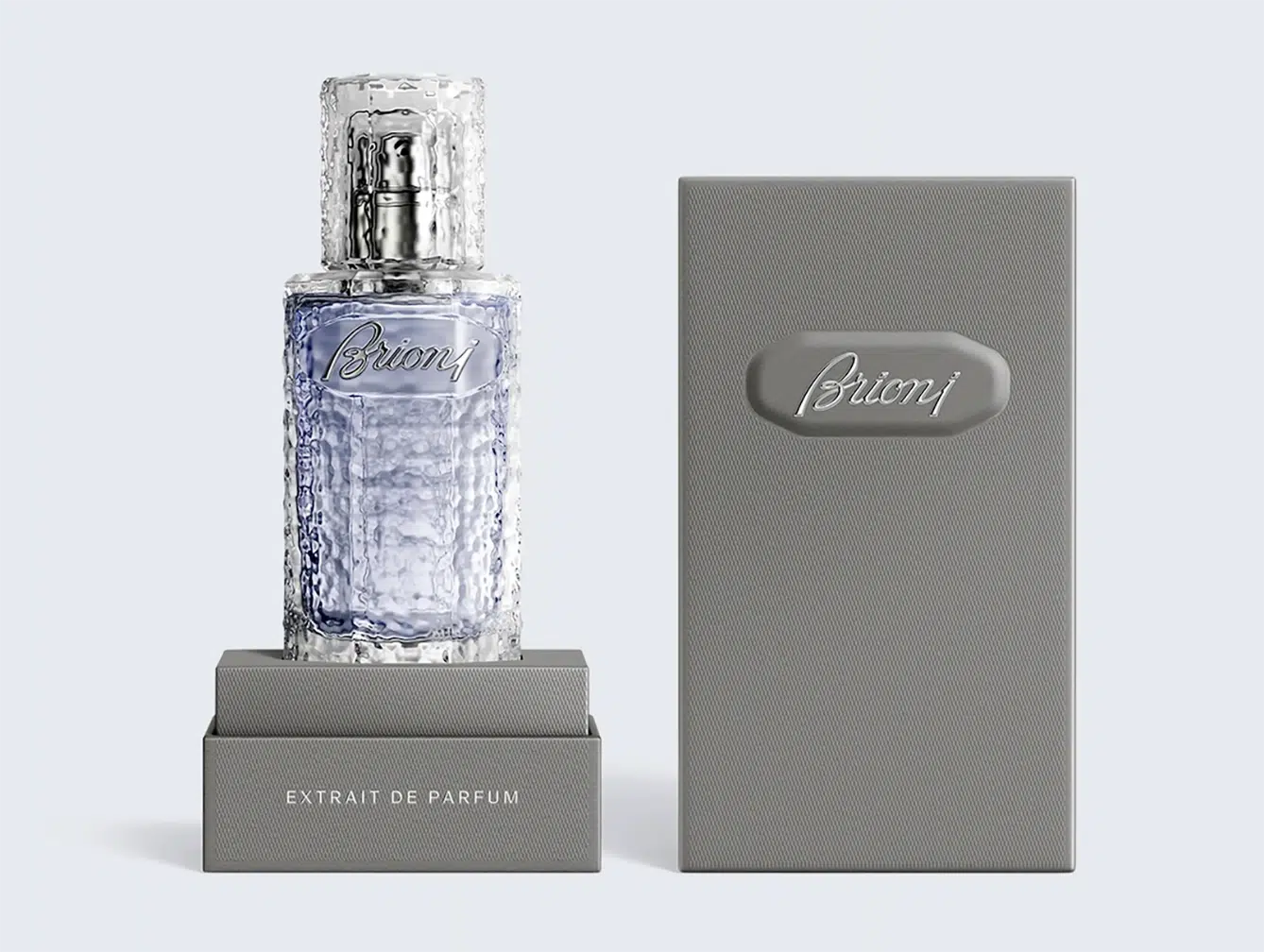
That sense of restraint extends to the presentation. Les Extraits de Parfum are housed in sculptural octagonal glass flacons with a hammered finish, giving each bottle a tactile quality that feels both contemporary and quietly artisanal. The design avoids obvious ornament, relying instead on form, weight, and material, an approach entirely consistent with a house whose greatest signatures are often recognized by those who know rather than those who merely look.
Brioni has also positioned the collection within a more modern understanding of luxury. The fragrances are vegan and cruelty-free, and the house emphasizes the use of sustainably sourced ingredients. These considerations are increasingly becoming part of the conversation around high-end beauty and fragrance, particularly among consumers who expect craftsmanship and responsibility to coexist rather than compete.
What makes Les Extraits de Parfum compelling, however, is not simply its ingredient list or its sustainability credentials. It is the way the collection reflects Brioni’s broader philosophy. This is fragrance treated not as an accessory, but as another extension of personal style.
A Brioni suit is designed to become part of the wearer rather than overwhelm him. Les Extraits de Parfum appear to pursue the same ideal. Each composition is distinctive, but none feels eager for attention. Instead, they reveal themselves gradually, through iris, incense, labdanum, papyrus, as the subtle construction details of a garment understood only upon closer inspection.
In an era when luxury fragrance increasingly favors intensity, projection, and statement-making, Brioni has chosen a quieter path. Les Extraits de Parfum is not about filling a room. It is about leaving an impression.
And in true Brioni fashion, that impression is one of precision, confidence, and effortless Italian elegance.