TAFT has never been especially interested in understatement for understatement’s sake. Since its founding, the footwear label has built a following by taking familiar men’s silhouettes and giving them a more expressive edge, pairing traditional construction with unexpected materials, richer textures, and a willingness to treat shoes as objects of personality rather than mere finishing touches.
Its latest release, the Longhorn Collection, pushes that philosophy in a new direction. Conceived as the first chapter in a series of limited-edition Summer 2026 drops, the capsule draws inspiration from the American West while remaining firmly rooted in the craftsmanship and refinement that have defined TAFT’s identity. The result is less cowboy revival than studied reinterpretation.
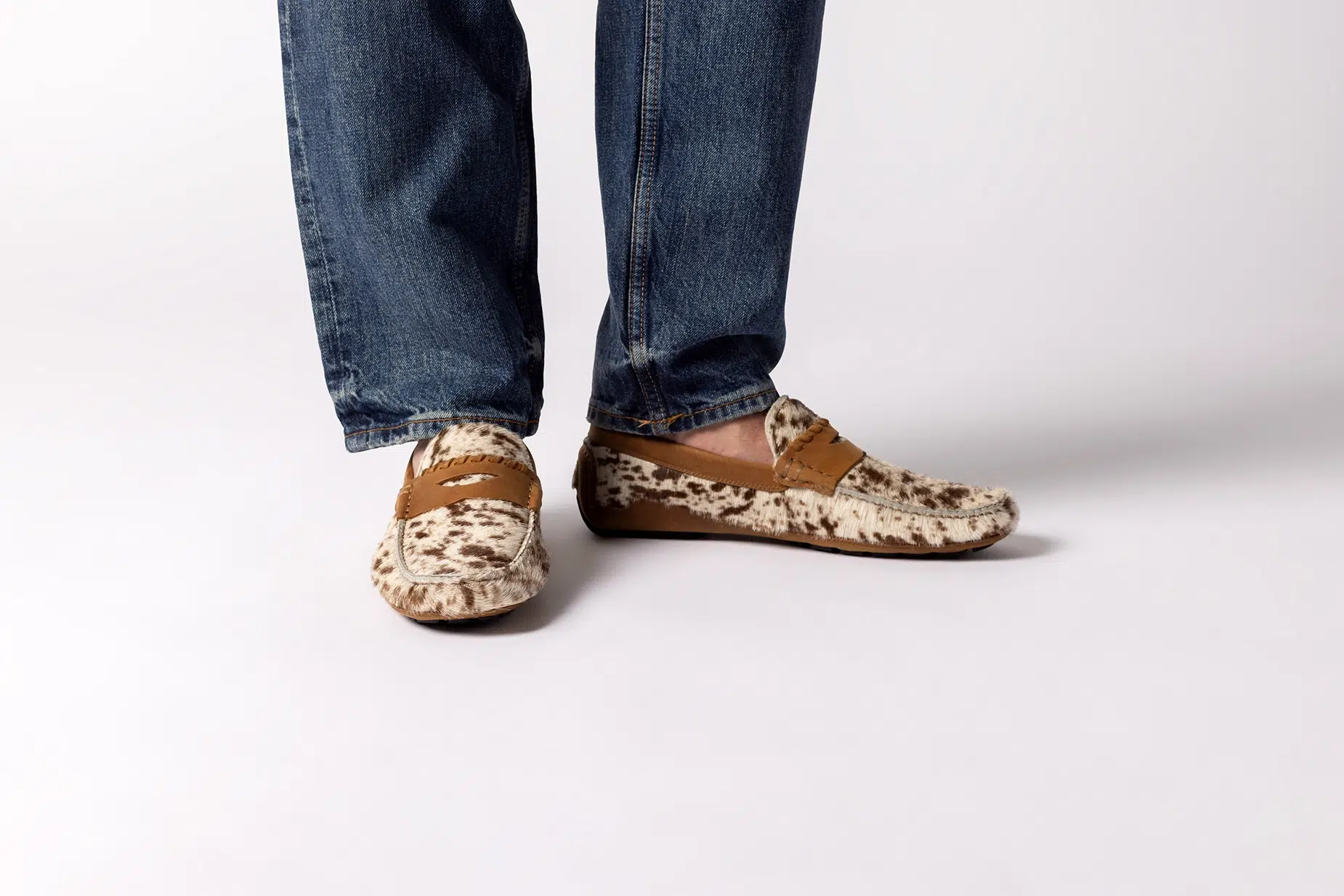
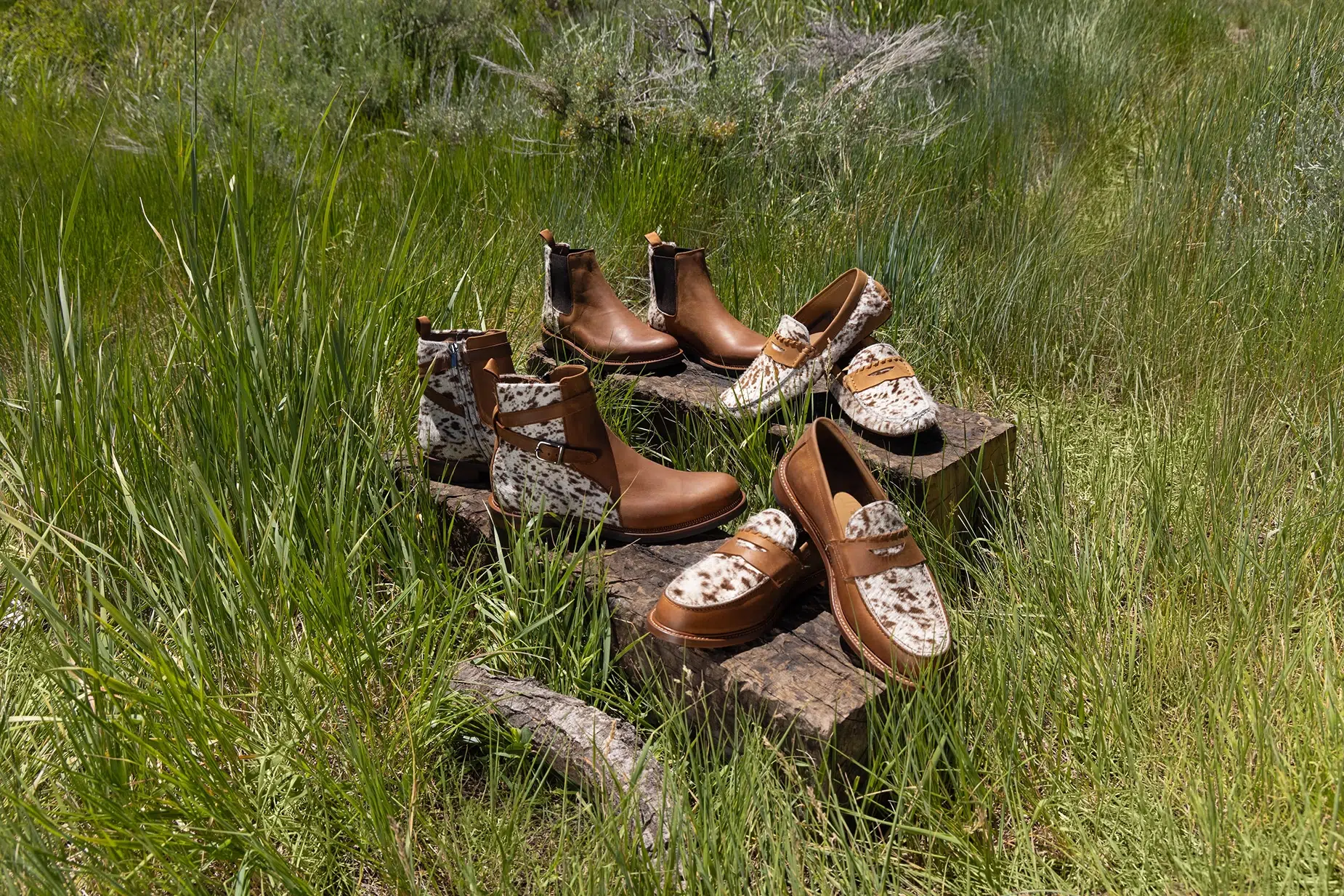
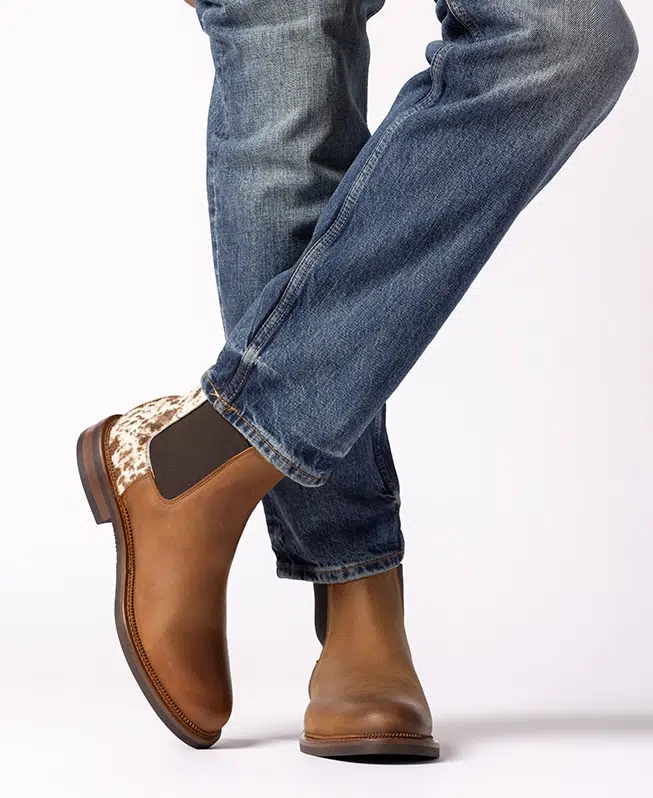
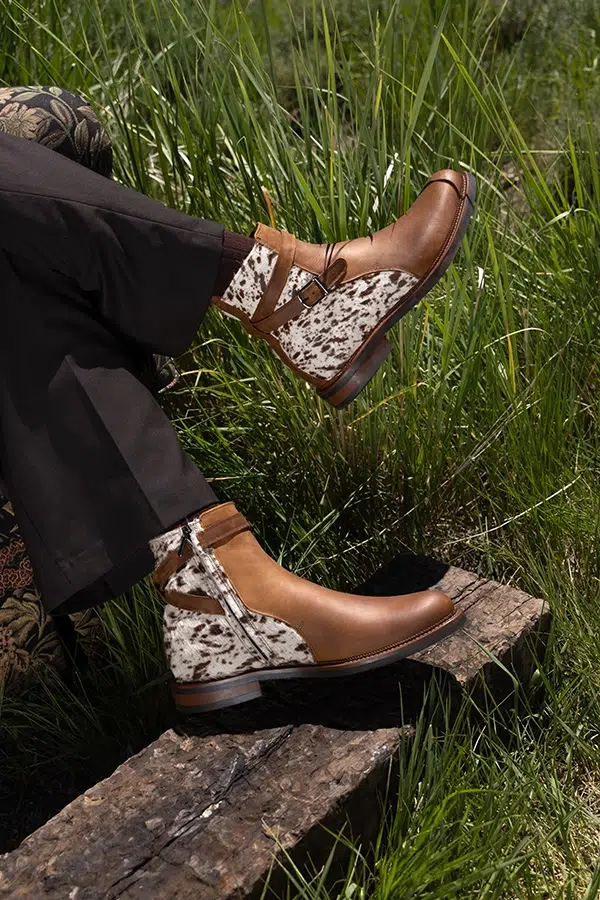
At the heart of the collection is cream-and-brown dappled haircalf leather, chosen for its resemblance to the distinctive markings of Longhorn cattle. The material gives each pair a natural irregularity, ensuring that no two shoes look exactly alike. In an increasingly standardized luxury market, that element of variation feels particularly relevant: each pair carries its own pattern, its own visual rhythm, and, in effect, its own identity.
That individuality is balanced by silhouettes that remain familiar. The collection comprises four styles: the Dylan Jodhpur Boot, Glen Chelsea Boot, Jack Penny Loafer, and Luke Driving Loafer. Each is handcrafted in Italy in limited quantities, giving the capsule a sense of rarity without forcing the point.
The boots are perhaps the most direct expression of the Western influence. The Dylan Jodhpur brings a more polished structure to the material, while the Glen Chelsea offers a cleaner, more architectural profile. Both allow the haircalf to do most of the visual work, while subtle whipstitching introduces a hand-finished note that references frontier craftsmanship without veering into costume.
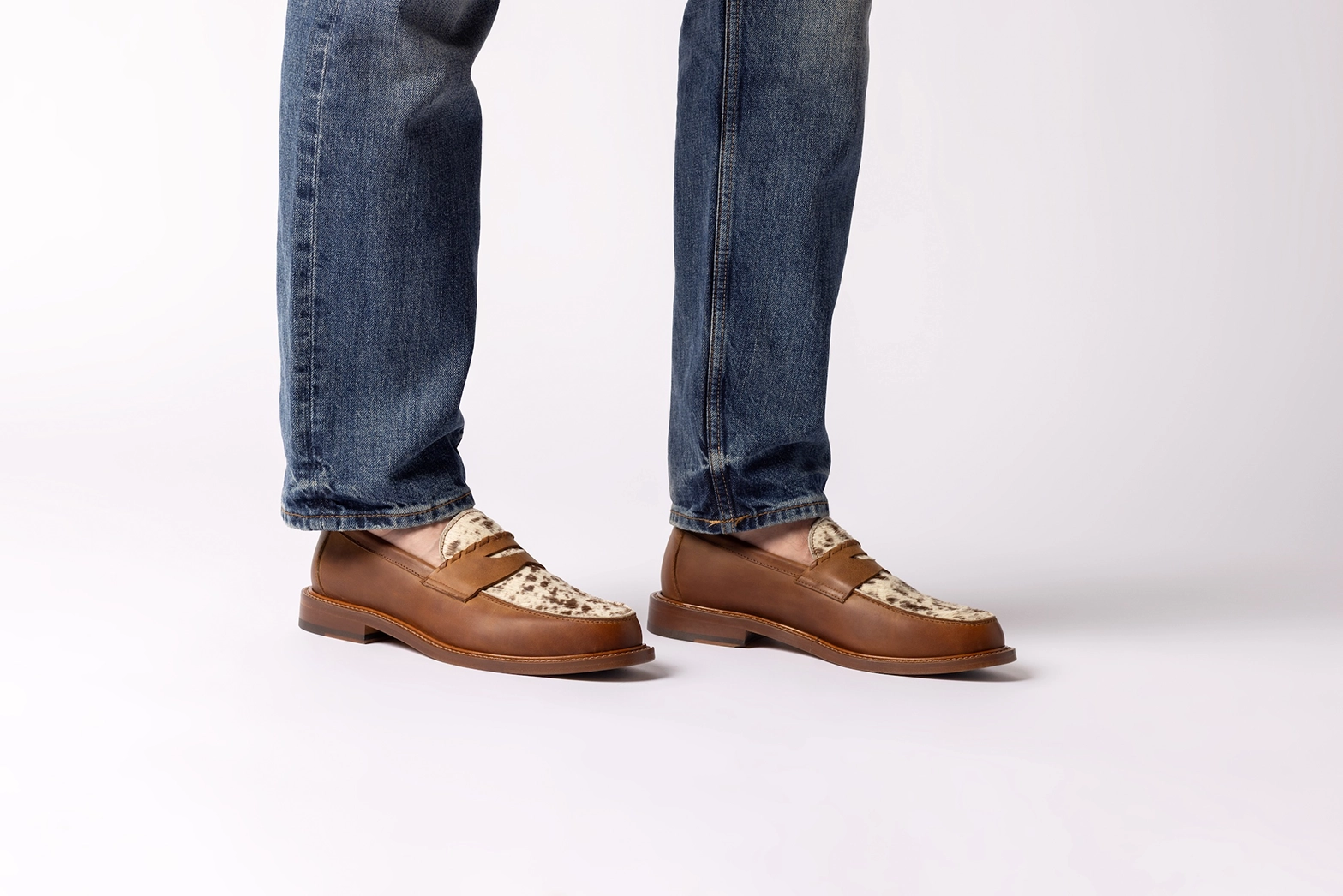
The loafers take the idea somewhere more unexpected. On the Jack Penny Loafer, the Longhorn-inspired pattern turns a traditionally conservative shape into something considerably more expressive, while the Luke Driving Loafer feels lighter and more relaxed, translating the same material language into a shoe suited to summer travel and casual tailoring.
Across all four designs, the tension between refinement and ruggedness is what gives the collection its character. Haircalf can easily become theatrical when used too aggressively, but TAFT tempers it with restrained proportions and familiar construction. The Western references are present, but controlled, allowing the craftsmanship to remain central to the design.
Western aesthetics have moved in and out of fashion for decades, often returning through exaggerated details such as fringe, embroidery, heavy boots, and oversized buckles. TAFT’s approach is more interesting because it borrows the material and spirit of the genre rather than reproducing its most obvious symbols. The result feels contemporary, wearable, and far removed from costume.
The Longhorn Collection also signals a broader creative evolution for the brand. TAFT has long operated in the space between classic menswear and expressive design, but this release places greater emphasis on narrative. The shoes are not simply differentiated by color or construction; they are tied to a specific visual world and released in intentionally limited runs, giving the collection a stronger sense of identity.
Rather than behaving like permanent wardrobe basics, these pieces are positioned more like collectibles, objects made for customers who appreciate craftsmanship but also want something less predictable than a traditional black or brown shoe. It is a model increasingly visible across luxury fashion: smaller drops, stronger storytelling, greater material distinction, and a heightened sense of scarcity.
For TAFT, the approach feels particularly natural. The brand’s most memorable designs have always relied on individuality, and the Longhorn Collection simply sharpens that point of view. There is also something fitting about the choice of Italian craftsmanship for a collection inspired by the American West, with the contrast giving the shoes much of their sophistication.
Frontier imagery is filtered through European shoemaking, resulting in pieces that feel worldly rather than nostalgic. The effect is neither purely American nor conventionally Italian, but something more hybrid and more contemporary, which may ultimately be the collection’s greatest strength.
The Longhorn Collection does not ask the wearer to adopt a Western persona. Instead, it borrows the confidence, texture, and individuality associated with the landscape and translates those elements into footwear designed for a more refined setting. In that sense, TAFT’s latest chapter feels less like a departure than an evolution, with the brand continuing to do what it has always done best: take something recognizable, disrupt it just enough, and turn it into something far more personal.