There is a point at which a boot stops being simply footwear and begins to resemble something closer to an heirloom. The distinction is rarely announced with an oversized logo. Instead, it can be found in hand-cut leather, carefully shaped lasts, oak-bark-tanned soles, hand-welted construction, and hours of work performed by craftspeople whose techniques have been passed from one generation to another.
That level of shoemaking comes at a price. While a well-made factory-produced boot can be found for several hundred dollars, the upper reaches of traditional men’s footwear routinely move beyond $800 and into four figures. At houses such as Carmina, J.M. Weston, Antonio Meccariello, Stefano Bemer, and Edward Green, the premium is tied not simply to the name on the box, but to materials, construction, finishing, and the increasingly rare human expertise required to put them together.
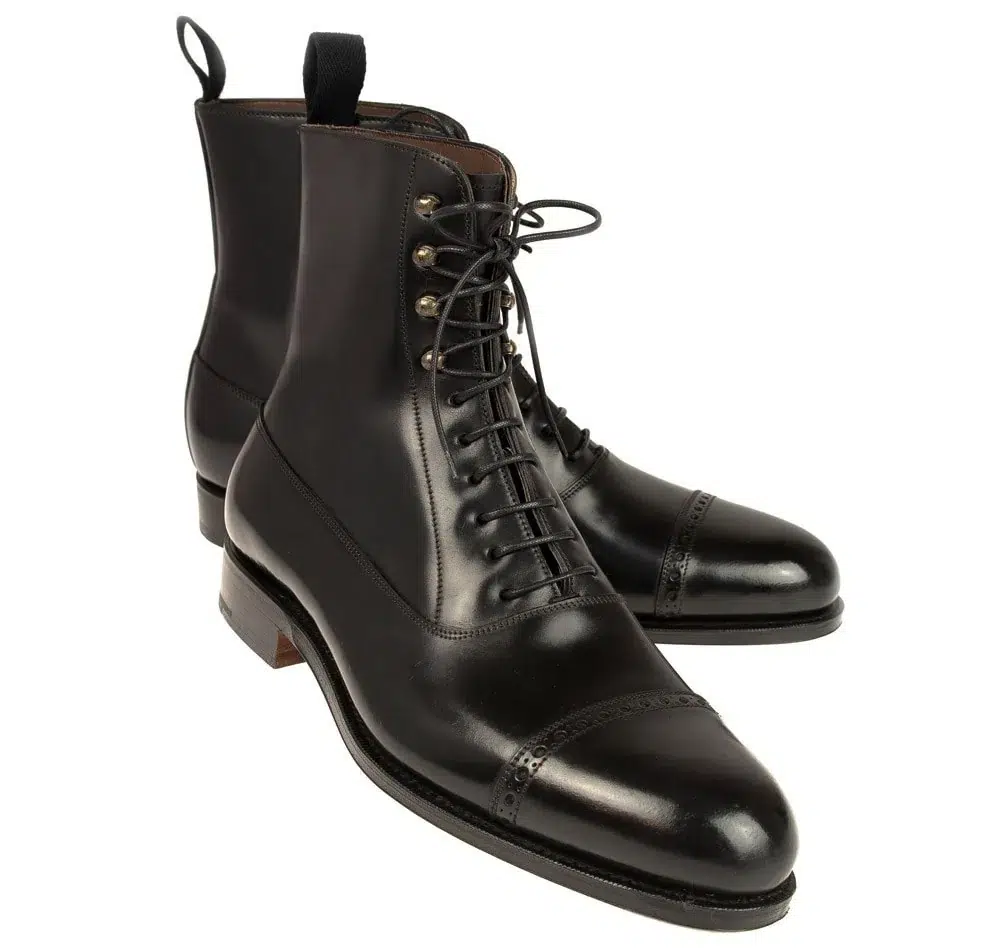
Carmina Balmoral Cordovan Boot
Mallorca-based Carmina has been making footwear within the same family tradition since 1866, and its Balmoral Cordovan Boot demonstrates why shell cordovan occupies such an elevated place in serious shoemaking. The current black version is priced at $1,350 and uses Horween Shell Cordovan, a bark-tanned double leather sole, calf lining, and Goodyear-welted construction. Carmina says its shoes continue to be made by artisans on Mallorca using traditional construction techniques.
Cordovan is particularly suited to a boot intended to age rather than simply wear out. Dense, lustrous, and prized for developing character over time, the leather gives the Balmoral an almost architectural presence. The cap toe and restrained perforation keep the silhouette formal enough for tailoring, yet the height and substantial sole lend it considerably more authority than an Oxford. This is the sort of boot that looks almost too pristine when new and increasingly convincing after years of careful wear.
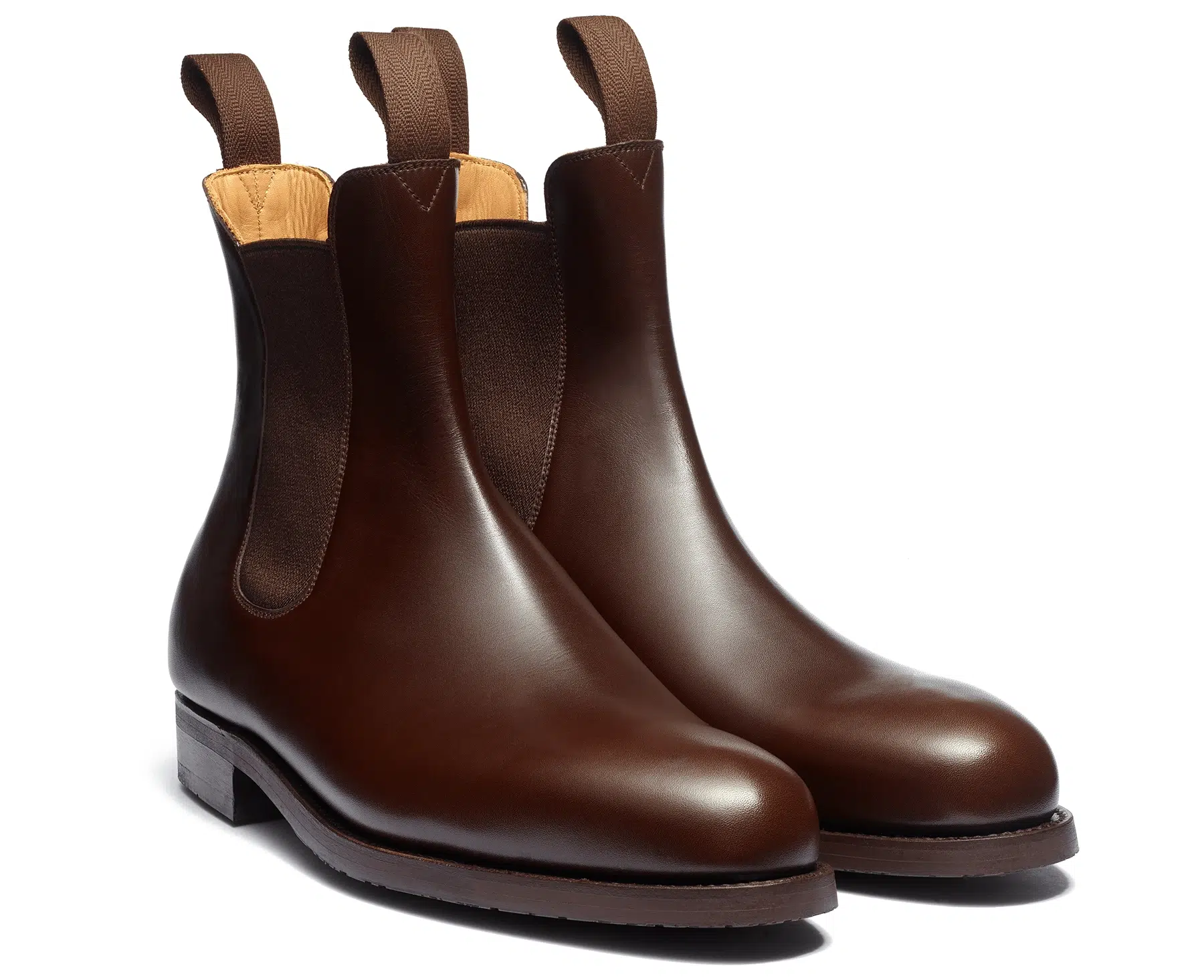
J.M. Weston Icons Chelsea Boot — $1,360
The Chelsea boot may be one of menswear’s simplest shapes, which makes execution particularly unforgiving. With almost no decorative detail to distract the eye, proportion, leather quality, and silhouette have to do everything.
J.M. Weston’s Icons Chelsea Boot is currently priced at $1,360 in the United States. The French shoemaker, founded in 1891, offers the model in box calf and suede variations, describing it as an elastic ankle boot inspired by traditional riding footwear.
What makes the Weston appealing is precisely its restraint. There is no attempt to reinvent the Chelsea through exaggerated soles or fashion-driven proportions. Instead, the boot is streamlined and urbane, the kind of piece that disappears beneath a beautifully cut trouser until the wearer sits down. In luxury menswear, that quietness can be far more persuasive than novelty.
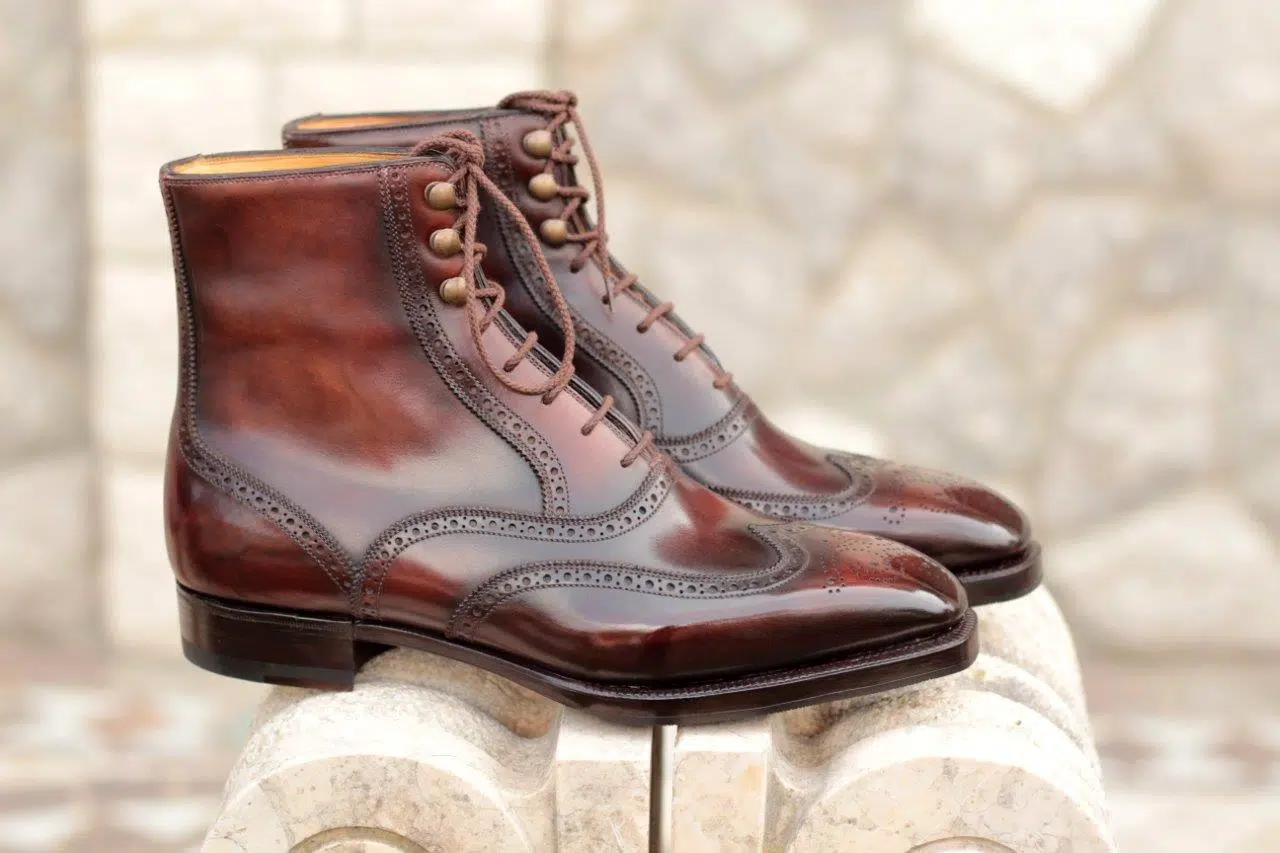
Antonio Meccariello Optio Hand-Welted Boot — €850 Plus VAT
For the enthusiast who cares about construction almost as much as appearance, Antonio Meccariello occupies particularly interesting territory. The Italian maker’s Optio Boot, part of its hand-welted line, is listed at €850 plus VAT and is made entirely in Italy.
Hand-welting matters because it represents one of traditional shoemaking’s more labor-intensive forms of construction. Rather than relying entirely on mechanized welting, the connection between upper, insole, welt, and sole involves extensive handwork. The result is not merely romantic craftsmanship; properly executed, it can produce a boot with exceptional structure, repairability, and longevity.
The Optio also carries the slightly sculptural quality associated with fine Italian shoemaking: an elegant heel, carefully judged broguing, and a shape that manages to feel classic without becoming conservative. At this price level, the pleasure lies as much in knowing how the boot was made as in seeing it.
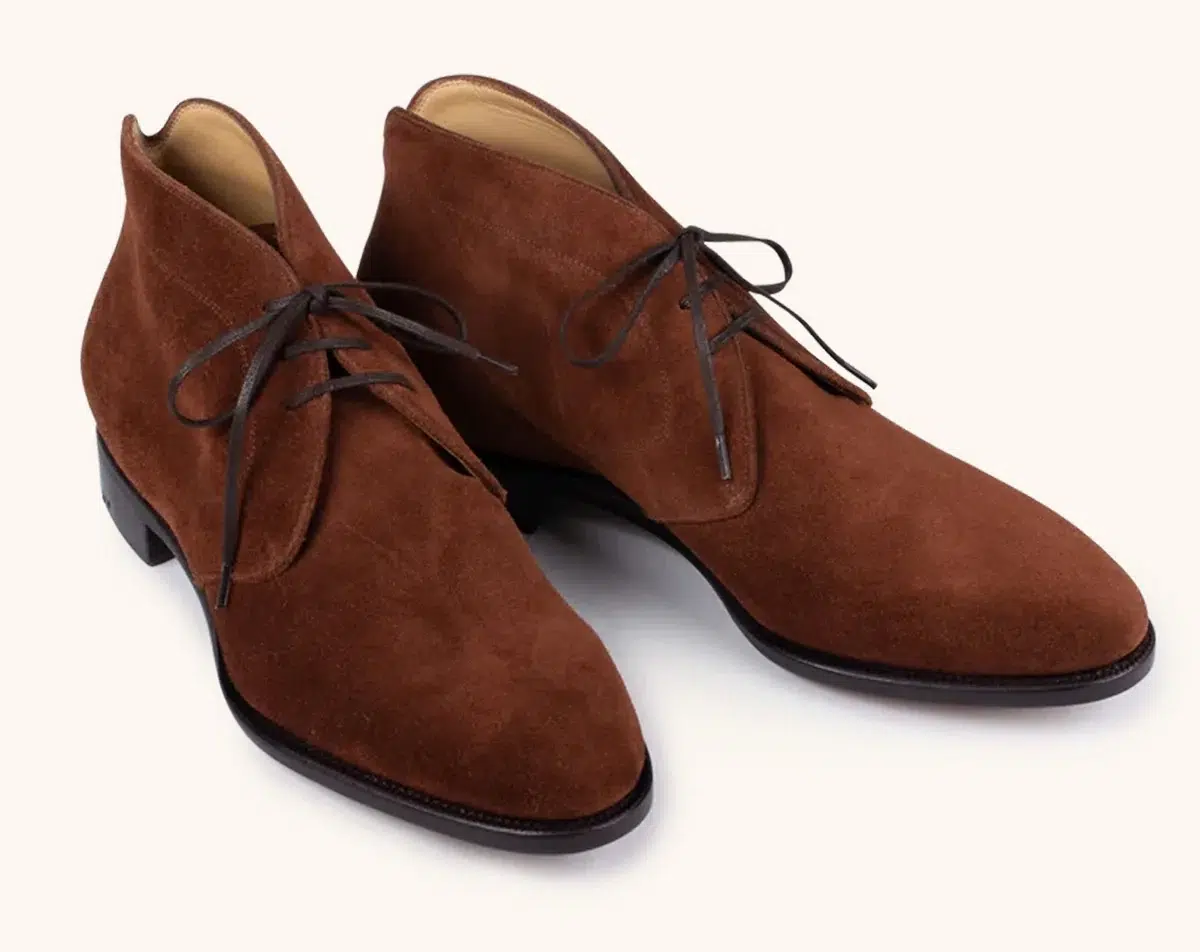
Stefano Bemer Suede Chukka — $1,190
Florence has its own approach to luxury, one generally more relaxed than London and more intimate than Milan, and Stefano Bemer’s shoemaking embodies much of that spirit. Its Polo Brown Suede Chukka carries a regular price of $1,190, although the model is currently offered at a reduced price. It uses French suede and a Goodyear-welted construction developed as part of Bemer’s Essenziale line.
A chukka at nearly $1,200 may sound extravagant until one considers what the buyer is seeking. The appeal is not visual complexity. It is refinement of something deliberately simple: the depth of the suede, the shape of the last, the way the arch is supported, the profile of the sole, and the ability of an understated boot to work with everything from flannel trousers to denim and an unstructured jacket.
Bemer also ventures considerably higher. Its current boot collection includes models moving well beyond $1,500, with Chelsea, Jodhpur, hunter, and exotic-leather styles entering the $1,700-to-$3,000 range and above.
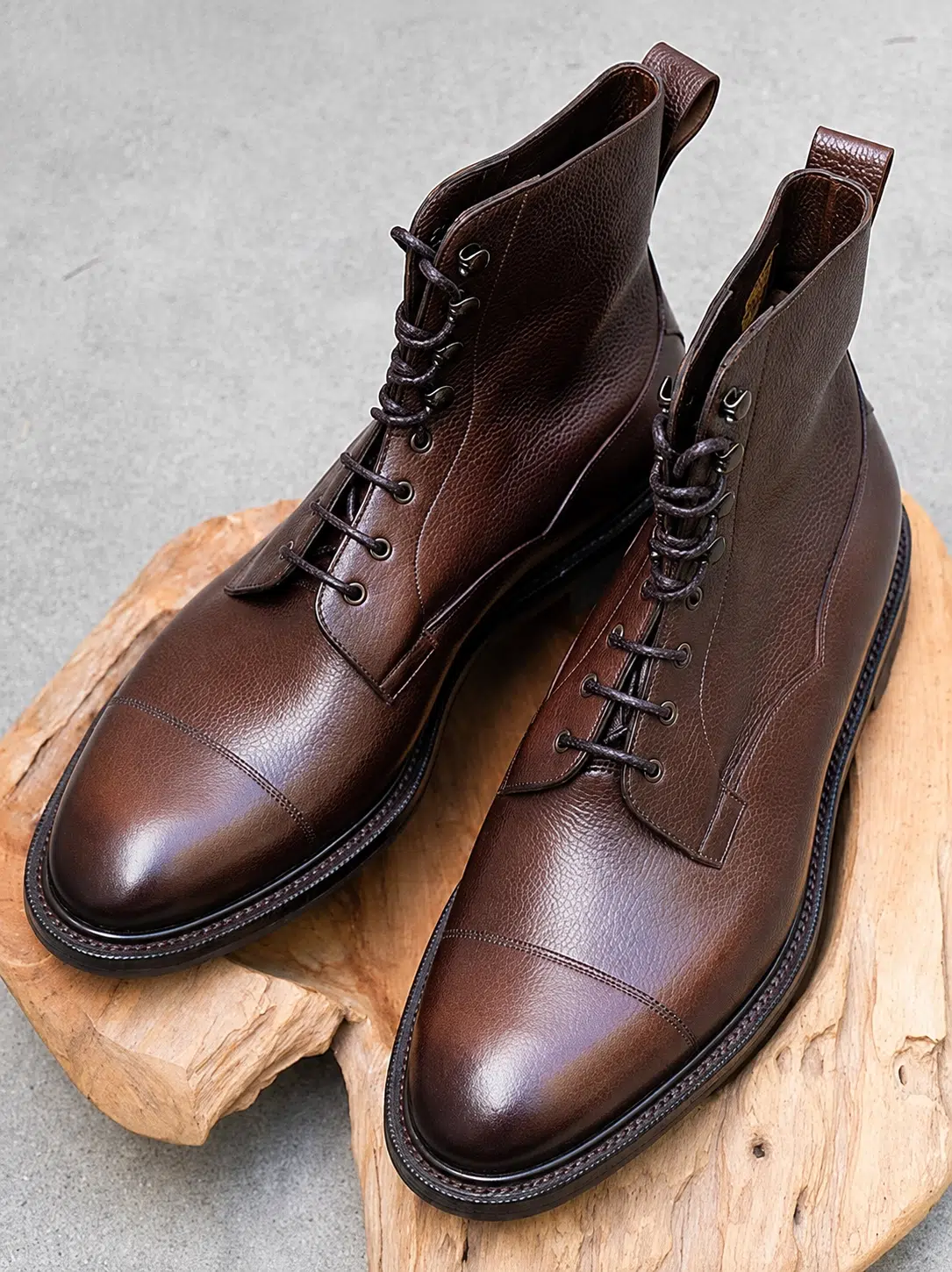
Edward Green Galway — $2,175 and Beyond
Then there is the Edward Green Galway, a boot whose reputation among serious footwear collectors approaches icon status. Edward Green has been making shoes in Northampton since 1890, with leather still cut by hand and footwear produced by a workshop of skilled artisans. The company says approximately 60 craftspeople make around 350 pairs each week, using details including hand-finished calfskin and oak-bark-tanned soles.
The Galway has been part of that story for the better part of a century. Its signature is the sweeping arrowhead-shaped panel running along the side, a detail that gives a traditional Derby boot unmistakable identity without resorting to embellishment. Edward Green currently lists standard Galway variations around $2,175 in the U.S., while cordovan combinations rise substantially higher.
At more than $2,000, the Galway moves beyond the original $800-to-$1,500 bracket, but it illustrates where the same philosophy ultimately leads. Better leather, more hand finishing, smaller production, complex construction, and a century of accumulated knowledge all push the price upward. Whether that makes a boot “worth” the money remains personal, but the object itself is clearly operating in a different universe from disposable fashion.
Why Four-Figure Boots Still Matter
The most compelling argument for handmade footwear is not that it is expensive. Price by itself has never guaranteed quality. The appeal lies in the opposite idea: buying fewer objects and expecting considerably more from them.
A truly exceptional boot can be resoled, maintained, polished, repaired, and worn long enough to acquire a history of its own. The leather softens. The color deepens. Small marks cease to look like damage and instead become part of the patina. With care, the boot becomes more personal rather than simply older.
That may be the real luxury of traditional shoemaking. In a market built around constant replacement and endless newness, these houses are selling something increasingly unusual: an object designed with the expectation that its owner will still want it years from now.