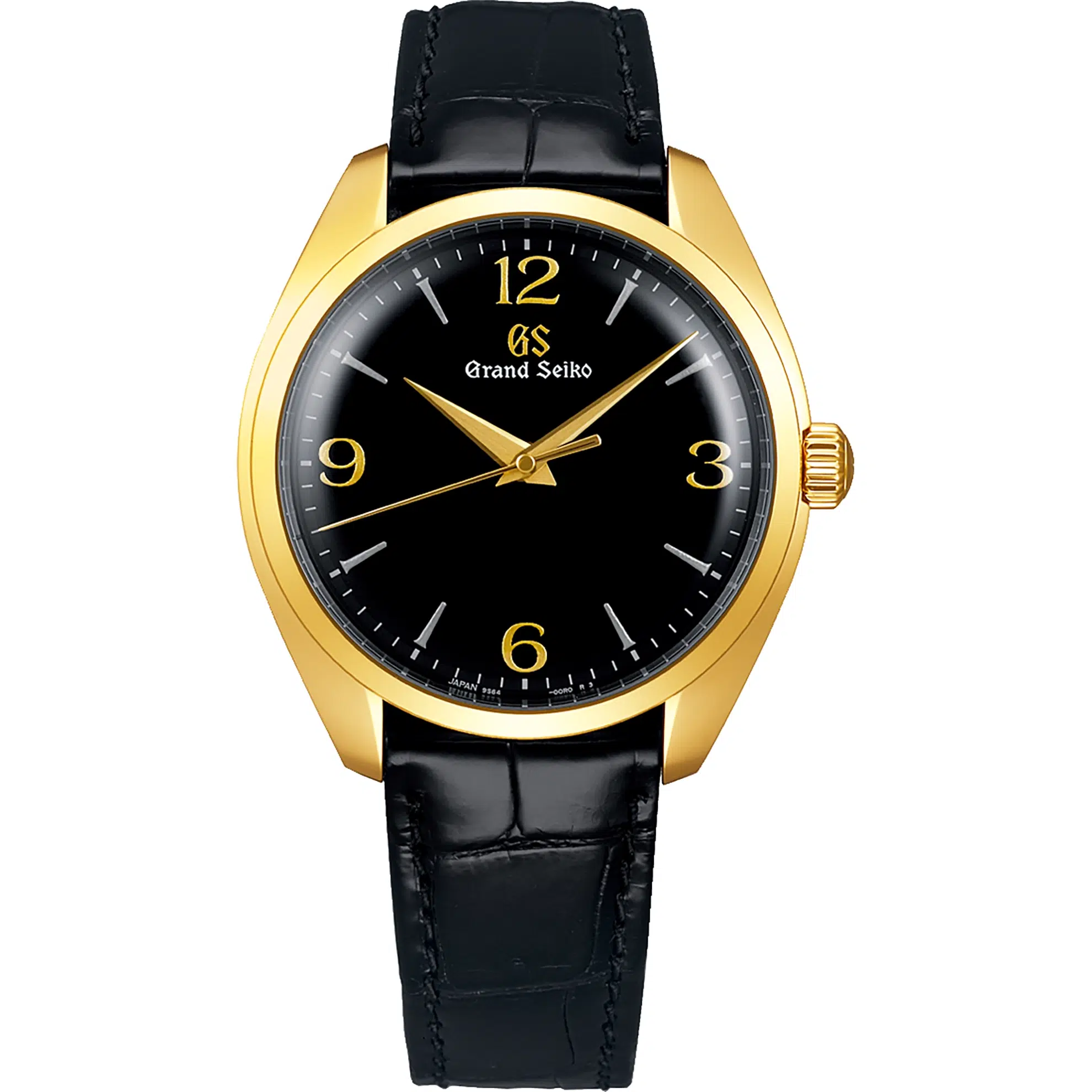
Grand Seiko has long built its reputation on precision, restraint and a distinctly Japanese approach to watchmaking. The SBGW262, part of the brand’s Elegance Collection, brings those qualities together in a watch that feels less like a conventional luxury timepiece and more like a study in traditional craft.
Introduced during Grand Seiko’s 60th-anniversary year, the SBGW262 is housed in a 39 mm case of 18k yellow gold and paired with a black urushi lacquer dial. The combination is deliberately understated at first glance, but the details become more expressive the longer the watch is observed.
The dial is where much of the watch’s character resides. Grand Seiko uses urushi lacquer sourced from trees grown in and around Joboji, beneath Mt. Iwate, near the Shizukuishi Watch Studio. The lacquer is mixed with iron to create its distinctive deep black tone, a surface that responds subtly to changing light rather than presenting a flat, uniform finish.
Against that dark background, the hour markers are created using raised maki-e, a traditional Japanese decorative technique. The work is carried out by Isshu Tamura, a master of Kaga maki-e, who builds the markers by hand to create depth and contrast. Grand Seiko has described the technique as one that depends on remarkable precision, particularly when applied to a curved surface.
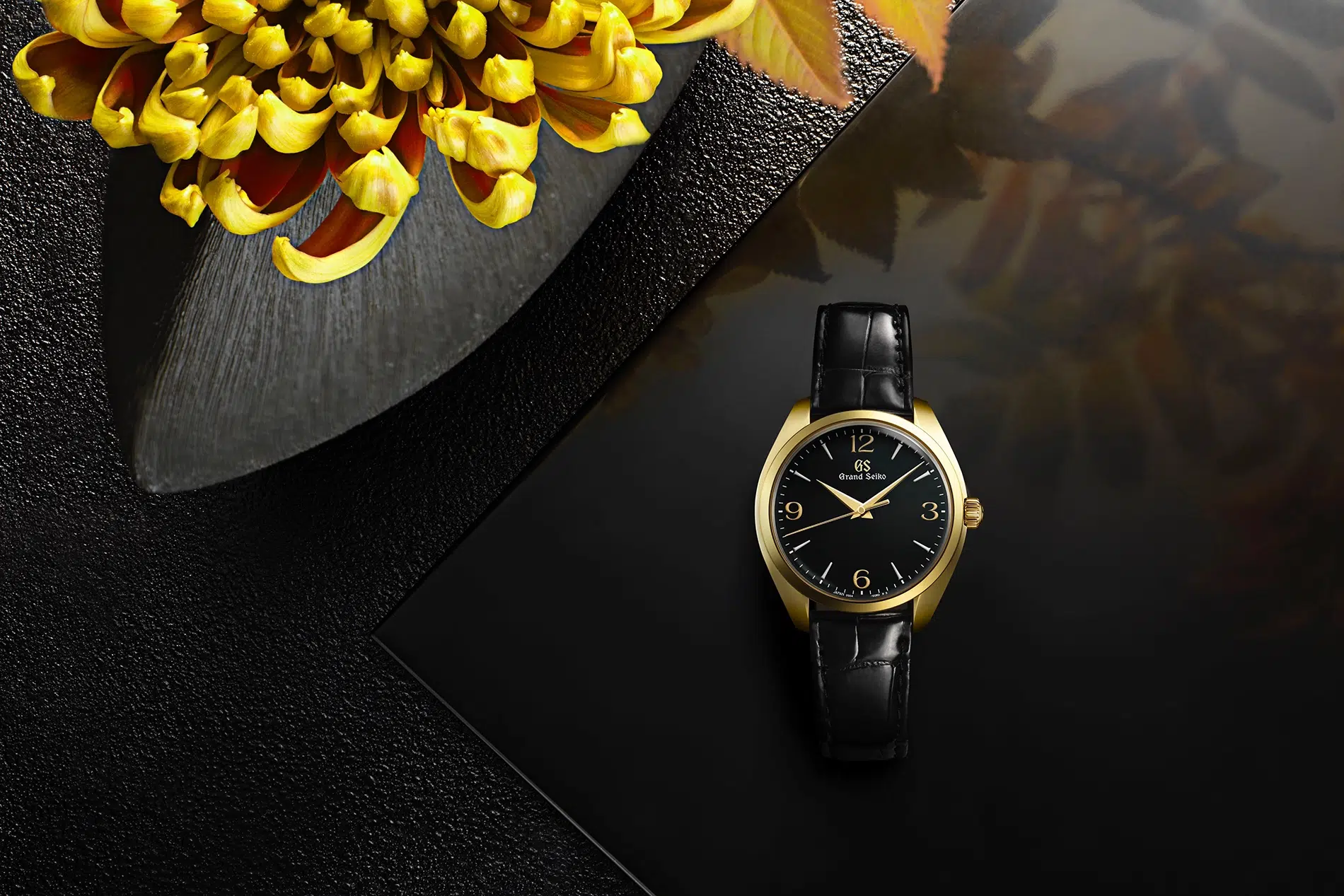
The result is a dial that feels quietly architectural. The gold markers and Arabic numerals do not simply sit on the surface; they appear to emerge from it, catching light against the lacquer while maintaining the clarity Grand Seiko considers central to its design philosophy.
That balance of ornament and restraint is particularly important to the Elegance Collection. The SBGW262 does not rely on oversized proportions or complex complications to make an impression. Instead, its appeal comes from proportion, finishing and the relationship between traditional Japanese craft and contemporary watchmaking.
Beneath the dial sits Grand Seiko’s manually wound Caliber 9S64. The movement offers a power reserve of approximately 72 hours and a mean daily rate of +5 to -3 seconds under controlled testing conditions. It operates at 28,800 vibrations per hour and can be viewed through the sapphire case back, giving the owner a direct view of the mechanical work that underpins the watch.
Manual winding feels especially appropriate here. In a watch built around craftsmanship and interaction, the act of winding becomes part of the experience rather than an inconvenience. The movement’s relative simplicity also allows the watch to maintain the slender, refined profile associated with Grand Seiko’s more traditional dress pieces.
The case itself measures 11.6 mm thick, with a dual-curved sapphire crystal and crocodile leather strap. The gold case adds warmth without overwhelming the dial, while the curved glass reinforces the soft, rounded character of the design.
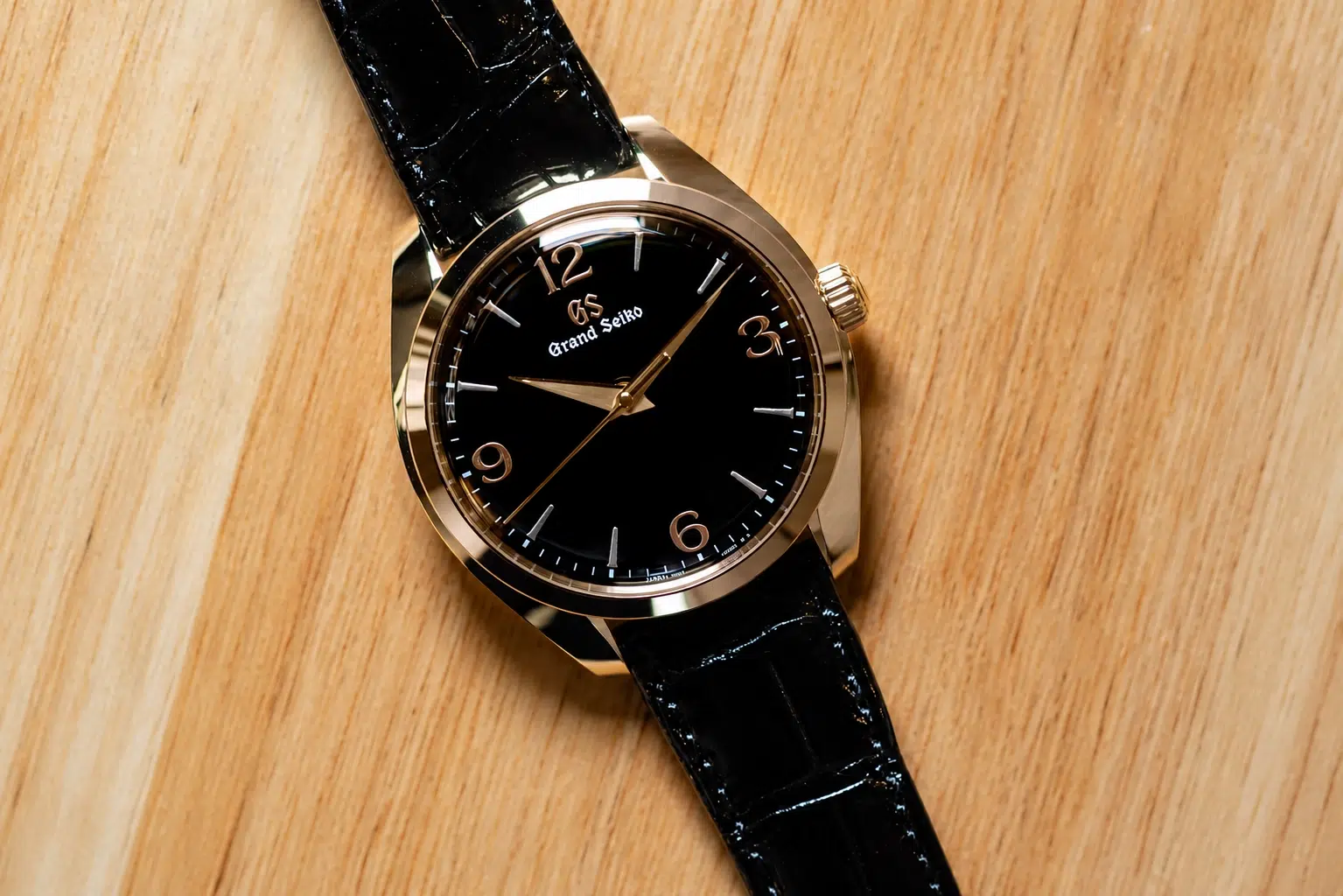
What makes the SBGW262 compelling is not just that it combines Japanese lacquer with mechanical watchmaking. It is the way those elements are integrated without turning the watch into a decorative exercise. The urushi, the maki-e and the hand-finished movement all serve the same broader idea: refinement through control.
That philosophy has deep roots within Grand Seiko. The brand was created in 1960 with the ambition of producing a watch that combined precision, durability, comfort and beauty at the highest level possible. Six decades later, the SBGW262 offered a very different expression of that same goal, one rooted as much in cultural identity as in technical performance.
In a market where luxury watches often compete through complication, scarcity or spectacle, the SBGW262 takes another path. Its appeal lies in the confidence of small details: the depth of black lacquer, the raised gold markers, the warmth of yellow gold and the measured rhythm of a hand-wound movement.
That restraint is precisely what gives the watch its character. The SBGW262 is not trying to shout about craftsmanship. It allows the craftsmanship to reveal itself slowly, which may be the most Grand Seiko approach of all.