Some yachts announce their importance at launch. Others need a few oceans beneath the keel before their significance becomes clear.
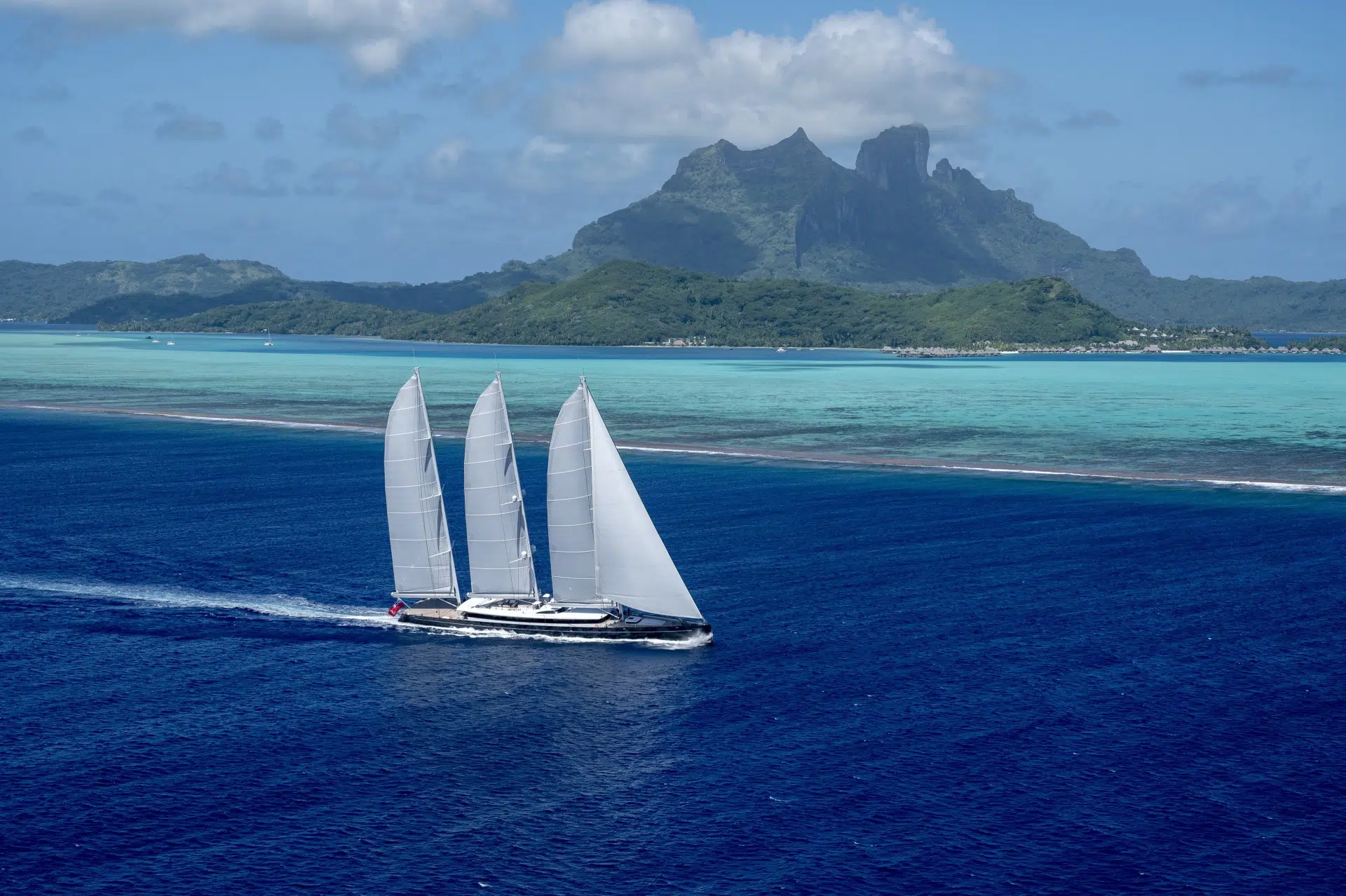
When Royal Huisman delivered the 81-meter Sea Eagle in 2020, the three-masted schooner immediately entered the rarefied ranks of the world’s ten largest sailing yachts. At 266 feet, she was the largest yacht the Dutch shipyard had built at the time, a vast aluminum sailing machine distinguished by a plumb bow, a powerful Panamax rig and the sort of proportions more commonly associated with motor yachts than performance schooners. Yet six years later, her dimensions may be the least interesting thing about her.
Sea Eagle has since done precisely what she was designed to do: sail.
Royal Huisman’s original brief called for an exceptionally comfortable world cruiser with genuine passage-making ability, strong seakeeping and the practicality to be managed without allowing her size to dominate the experience aboard. The objective was not to create a floating residence that happened to carry sails, but a true sailor’s yacht—powerful, safe, efficient and straightforward enough to use as intended.
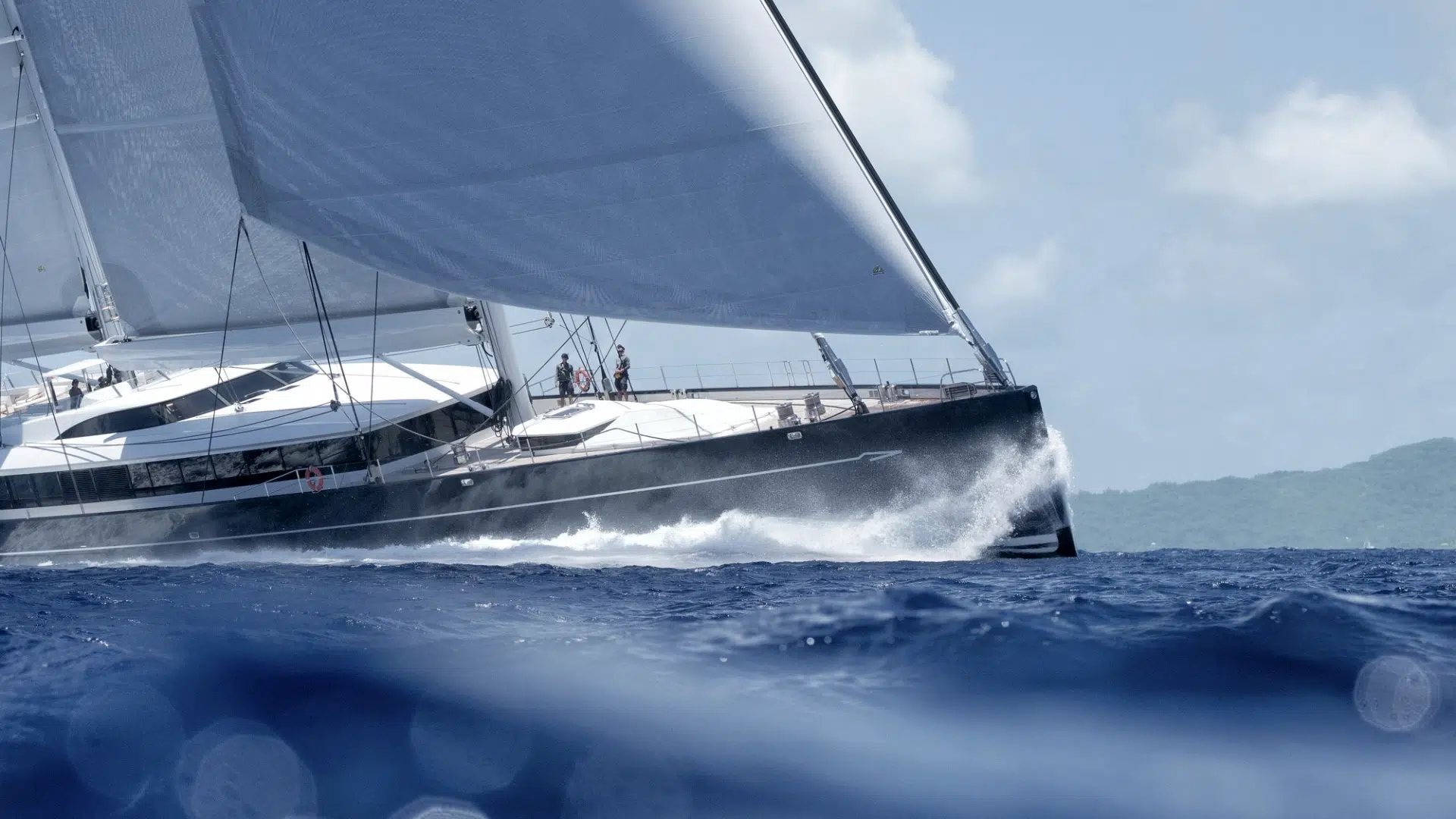
That distinction has only become more meaningful with time. Since delivery, Sea Eagle has accumulated more than 45,000 nautical miles of world cruising, transforming what might once have been regarded as an audacious exercise in scale into a proven long-distance sailing platform. She has crossed oceans, explored distant cruising grounds and later appeared on the regatta circuit, where her considerable size has done little to diminish her appetite for sailing.
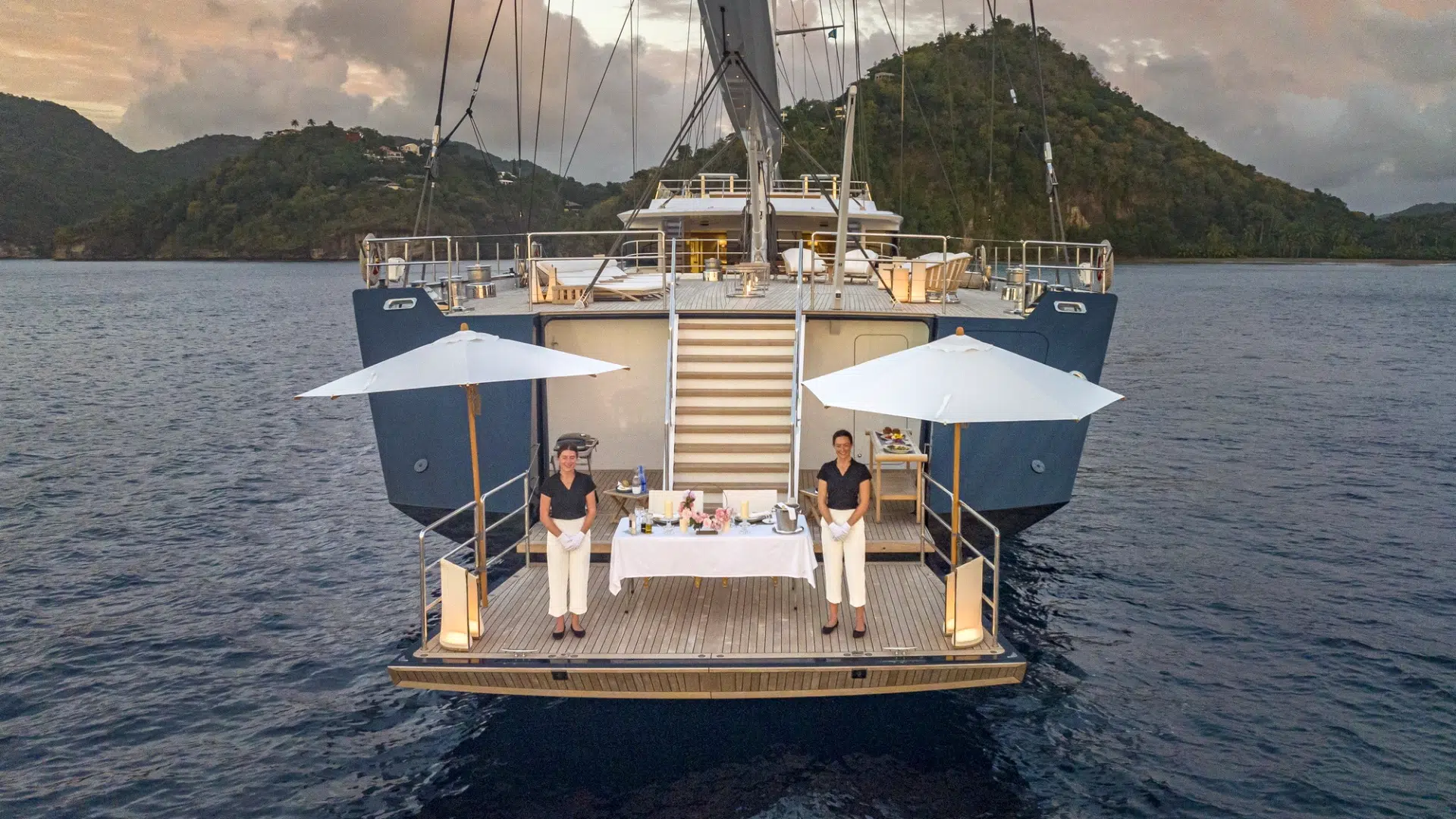
The yacht was conceived by Dykstra Naval Architects, with exterior styling developed in collaboration with Mark Whiteley Design. The result remains strikingly disciplined. Sea Eagle’s near-vertical bow lengthens the waterline visually and functionally, while a monochromatic hull and restrained superstructure keep the profile clean despite the enormous volume beneath it. What could easily have become monumental instead appears purposeful.
Purpose, in fact, runs through almost every aspect of the yacht.
Her aluminum construction combines strength with the weight advantages essential to a yacht intended to perform under sail. Above deck, a three-mast carbon rig supplied by Rondal carries an immense sail plan, yet Royal Huisman engineered the handling systems so that size would not translate into cumbersome operation. According to the shipyard, Sea Eagle carries 2,580 square meters of sail upwind and as much as 3,552 square meters downwind. Remarkably, all three mainsails can be hoisted simultaneously in roughly the time required to raise the mainsail aboard a sloop half her length.
Those numbers become more persuasive once the yacht begins moving. During sailing trials, Sea Eagle recorded 21.5 knots in a moderate breeze, an extraordinary figure for an 81-meter cruising yacht carrying the accommodations, systems and amenities expected at this level. Her long waterline and powerful rig allow her to convert comparatively modest wind into high passage-making speed, the sort of performance that changes the rhythm of a transoceanic voyage.
It also explains why Royal Huisman has always resisted describing Sea Eagle simply in terms of luxury.
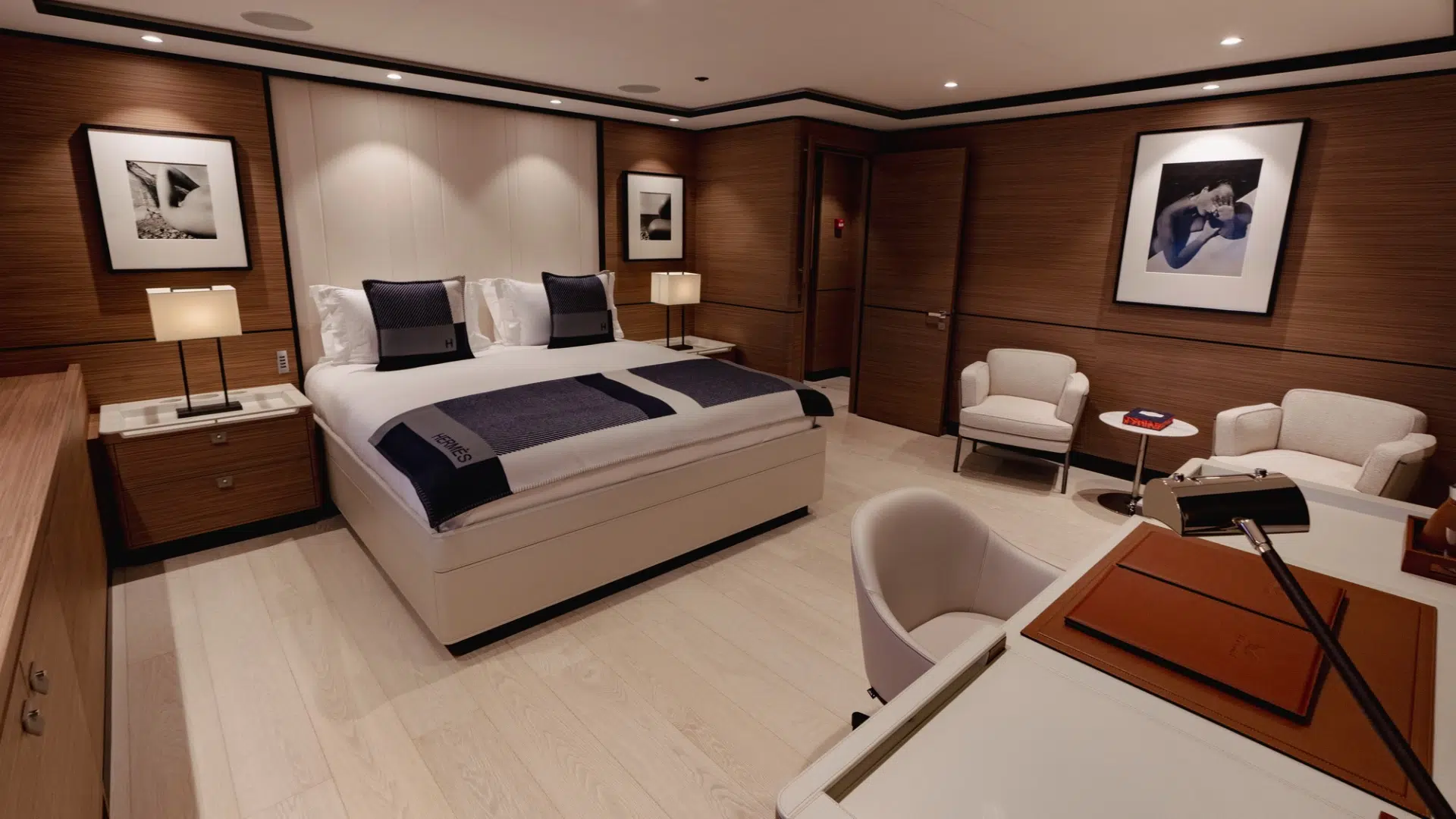
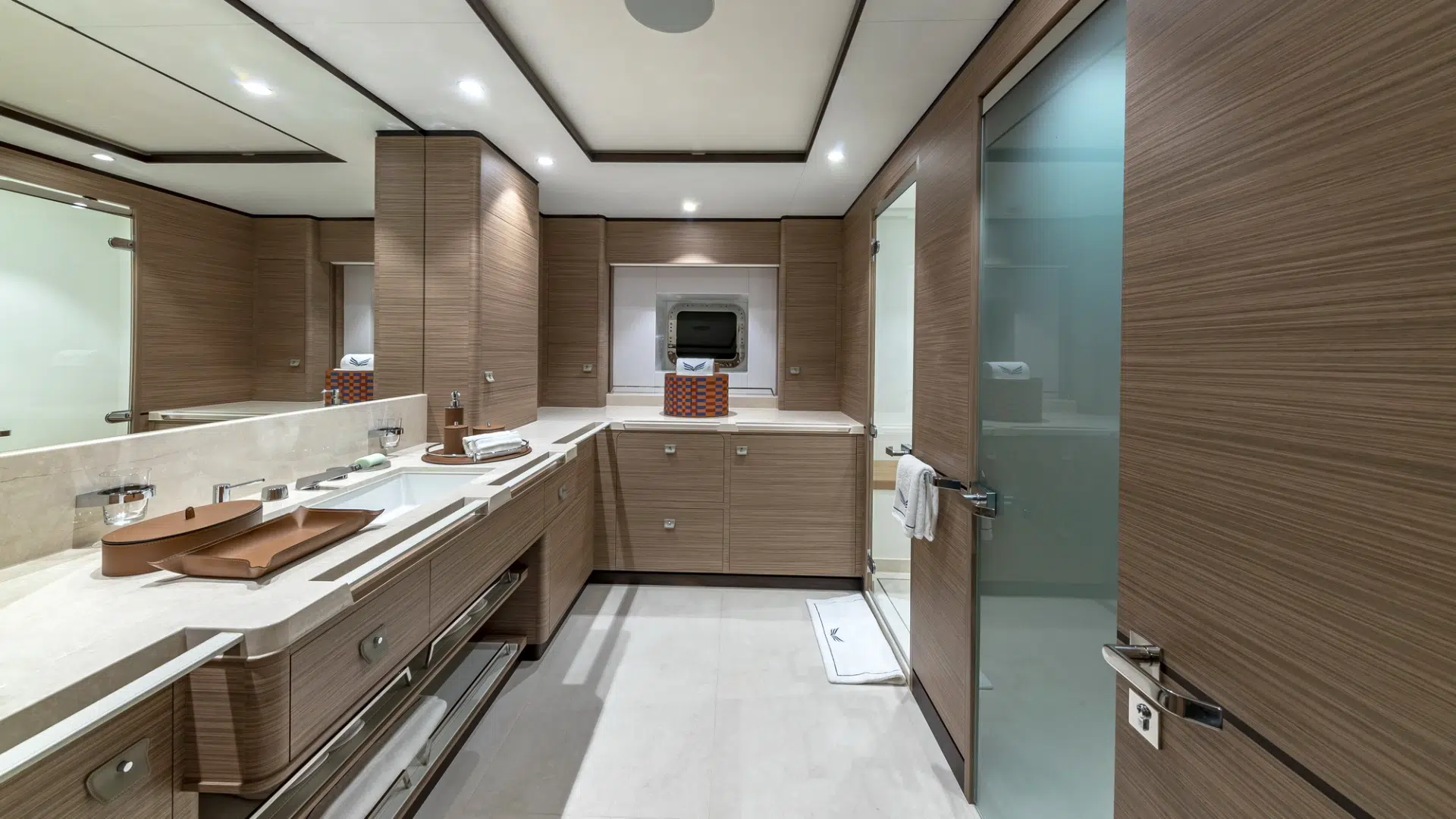
The yacht’s comfort is substantial, but it was designed around sailing rather than despite it. Mark Whiteley Design created interiors intended to feel contemporary and refined without overwhelming the connection to the water. Sea Eagle accommodates up to 11 owners and guests in her current specification, supported by a crew of 14, with generous interior volume distributed beneath a raised pilothouse and expansive flybridge.
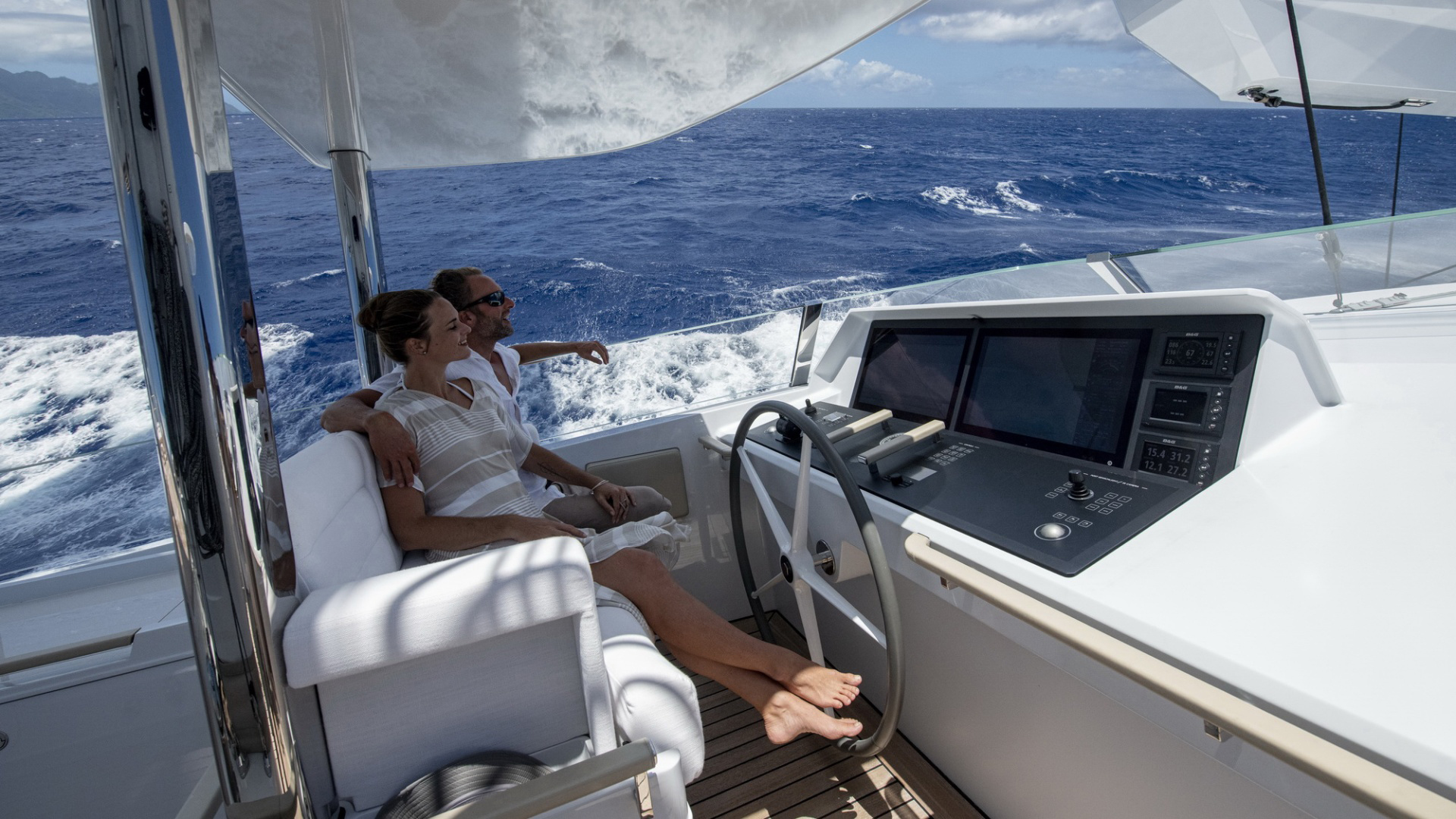
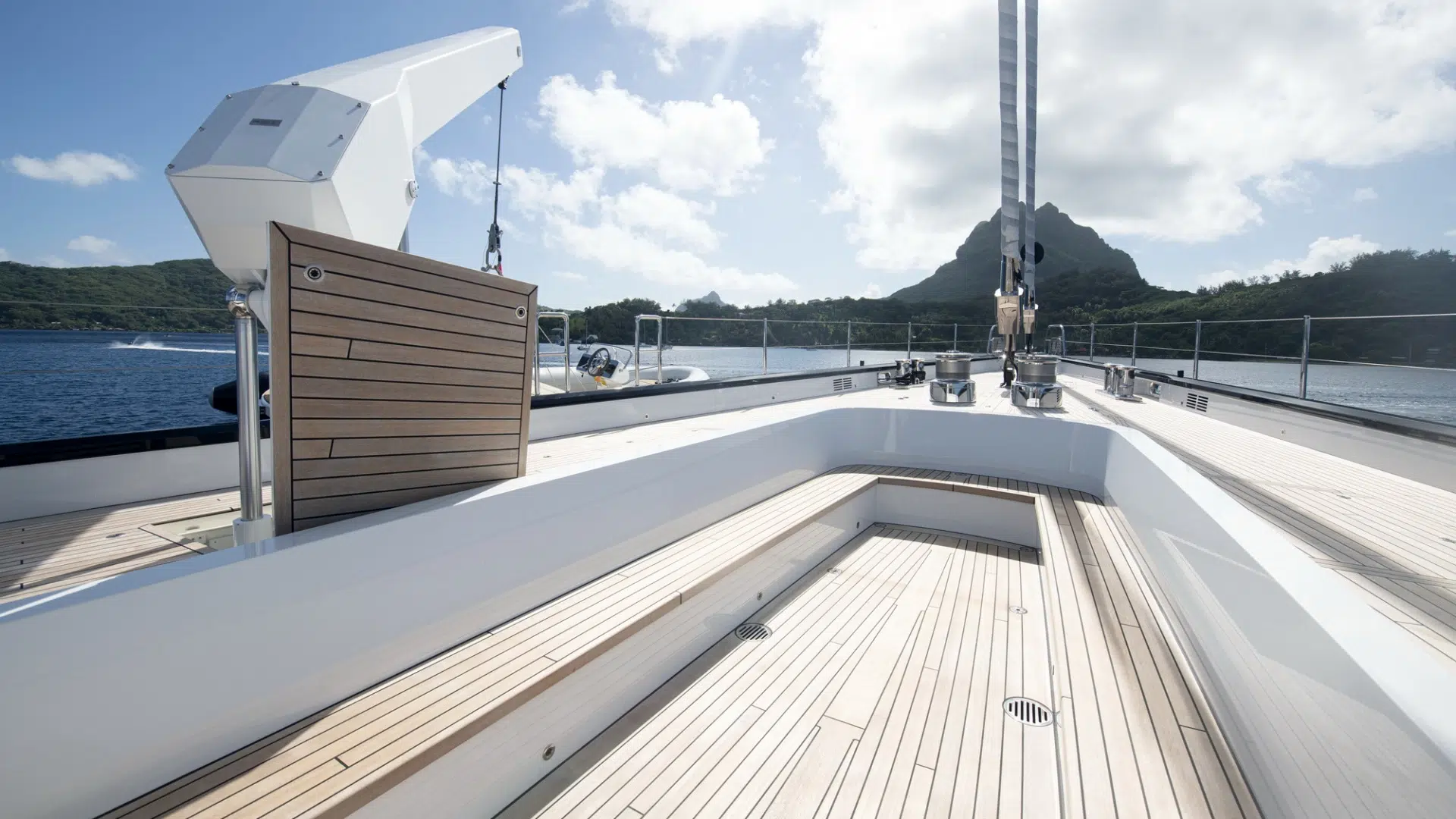
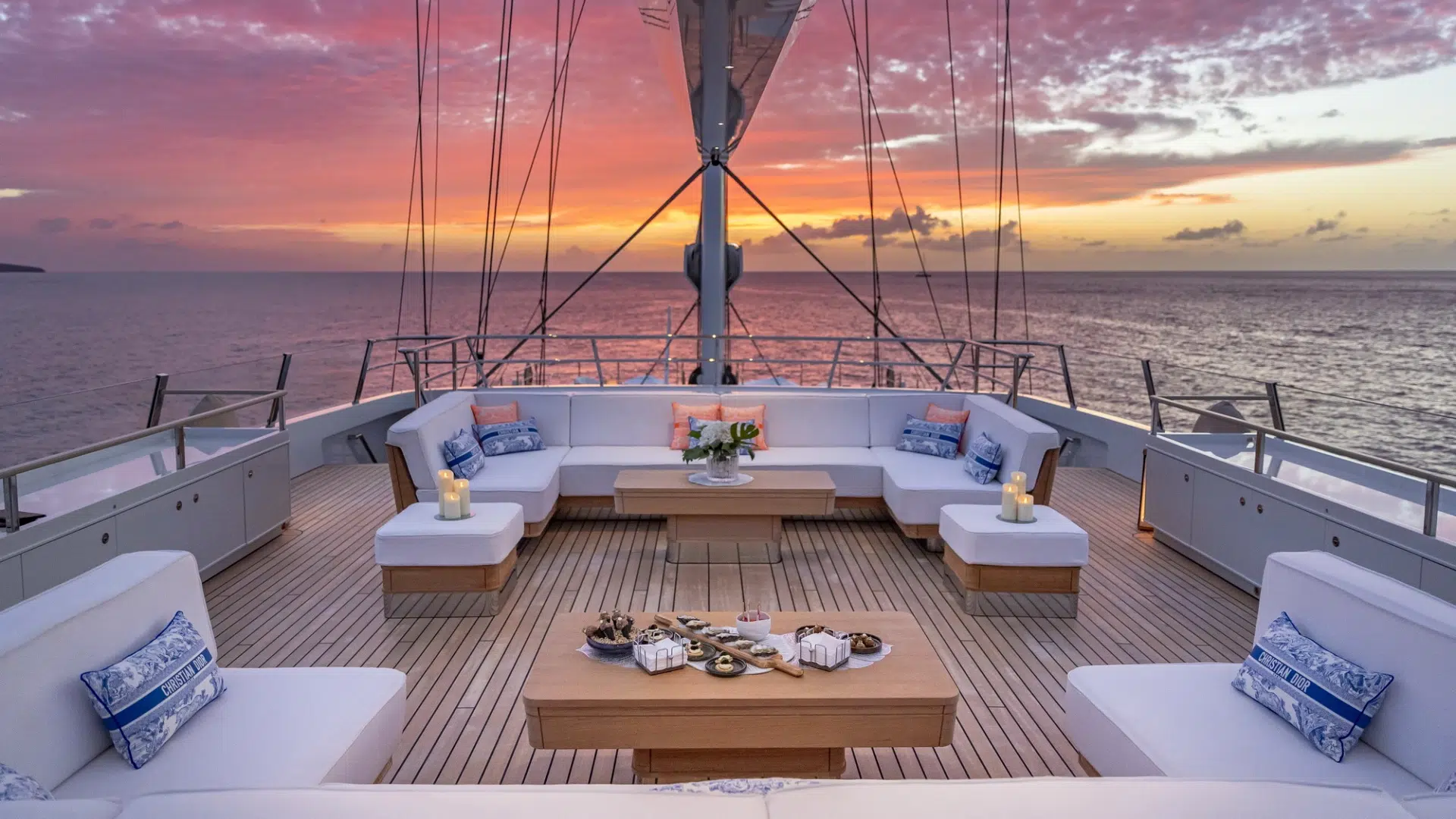
The flybridge is particularly important to the yacht’s character. Helm stations place sailing at the center of the upper-deck experience, while social areas allow guests to remain close to the action rather than observing it from within an enclosed salon. Elsewhere, exterior dining and lounging spaces, expansive decks and elevated viewpoints turn the yacht’s scale into an advantage without severing the relationship between guests, crew and sea.
That philosophy helps explain why Sea Eagle has aged unusually well.
Superyachts can become dated quickly, especially when their identity depends heavily on decorative fashion or novelty. Sea Eagle’s appeal rests instead on proportion, engineering and purpose. The plumb bow, long waterline and towering rig still communicate the same idea they did at delivery: this is a yacht built to cover distance under sail.
Her subsequent career has reinforced that premise. In 2023, Sea Eagle received the International Superyacht Society award for Best Sail above 500 GT, recognition that specifically highlighted her combination of practicality, comfort, safety, stability and performance. The award arrived three years after delivery, when there was enough real-world experience to judge the yacht by more than renders and sea-trial figures.
By then, Sea Eagle had also become more than a one-off achievement for Royal Huisman.
Her proven architecture now underpins the shipyard’s Trident 810 series, an 81-meter platform intended to combine custom-yacht individuality with an already engineered technical foundation. The concept retains the three-mast configuration, world-cruising capability, and emphasis on manageable sail handling that defined Sea Eagle, while allowing future owners to personalize the design around their own requirements.
A second Trident-based yacht, Project 412, is already under construction at Royal Huisman’s Vollenhove facility. Its aluminum hull was rolled out in 2026 as the project moved into systems integration and outfitting, further demonstrating how Sea Eagle’s architecture has evolved from an extraordinary individual commission into something approaching a new category of large sailing yacht.
There is an appealing continuity in that evolution.
Royal Huisman is now preparing the 85-meter Project 410, an even larger single-masted sailing yacht that will claim the title of world’s largest sloop. Yet the questions being asked by that project—how to maintain performance, manageable sailing systems and a genuine connection with the wind at megayacht scale—are questions Sea Eagle was already answering when she left the yard in 2020.
That makes Sea Eagle more than an impressive entry in Royal Huisman’s back catalogue.
She represents an inflection point in large sailing-yacht design: proof that extraordinary volume and serious sailing capability need not be opposing ambitions. The yacht could have relied on her 266-foot length, three towering masts and position among the world’s largest sailing yachts to secure her reputation. Instead, she went to sea and built one.
More than 45,000 nautical miles later, that may be the more meaningful measure of her scale.
And unlike a record for length, it is one that can only grow.